
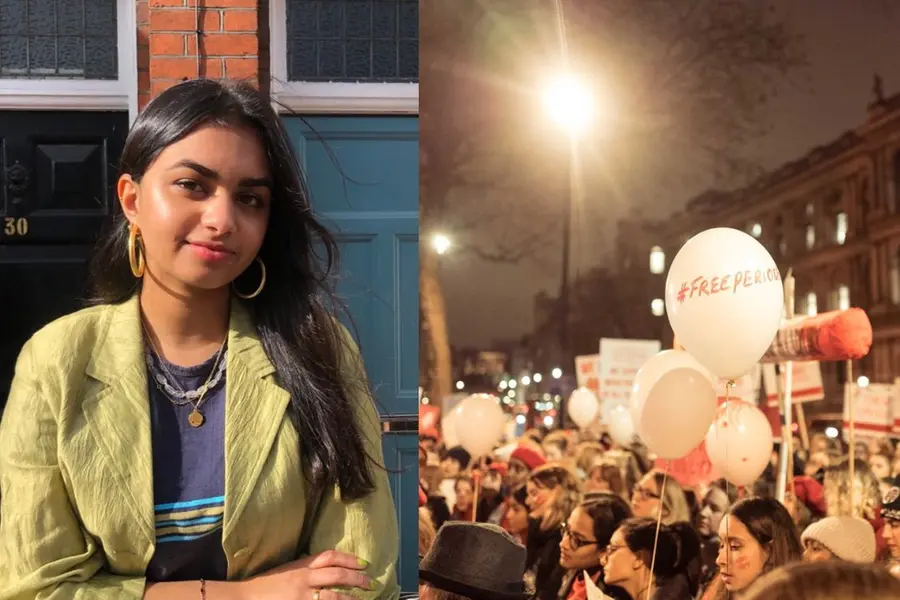
As we bid farewell to 2023, it's time to reflect on the impactful endeavors of individuals who have left a mark on the world. One such inspiring individual is Amika George, a young British activist of Kerala descent. She is known for her work on the "Free Periods" campaign, which advocates for free menstrual products in schools to ensure that all students have access to necessary hygiene products, regardless of their financial situation. It addresses issues of period poverty and aims to destigmatize menstruation while promoting equal access to education.
Amika's father’s family is from Pathanamthitta's Kumplampoika and her mother is from Kozhencherry side, but now mainly based in Kochi. In this interview with Mathrubhumi English, Amika shares reflections on her campaign and her Kerala connection.
Excerpts from the interview:
1. What inspired you to engage in the #FreePeriods campaign?
At the age of 17, I saw a headline one morning about girls in the UK missing up to one week of school a month, as they were unable to afford menstrual products. I was shocked that I’d never heard of ‘period poverty’ before, and outraged to learn that it existed. The more I researched the issue, the more it began to consume my thoughts, and I decided to act. What was borne out of this anger was Free Periods: a global campaign fighting for an end to period poverty in education. 3 years on, in a historic decision, the British government agreed to provide free menstrual products in all schools and colleges from 2020.

Through this campaign, I worked with politicians and policymakers, but I also galvanized and engaged a group of 300,000 young activists through social media, public education, and both in-person and online outreach. The campaign involved building and leading an online community of passionate young supporters, organising a two-thousand-person protest outside Downing Street in 2017, working with a team of human rights lawyers to prepare for a legal case against the UK government, and finally, as a not-for-profit organisation, scrutinising the government scheme.
2. The Kerala government in 2023 decided to grant menstrual leave for students in State-run higher educational institutes. Your comment on that?
I think this new initiative is fantastic, as it explicitly acknowledges the significant impact of periods on daily life. For students with exams and schoolwork, monthly periods can be a painful and disruptive hindrance to education, regardless of access to menstrual products. Rather than perpetuating the stigma, I think this new policy should encourage more open conversation around the issue and why we should not attach shame or embarrassment to periods.
3. Are you actively following political developments in Kerala and India?
I do follow Kerala politics, and whilst I was visiting I was filled with pride that leftist politics is thriving in the region, despite the frightening national shift to the right. I was especially proud to see the ongoing solidarity and support expressed in Kerala for the people of Palestine and its vocal condemnation of the Israeli occupation. I feel very proud to come from such a strong socialist tradition, affirming that a political program that prioritizes justice for the most marginalized, and equality regardless of class, religion, caste, or gender, is both possible and viable. I am deeply concerned, however, by the policies of the BJP and its treatment of Muslims and other minorities, which threaten peace and democracy in the country and internationally.
4. Could you offer a glimpse into your personal life and Kerala connection?
I am currently living in New York, working for a political organisation called Citizen Action New York. Its focus is on building grassroots power and organizing to drive political change, with a broader mission to end racial capitalism. I work in campaigning communications across the issues of housing justice, healthcare rights, education justice, ending mass incarceration, and more, across New York State. Whilst I live in New York, I miss my family in London (and Kerala), so hope to eventually move back home.
I was there with my family in July and August this year, and we travelled to several places including Ernakulum, Kayamkulam, Thiruvananthapuram, Kollam, and Kovalam. I loved visiting the old churches and temples, and landmarks and institutions central to the history of Kerala and my family - the houses that my forefathers lived in centuries ago, and swimming in the Pamba river that my dad and his cousins would play in as children. My favorite Kerala foods are 'kumbalappam' and 'ethakka appam' so I had plenty of those while I was there. Although I am familiar with Malayalam, I’m definitely not an expert by any means! I hope to go back again soon.
Published: 29 Dec 2023, 02:42 pm IST
ABOUT THE AUTHOR
Related Topics
Disclaimer: Kindly avoid objectionable, derogatory, unlawful and lewd comments, while responding to reports. Such comments are punishable under cyber laws. Please keep away from personal attacks. The opinions expressed here are the personal opinions of readers and not that of Mathrubhumi.