

How did Kanniyakumari become part of Tamil Nadu? Historian Joy Balan Valathankara explains the Tamil movement, Travancore elections and Pattom's Idukki gamble.
Thiruvananthapuram: Every November 1, Kerala celebrates its birth as a state, remembering the historic unification of Malayalam-speaking regions in 1956. But the formation of Kerala was not merely a story of territories coming together. It was also a story of territories being left behind.
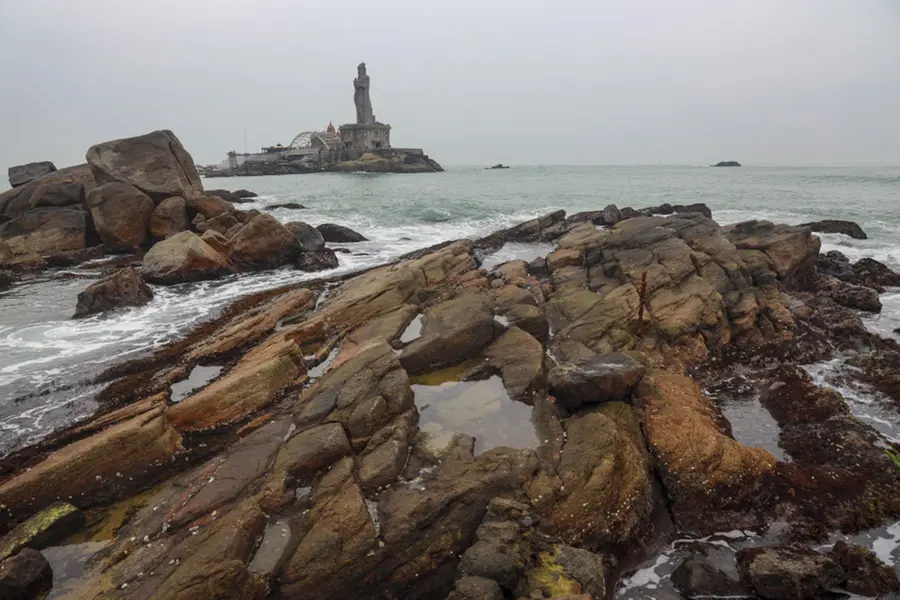
Among them was Kanniyakumari, once part of the princely state of Travancore and now the southernmost district of Tamil Nadu.
Why did Kerala lose Kanniyakumari? Was it the result of a conflict between communities, the growing influence of Tamil political organisations, or the failure of Travancore’s leadership to protect its territorial interests?
And if Kerala could retain the Tamil-majority hill regions of Devikulam and Peermade, which later became part of Idukki district, why could it not do the same for Kanniyakumari?
Historian Dr Joy Balan Valathankara believes the answer lies in a combination of demographic realities, the emergence of competing linguistic identities, electoral politics and the contrasting strategies adopted by political leaders during the reorganisation of states.
“An intervention was made to keep Devikulam and Peermade in Kerala. No such intervention was made to keep Kanniyakumari. That is truly a fact. That is what the documents say,” he said in a conversation with Mathrubhumi English.
He traces how Tamil political mobilisation gathered strength in southern Travancore, how successive election victories strengthened the demand for merger with Tamil Nadu, and how Chief Minister Pattom Thanu Pillai attempted to alter the demographic balance in the high ranges to prevent their separation from Kerala. That intervention, although ambitious, did not achieve its intended demographic transformation. Yet the hill regions remained with Kerala, while Kanniyakumari became part of Tamil Nadu.
Was Kanniyakumari ever a Malayali-majority region?
To understand why Kanniyakumari became part of Tamil Nadu, the story must begin with the population figures of nineteenth-century Travancore. Census records from the 1870s show that the old Thiruvananthapuram division, which included present-day Thiruvananthapuram and Kanniyakumari districts, did not have a Malayalam-speaking majority. Tamil speakers accounted for approximately 52 per cent of the population, while Malayalis constituted around 47 per cent. The linguistic divide was even more pronounced in the Padmanabhapuram division, corresponding broadly to present-day Kanniyakumari district. There, more than 80 per cent of the population spoke Tamil, while Malayalis accounted for only about 17 per cent. These figures, according to the historian, are essential to understanding the political developments that followed.
Kanniyakumari was not a predominantly Malayalam-speaking territory that suddenly developed a Tamil identity during the movement for linguistic states. Tamil speakers had already formed an overwhelming majority in the region decades before independence. This demographic reality would eventually become central to the demand for Kanniyakumari’s merger with Tamil Nadu.
How the Malayali movement triggered a Tamil response
The emergence of organised linguistic identities in Travancore also played a significant role in shaping the region’s political future. Dr. Joy Balan points to the formation of the Malayali Social Union at University College in Thiruvananthapuram.
Novelist C. V. Raman Pillai was among the founders of the organisation, whose original objective was to encourage cultural activities, arts and sports among students. Over time, however, the organisation evolved into the Malayali Sabha, expanding its activities beyond the college.
The Sabha established schools, published a newspaper named Malayali, and contributed to the emergence of a traders’ association and the Malayali Memorial. According to the Travancore Almanac, the organisation operated 14 schools, although unofficial estimates place the number as high as 28. While these activities helped consolidate Malayali cultural and social identity, Dr Joy Balan argues that they also had an unintended political consequence.
In a region where Tamil speakers formed the majority, the growing assertion of Malayali identity encouraged Tamil-speaking communities to organise around their own linguistic interests. What began as a cultural movement gradually contributed to a larger political contest over language, representation and territory.
The rise of the Travancore Tamil Nadu Congress
The Tamil response eventually took an organised political form. Several Tamil organisations emerged in Travancore, but it was the Travancore Tamil Nadu Congress (TTNC) that succeeded in bringing different groups together under a common political platform. The organisation later came under the leadership of A. Nesamony, who became one of the central figures in the movement to merge Tamil-majority areas of Travancore with Tamil Nadu.
According to Dr Joy Balan, the strength of the movement lay in its ability to mobilise Tamil-speaking communities across social and religious divisions. The demand was not confined to a single community. It had developed into a broader political movement rooted in linguistic identity. The decisive evidence of this mobilisation emerged in the elections.
The 1948 election that changed Kanniyakumari’s political future
The 1948 Travancore election provided the first major demonstration of the TTNC’s electoral strength. Rather than contesting across the entire state, the party concentrated on 18 constituencies located in Tamil-majority regions. These included all 14 constituencies in Kanniyakumari, two in Devikulam-Peermade, one in Chenkottai and one in Neyyattinkara.
The TTNC won all 14 seats in Kanniyakumari. Its central campaign promise was straightforward: wherever the Tamil party secured an electoral victory, that territory should become part of Tamil Nadu. The scale of the victory was striking. The results challenge the argument that the demand for merger was driven by the interests of one particular community.
The party’s successful candidates represented a broad cross-section of Tamil society, suggesting that the movement had acquired support beyond narrower community affiliations. The electoral trend continued in subsequent years. In the 1952 election, the TTNC won every Tamil-majority constituency in southern Travancore except one. Nesamony also secured victory from the Nagercoil Lok Sabha constituency.
The party’s influence extended to the Rajya Sabha, where a TTNC representative secured a seat with support beyond the party’s own nine votes. The political message was becoming increasingly difficult to ignore. In 1954, the TTNC went on to win both seats in the Devikulam-Peermade constituency, extending the movement’s electoral success into the high ranges. These victories would become particularly significant as the question of reorganising India’s states came before a national commission.
August 1954: When the movement turned violent
The Fazl Ali States Reorganisation Commission was examining the question of state boundaries during 1953 and 1954. As the commission considered linguistic and administrative claims, the TTNC’s electoral victories provided strong political backing for its demand to transfer Tamil-majority regions to Madras State. But the movement was no longer confined to elections and political negotiations.
Tensions escalated in the high ranges following police action against Tamil plantation workers in Devikulam. In response, Tamil organisations called for a liberation day protest, initially planned for early August before being shifted to August 11, 1954. Although the agitation originated in the hill regions, its most intense phase unfolded in Kanniyakumari. Protesters attempted to damage the pillars of the bridge across the Kuzhithurai River. Buses were set on fire as the agitation intensified. Police firing claimed the lives of seven Tamils in one incident. Dr Joy Balan estimates that approximately 20 people were killed during the wider period of unrest.
The violence further complicated the question of retaining Kanniyakumari within the proposed Malayalam-speaking state. By this stage, the historian argues, the strength of Tamil political mobilisation, combined with the demographic and electoral realities, had made the separation of Kanniyakumari increasingly difficult to prevent.
Pattom Thanu Pillai’s Idukki gamble
While the movement for Kanniyakumari’s merger with Tamil Nadu was gathering strength, Kerala’s political leadership faced another territorial challenge. The hill taluks of Devikulam and Peermade, which later became part of Idukki district, also had substantial Tamil-speaking populations.
The TTNC’s victory in both constituencies in 1954 strengthened the possibility that the hill regions, too, could be transferred to Madras State during the reorganisation. For Kerala’s leaders, losing Devikulam and Peermade would have meant surrendering strategically important high-range territories.
It was against this background that Chief Minister Pattom Thanu Pillai introduced an ambitious settlement scheme. The objective was to encourage Malayali families to move permanently into the high ranges, thereby increasing the Malayalam-speaking population before the States Reorganisation Commission made its recommendations.
The government proposed settling approximately 8,000 families in the region. Each eligible family was to receive five acres of land and financial assistance of ₹2,000. Applicants were required to be farmers, not hold government employment and be willing to settle permanently in the region. The conditions were intended to attract families capable of establishing a lasting presence in the high ranges.
In effect, the scheme sought to influence the demographic composition of Devikulam and Peermade at a time when linguistic identity was central to determining state boundaries.
Why Pattom’s settlement plan failed to meet its target
Despite the scale of the proposal, Pattom Thanu Pillai’s settlement initiative fell far short of its target. Against the proposed 8,000 families, only around 1,500 families took up the offer. Assuming an average household size of five, the programme would have brought approximately 7,500 people into the region.
While this represented a meaningful addition to the local population, it was considerably smaller than the demographic shift the government had sought to achieve. The plan, therefore, did not accomplish its intended objective of substantially altering the linguistic balance in the two taluks.
Devikulam and Peermade subsequently became part of Idukki district. Kanniyakumari, meanwhile, was transferred to Tamil Nadu.
For the historian, the crucial distinction is not simply whether the settlement scheme succeeded. It is that a deliberate political and administrative intervention was attempted in one region but not the other.
“Kerala made a deliberate intervention to hold Devikulam and Peermade. No comparable effort was made for Kanniyakumari. That is what the documents show,” he said.
Kanniyakumari eventually became part of Tamil Nadu, where it developed into one of the state’s relatively prosperous districts.
Dr Joy Balan points to its achievements in literacy, per capita income and agriculture while discussing what Kerala lost. Could a different political approach have changed the outcome?
“Yes,” he says, “if there had been leaders willing to push for it.”
Kerala’s borders were contested beyond Kanniyakumari
The formation of Kerala also involved territorial disputes in other parts of the proposed state. In Malabar, Madras sought the return of two forest tracts. In the north, Karnataka laid claim to territory in Kasaragod lying beyond the Chandragiri River, arguing that the river should form a natural boundary.
Kerala’s representative, P.S. Rao (Patkar Sitharamarao), responded with competing geographical and linguistic arguments. He proposed that the Tamraparani, also known as the Kuzhithurai River, should be treated as a natural boundary in the south.
Such a boundary would have brought parts of Kanniyakumari within Kerala. Rao also raised the question of Malayalam-speaking majority areas in Kodagu. These competing claims demonstrate that the eventual state boundaries were not determined solely by a straightforward division of Malayalam- and Tamil-speaking populations.
Historical connections, geographical features, administrative considerations and political negotiations also entered the debate. The immediate dispute was eventually settled through a presidential decision, although questions surrounding the northern boundary resurfaced later through the Mahajan Commission.
Published: 01 Nov 2026, 07:00 am IST


ABOUT THE AUTHOR
Related Topics
Disclaimer: Kindly avoid objectionable, derogatory, unlawful and lewd comments, while responding to reports. Such comments are punishable under cyber laws. Please keep away from personal attacks. The opinions expressed here are the personal opinions of readers and not that of Mathrubhumi.