
India’s draft animal-experimentation rules shift approval powers to institutional ethics committees. Why PETA India and welfare groups are alarmed.
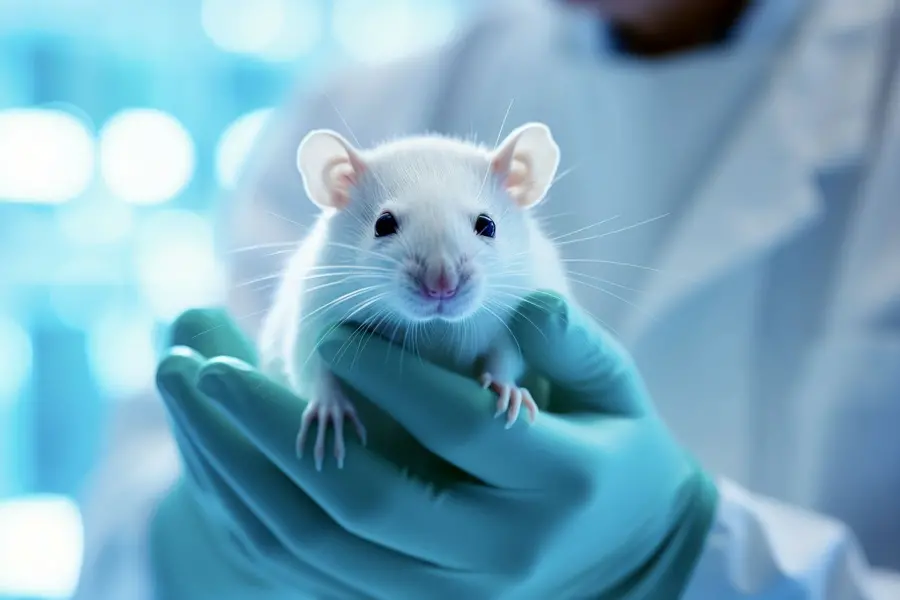
A proposed overhaul of India's animal-experimentation framework has triggered a sharp conflict between the government’s attempt to modernise research approvals and animal-welfare groups’ warning that it could weaken independent oversight and allow greater suffering in laboratories. The draft rules, published in the Gazette of India on October 7, would supersede regulations dating back to 1968 and 1998 and make the expected severity of pain or distress -- not merely the species involved -- the principal basis for deciding who approves an experiment.
The Ministry of Fisheries, Animal Husbandry and Dairying has invited objections and suggestions for 30 days through the Committee for Control and Supervision of Experiments on Animals, or CCSEA.
The draft, notified as GSR 864(E) on September 30, 2026, is titled the Prevention of Cruelty to Animals (Control and Supervision of Experiment, Breeding and Trading of Laboratory Animals) Rules, 2026.
What the government proposes
The draft says it will “establish measures for the protection of animals used for scientific or educational purposes.” It lays down guidelines for “the replacement and reduction of the use of animals in experiments and the refinement of the breeding, accommodation, care and use of animals in experiments,” as well as for animal origin, breeding, marking, care, housing and euthanasia.
The rules apply to live non-human vertebrates, including independently feeding fish larvae, embryonated eggs and mammalian foetuses in the last third of normal development.
They also cover animals at earlier developmental stages if they are allowed to live beyond that stage and are likely to experience pain, suffering, distress or lasting harm as a result of the experiment.
The government's stated purpose is to retain a regulatory system while making it more coherent and risk-based. Every breeder, trader and establishment conducting experiments must register with CCSEA, with registration valid for three years.
Establishments must have trained personnel, a designated veterinarian, prescribed records, inspections and procedures for humane endpoints and euthanasia.
The draft also incorporates the internationally recognised “3Rs” principle. Registered establishments must ensure that, “wherever possible,” a scientifically satisfactory method not involving live animals is used instead of an experiment; that animal numbers are reduced to the minimum necessary for valid results; and that breeding, housing, care and methods are refined to eliminate or minimise pain, suffering, distress and lasting harm.
A break from 1968 and 1998
India’s first dedicated animal-experiment rules were notified in 1968 by the then Ministry of Food and Agriculture, Community Development and Co-operation. They were followed by the Breeding of and Experiments on Animals (Control and Supervision) Rules, 1998, notified by the Ministry of Social Justice and Empowerment and subsequently amended in 2001 and 2006.
The new notification explicitly states that the 2026 draft is issued “in supersession of the Experiments on Animals (Control and Supervision) Rules, 1968” and the 1998 Rules.
It says the supersession will not affect things done or omitted before the new rules take effect.
The major shift lies in the approval architecture. Under the existing system, institutional animal ethics committees, or IAECs, generally handled smaller-animal experiments, while experiments involving larger animals commonly required clearance from the central committee.
The draft changes that by classifying every experiment as “non-recovery,” “mild,” “moderate” or “severe,” and then allocating approval authority according to that classification.
Rule 7 says: “The establishment shall follow the severity of experiment, classified as ‘non-recovery’, ‘mild’, ‘moderate’, or ‘severe’ on a case-by-case basis as set out in Annexure-I.”
It adds that establishments must ensure an experiment is not performed if it involves “severe pain, suffering or distress that is likely to be long period and cannot be ameliorated.”
The controversial approval shift
The provision at the centre of the controversy is Rule 11. It says every registered establishment must obtain permission either from CCSEA or from its IAEC “before conducting experiment, as the case may be.” But it then draws a decisive line: severe and non-recovery experiments on animals above the category of rodent and lagomorph require an application to CCSEA after IAEC recommendation, while mild and moderate experiments -- including those on all animals -- must be decided by the IAEC.
The Gazette text is explicit: “Every establishment conducting experiments which have been defined as mild and moderate including such experiments on all animals, shall submit their application as per Schedule III to the Member Secretary of IAEC for decision on the experiment. Such experiment shall not be referred to the Committee.”
That means an institution’s own ethics committee could approve mild or moderate experiments on dogs, horses, pigs, cattle and other large animals without prior CCSEA approval. For such larger-animal experiments, the IAEC must report to CCSEA at study initiation, interim progress and completion, covering progress, deviations and compliance with the 3Rs.
The draft retains some safeguards. It mandates veterinary certification that the animal is fit for the proposed experiment, requires the principal investigator to submit records after completion, and says the IAEC may approve repetitive or curriculum-based teaching experiments for up to five years, with fresh approval required if species, animal numbers, severity or procedure materially change.
Why activists object
Animal-welfare organisations say the severity classification effectively transfers a major regulatory power from the central committee to the very institutions seeking permission to experiment. PETA India has demanded withdrawal of the draft, arguing that it could expose animals to greater suffering in laboratories and weaken independent oversight.
The organisation’s central objection is that the draft “would allow institutional ethics committees to approve experiments classified as mild or moderate on larger animals, including dogs, horses, pigs, and cattle, without prior approval from the central Committee for Control and Supervision of Experiments on Animals.”
Critics argue that this creates a structural conflict of interest. The IAEC is part of the establishment, even though it includes CCSEA-nominated members, and it would decide whether a proposed protocol falls into the lower-severity categories that do not require central clearance.
Welfare groups say vague or generous grading of “mild” and “moderate” could therefore become the route through which larger-animal experiments avoid central scrutiny.
PETA India also objects to the treatment of severe suffering. “Although the draft prohibits prolonged severe suffering that cannot be alleviated, it continues to accommodate experiments involving severe suffering,” the organisation said.
Wildlife, strays and sourcing
The draft generally prohibits the use of animals protected under the Wildlife (Protection) Amendment Act, 2022, wild animals, and stray or feral domestic animals. But each category carries exceptions that have become a major flashpoint.
For protected species, the draft allows experiments where the purpose falls within specified categories, where there is “scientific justification to the effect that the purpose of the experiment cannot be achieved using species other than the endangered species,” and where permission has been granted by competent authorities under applicable law.
For wild-caught animals, the rules say they “shall not be used in experiments unless the Competent authority of the relevant department grants exemptions based on scientific justification to the effect that the purpose of the experiments cannot be achieved by the use of an animal which has been bred for use in experiments.”
Stray and feral domestic animals are also generally barred from experiments, but competent authorities may grant exemptions where there is “an essential need for studies concerning the health and welfare of the animals or serious threats to the environment or to human or animal health,” and where the purpose can be achieved only by using such an animal.
PETA India says these exemptions could permit the capture and use of protected animals and, in specified circumstances, experimentation on stray dogs and cats. Welfare groups contend that the language is broad enough to be exploited, particularly because “scientific justification” is the recurring threshold for exceptions.
Sourcing concerns
Another contested provision concerns animals obtained from outside the registered supply chain. Rule 21 normally requires registered breeders, users or establishments to acquire animals only from CCSEA-registered breeders, establishments or traders.
But it adds an exception: where a particular kind of livestock or farm animal above the level of Lagomorpha, fish or bird is unavailable from registered breeders or traders, it may be procured from non-registered establishments or the open market with prior IAEC approval and documentation, provided the animal undergoes a mandatory veterinarian-certified quarantine and stabilisation period.
Animal-welfare groups argue that this could normalise poorly traceable sourcing and introduce animals with unknown health histories into laboratories. The government’s position, reflected in the draft, is that the exception is limited to non-availability, requires prior IAEC approval and mandates quarantine.
The political stakes
The dispute is not simply about whether India should permit animal research; the 1960 Act and the 1998 Rules already contemplate it under regulation. The question is whether the 2026 draft strengthens welfare protection or decentralises it too far.
Supporters of the draft can point to its explicit 3Rs mandate, its requirement that death as an endpoint be avoided “as far as possible,” its insistence on veterinary supervision, its registration and inspection regime, and its power for CCSEA to suspend or revoke registration where animal welfare is at imminent risk.
Opponents counter that the draft’s most consequential change -- self-approval by IAECs for mild and moderate experiments on all animals -- comes with only retrospective reporting for larger animals. They argue that a system built on institutional classification, broad exemptions and market sourcing may reduce friction for researchers while increasing risk for animals.
With the consultation window open, the government must now decide whether to retain the severity-led model, tighten the definitions of mild and moderate experiments, narrow the wildlife and stray-animal exceptions, or restore prior CCSEA approval for large-animal research. The response from animal-welfare organisations suggests that, in its present form, the draft is likely to face sustained opposition.
Published: 20 Oct 2026, 10:17 am IST
Related Topics
Disclaimer: Kindly avoid objectionable, derogatory, unlawful and lewd comments, while responding to reports. Such comments are punishable under cyber laws. Please keep away from personal attacks. The opinions expressed here are the personal opinions of readers and not that of Mathrubhumi.
