
India needs lithium, cobalt, nickel and rare earths for its clean-energy and digital ambitions. Its critical minerals strategy seeks to turn vulnerability into influence.
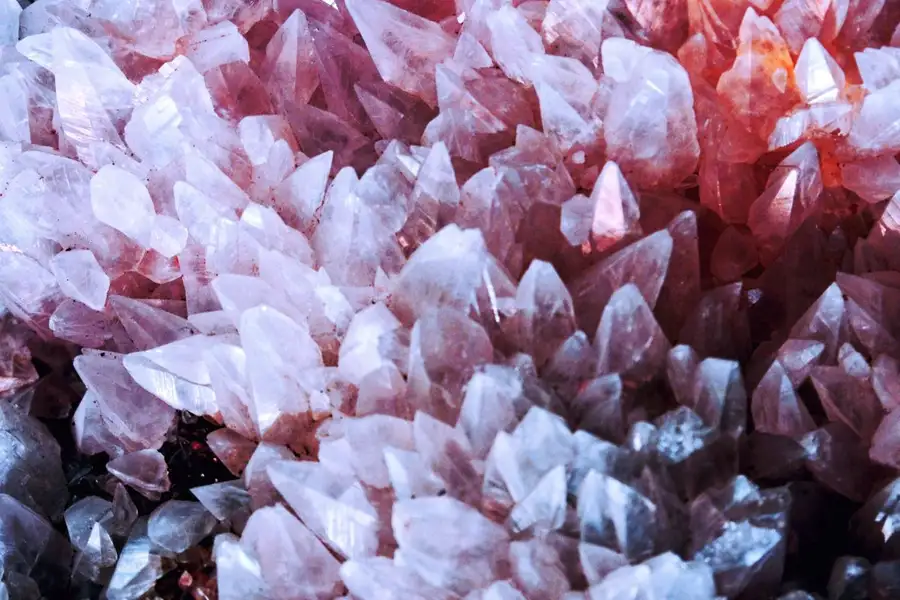
India is an emerging swing player in the global critical minerals race: a major industrial economy with fast-growing needs, limited domestic supply and increasing ability to shape partnerships with resource-rich countries. Its choices will matter not only for access to minerals, but also for where they are processed, what technology is shared and how the costs of extraction are managed.
Lithium, cobalt, nickel and graphite go into batteries. Rare earth elements help make the powerful magnets used in electric vehicles and wind turbines, while copper is essential to expanding electricity grids. These materials also support semiconductors, data centres, defence equipment and other advanced technologies.
As economies electrify and invest in digital infrastructure, reliable access to minerals has become a foundation of economic and strategic power.
Demand is rising quickly. The International Energy Agency (IEA) projects that demand for critical minerals will almost double by 2040 under its stated policies scenario, with lithium demand more than tripling. Global battery demand grew by over 35% in 2025, passing 1.5 terawatt-hours, as energy storage became a significant source of growth.
Copper consumption reached nearly 28 million tonnes that year and is projected to rise by more than 25% by 2040. Supply, however, is concentrated. China holds an average 70% share of the market across 19 of the 20 most strategic critical minerals, and 94% of rareearth permanent magnet production.
The IEA reports that, over the past two years, Indonesia accounted for more than three-quarters of growth in refined nickel supply, while China accounted for a similar share of growth in other key energy minerals.
New export restrictions and tighter supplies helped drive prices up in 2025 and early 2026. India is responding through a growing network of international agreements. Since January 2025, it has signed 15 agreements involving critical raw materials, according to the International Institute for Sustainable Development (IISD). Its count identifies 139 critical-mineral-linked agreements among 211 trade and economic agreements signed globally between January 2025 and September 2026.
The United States leads with 41 such agreements; Canada, China, the European Union and Saudi Arabia each have 11. These arrangements range from formal trade deals to memorandums of understanding and cooperation frameworks.
India’s urgency reflects a practical vulnerability: ambitions in electric mobility, renewable power, energy storage and manufacturing depend on minerals that are not yet available in sufficient quantities at home. In the 2024–25 financial year, India imported about 2,997 tonnes of lithium, 2,426 tonnes of cobalt and 13,006 tonnes of rare earth elements.
The National Critical Mineral Mission, approved in January 2025, is designed to address these dependencies across the supply chain. Running through 2030-31, it has a government outlay of Rs 16,300 crore and anticipates Rs 18,000 crore in public-sector investment. Its goals include 1,200 domestic exploration projects, the acquisition of 50 overseas mineral assets, and support for processing, recycling, research and skills development.
India also aims to build a national stockpile of at least five critical minerals, establish four regional processing parks and three Centres of Excellence, and achieve self-sufficiency in processing at least five minerals.
Some parts of the strategy are already under way. State-owned Khanij Bidesh India Ltd (KABIL) has exclusive rights to explore five lithium brine blocks in Argentina’s Catamarca province, covering around 15,702 hectares. India is exploring joint lithium and cobalt investments with Australia, while cooperation with Germany and Norway is expanding into processing, research and recycling. Domestic exploration and recycling are also advancing.
The Geological Survey of India completed 230 critical and strategic mineral projects in the 2025–26 field season. A Rs 1,500-crore recycling incentive scheme has attracted pledges from 58 entities for 850,000 tonnes of annual capacity -- above its programme target of 270,000 tonnes.
The scheme aims to build recycling capacity and recover critical minerals from sources such as electronic waste and lithium-ion battery scrap. India’s position as a large buyer and industrial economy gives it negotiating power. It can use partnerships to seek more than access to raw materials, including training, technology transfer and processing capacity in producer countries.
That approach could help create more value where minerals are mined and give India a stronger foothold across the supply chain. But diversification will be difficult. Indonesia’s restrictions on nickel-ore exports were intended to attract domestic processing and battery investment, and other producers are using export rules and investment conditions to encourage local industries. Meanwhile, critical-mineral agreements often say little about environmental standards.
IISD found that only one of 60 agreements centred primarily on critical minerals included additional energy provisions, while none addressed broader climate governance. Future partnerships could set clearer expectations for cleaner production, water use, waste management, worker protections and consultation with affected communities.
India's challenge is to secure minerals without replacing one dependency with another -- and to turn signed agreements into operating mines, refineries and factories. Its emerging role gives it room to influence how the global supply chain develops. Whether that influence also advances fairer and more sustainable production will depend on the terms of its partnerships and how consistently they are honoured.
Published: 27 Nov 2026, 06:23 pm IST


Related Topics
Disclaimer: Kindly avoid objectionable, derogatory, unlawful and lewd comments, while responding to reports. Such comments are punishable under cyber laws. Please keep away from personal attacks. The opinions expressed here are the personal opinions of readers and not that of Mathrubhumi.
