
Researchers say tackling local threats such as marine pollution, overfishing and poorly managed coastal development could improve the survival prospects of vulnerable reefs.
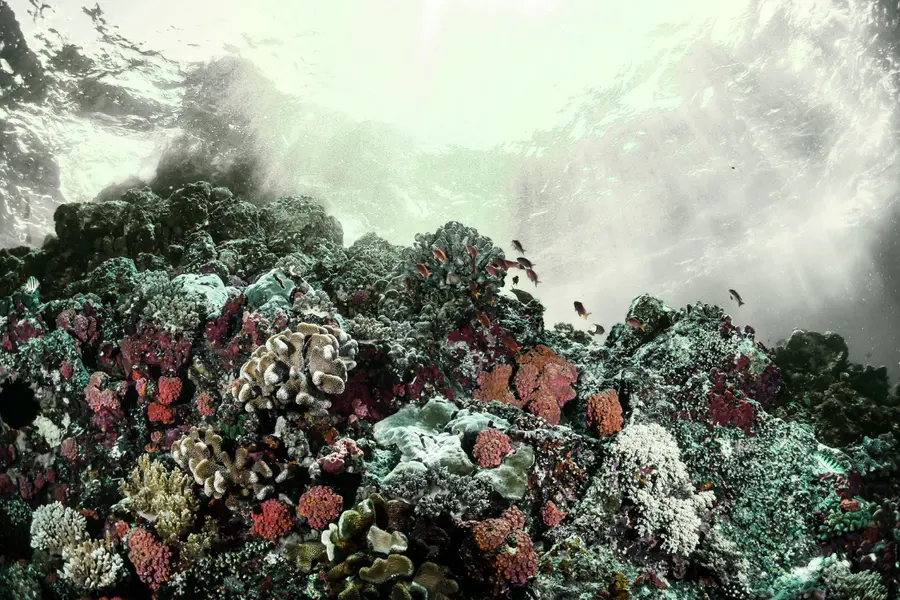
Beneath the turquoise waters of the world's tropical oceans, an ecological catastrophe is unfolding. Coral reefs, the vibrant underwater ecosystems that shelter thousands of marine species and sustain millions of coastal livelihoods, are approaching a dangerous tipping point. A new global assessment warns that nearly all shallow-water coral reef ecosystems face a critical risk of collapse within the next five decades, largely because of rising ocean temperatures and increasingly intense marine heat waves.
The findings, released Thursday by the International Union for Conservation of Nature (IUCN), paint an alarming picture of the future of the world's underwater rainforests. According to the assessment, 96 per cent of shallow-water reef ecosystems are already classified as critically endangered, putting them at risk of disappearing by 2075.
The assessment, unveiled on the sidelines of a United Nations biodiversity conference in Albania, is the first global evaluation of coral reef ecosystems under the IUCN Red List of Ecosystems framework.
Some of the planet's most celebrated marine ecosystems are among those facing the gravest threats. Australia's Great Barrier Reef, the Coral Triangle stretching across the Western Pacific and Southeast Asia, the Mesoamerican Barrier Reef System and the coral reefs of the Red Sea have all been classified as critically endangered.
The findings suggest that the crisis is no longer confined to isolated reef systems. Instead, the threat extends across tropical and subtropical waters, where coral reefs have supported complex marine ecosystems for thousands of years.
Yet scientists caution that the grim outlook should not be mistaken for an inevitable future.
"The risk of coral reef collapse is escalating, but this must be a wake-up call rather than a cause for despair," said Mishal Gudka, scientific lead of the global IUCN Red List of Coral Reef Ecosystems assessment.
"Coral reefs have shown a remarkable ability to bounce back from devastating bleaching events," he said. "Pockets of surviving, resilient coral reefs can remain in the future, so we must do everything within our reach to set them up for success."
Why the loss of coral reefs matters
Often described as the rainforests of the sea, coral reefs are among the most biologically diverse ecosystems on Earth.
Although they occupy a relatively small portion of the ocean, reefs provide habitat for approximately one-quarter of all marine species, including fish, crustaceans, molluscs and countless other organisms.
Their importance extends far beyond marine biodiversity.
For coastal communities, coral reefs serve as natural barriers against powerful waves, storms and erosion. They also support fisheries, tourism and businesses that depend on healthy marine ecosystems.
The collapse of these underwater habitats could therefore trigger consequences far beyond the oceans, threatening food supplies, livelihoods and the resilience of coastal settlements.
A healthy reef is built around living hard corals, which create the complex structures that allow marine life to flourish.
When a reef ecosystem collapses, these corals disappear and are replaced by algae, rubble and sponges. The intricate underwater habitat gradually loses its ability to support the diverse communities of organisms that once depended on it.
Species ranging from tiny invertebrates to larger reef fish, including grouper, can lose vital feeding grounds and shelter.
"Coral reefs are one of the clearest vital signs of the ocean's health," Grethel Aguilar, the IUCN Director General, said in a statement.
Climate change emerges as the biggest threat
The assessment examined coral reef ecosystems across 127 tropical and subtropical ecoregions, covering approximately 188,362 square kilometres of reefs worldwide.
Researchers identified climate change as the dominant factor behind the deterioration of these ecosystems, describing it as the "single most consistent threat driving coral reef decline worldwide."
As global temperatures rise, oceans absorb much of the additional heat trapped in Earth's climate system.
For coral reefs, even relatively small increases in water temperature can have devastating consequences.
Prolonged exposure to unusually warm water can trigger coral bleaching, a process in which stressed corals expel the microscopic algae living within their tissues.
These algae provide corals with much of their energy and contribute to their characteristic colours.
Without them, corals turn pale or white and become more vulnerable to starvation, disease and death.
Although some corals can recover when temperatures return to normal, repeated or prolonged bleaching events can leave reefs with insufficient time to regenerate.
The accelerating frequency and intensity of marine heat waves have made recovery increasingly difficult.
A series of warnings from the world's oceans
The latest assessment follows several studies documenting the growing threat to coral ecosystems.
Just a week earlier, another IUCN study published in the scientific journal Nature found that nearly 44 per cent of reef-building coral species face an elevated risk of extinction, primarily because of climate change.
The distinction is significant: while that research examined the extinction risk facing individual coral species, the latest assessment evaluates the possibility of entire reef ecosystems losing their structure and ecological functions.
A separate global survey released a year earlier found that harmful coral bleaching had affected reefs across 84 per cent of the world's reef areas, marking the most extensive bleaching event recorded.
These findings point to a rapidly intensifying crisis, with coral reefs facing mounting pressure from both long-term warming and repeated episodes of extreme ocean temperatures.
The scale of the threat has become particularly concerning as global temperatures continue to reach unprecedented levels.
The year 2024 was the hottest recorded on Earth, while the average annual sea surface temperature across non-polar oceans reached a record 20.87 degrees Celsius.
The continued accumulation of heat in the oceans has created increasingly hostile conditions for temperature-sensitive marine ecosystems.
Can coral reefs still be saved?
Despite the bleak projections, scientists believe there is still an opportunity to prevent the worst outcomes.
Reducing global greenhouse gas emissions remains the most important long-term measure, as continued ocean warming threatens to overwhelm the capacity of coral reefs to recover.
However, climate action alone is not the only intervention available.
Researchers say tackling local threats such as marine pollution, overfishing and poorly managed coastal development could improve the survival prospects of vulnerable reefs.
Protecting relatively resilient reef systems and restoring damaged habitats could also help preserve biodiversity while broader efforts to limit global warming take effect.
Such interventions are especially important for communities whose economies and food security depend on healthy coral ecosystems.
"We know what is needed: ambitious emissions reductions, stronger protection and restoration efforts, and sustained investment in resilient coastal ecosystems and the communities that depend on them," Aguilar said.
Published: 23 Oct 2026, 08:38 am IST
ABOUT THE AUTHOR

Related Topics
Disclaimer: Kindly avoid objectionable, derogatory, unlawful and lewd comments, while responding to reports. Such comments are punishable under cyber laws. Please keep away from personal attacks. The opinions expressed here are the personal opinions of readers and not that of Mathrubhumi.