
The situation worsened swiftly as Iran reportedly launched retaliatory missiles at the US Fifth Fleet in Bahrain. In response, neighboring countries like Iraq and the UAE closed their airspace.
A joint U.S.–Israeli military operation, codenamed “Operation Epic Fury” (U.S.) and “Roaring Lion” (Israel), began early on Saturday, February 28, 2026, marking a sharp escalation in tensions with Iran.
Strikes were reported across multiple Iranian cities, including Tehran, Qom, Isfahan, and Karaj. One of the early strikes was said to have taken place near the compound of Supreme Leader Ayatollah Ali Khamenei in downtown Tehran. Iranian media showed smoke rising from parts of the capital.
In a video statement shared on social media, President Donald Trump confirmed that the United States had begun “major combat operations in Iran.” He stated that the objective was to destroy Iran’s missile industry and “annihilate” its naval capabilities, framing the action as necessary to halt Iran’s nuclear ambitions.
Immediate Regional Impact
The fallout was swift. Bahrain reported retaliatory Iranian missile launches targeting the U.S. Navy’s Fifth Fleet headquarters.
Iraq, Jordan, and the United Arab Emirates temporarily closed their airspaces as a precautionary measure.
Military facilities across the Gulf region were placed on heightened alert, as the possibility of further escalation looms.
In this rapidly developing crisis, the network of U.S. military bases across the Middle East has become both the operational backbone of the campaign and a potential target for retaliation.
Key U.S. Military Installations in the Region
Bahrain
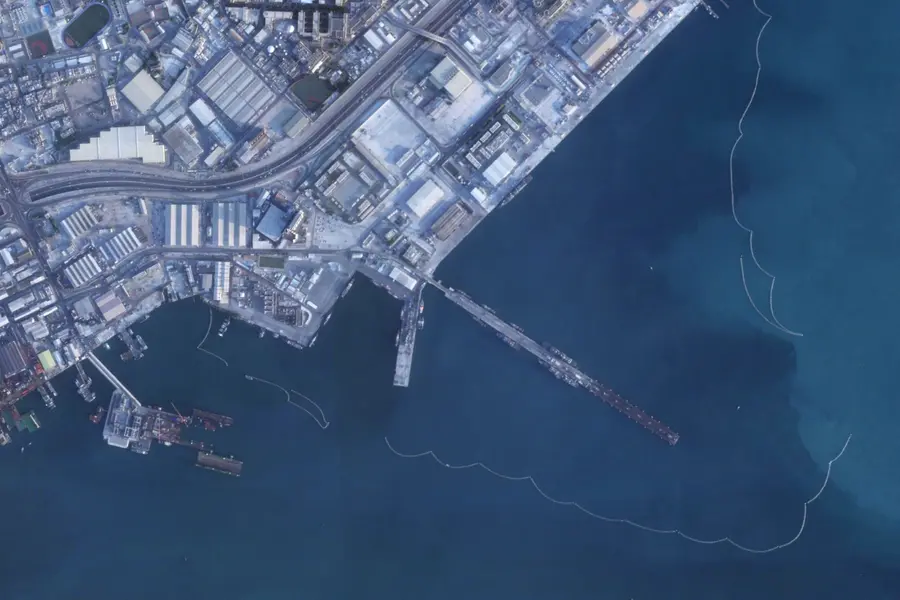
Bahrain hosts the headquarters of the U.S. Navy’s Fifth Fleet, responsible for operations in the Persian Gulf, Red Sea, Arabian Sea, and parts of the Indian Ocean. Following the strikes, this installation has taken on renewed strategic importance amid reports of Iranian missile retaliation.
Qatar
The Al Udeid Air Base near Doha serves as the forward headquarters of U.S. Central Command (CENTCOM). It is the largest U.S. military base in the region and houses around 10,000 troops. In large-scale air operations, Al Udeid functions as a primary launch and coordination hub for fighter aircraft and surveillance missions.
Kuwait
Kuwait hosts multiple U.S. facilities:
- Camp Arifjan – Forward headquarters of U.S. Army Central.
- Ali Al Salem Air Base – About 40 km from the Iraqi border, known as “The Rock” due to its remote desert setting.
- Camp Buehring – Established during the 2003 Iraq War, serving as a staging post for deployments into Iraq and Syria.
United Arab Emirates
- Al Dhafra Air Base, south of Abu Dhabi, supports U.S. Air Force missions and reconnaissance operations.
- Jebel Ali Port in Dubai, while not a formal base, is the largest U.S. Navy port of call in the Middle East and regularly hosts aircraft carriers and naval vessels.
Iraq
The United States maintains forces at:
- Ain Al Asad Air Base in western Anbar province — previously targeted by Iranian missile strikes in 2020 following the killing of General Qasem Soleimani.
- Erbil Air Base in the Kurdistan Region — a hub for coalition training, intelligence sharing, and logistical coordination.
Saudi Arabia
In 2024, approximately 2,321 U.S. troops were stationed in Saudi Arabia.
- Prince Sultan Air Base, about 60 km south of Riyadh, supports Patriot missile batteries and THAAD systems, designed to intercept incoming missile threats.
Jordan
Muwaffaq al Salti Air Base in Azraq hosts the U.S. Air Forces Central’s 332nd Air Expeditionary Wing, which conducts operations across the Levant.
Strategic Outlook
The joint US–Israel strikes represent one of the most serious direct confrontations with Iran in recent years. With retaliatory missile launches reported and airspace closures across the region, tensions remain extremely high.
From Bahrain’s Fifth Fleet to Qatar’s Al Udeid Air Base, the U.S. military network in the Middle East now stands at the centre of a volatile situation. Whether this crisis escalates further or moves toward containment will shape the region’s security landscape in the days ahead.
(Girish Linganna is an award-winning science communicator and a Defence, Aerospace & Geopolitical Analyst. He is the Managing Director of ADD Engineering Components India Pvt. Ltd., a subsidiary of ADD Engineering GmbH, Germany)
Published: 28 Feb 2026, 04:16 pm IST
Disclaimer: Kindly avoid objectionable, derogatory, unlawful and lewd comments, while responding to reports. Such comments are punishable under cyber laws. Please keep away from personal attacks. The opinions expressed here are the personal opinions of readers and not that of Mathrubhumi.
