
Emirates’ four-class A380 returns to Delhi, with Premium Economy expanding across all four daily flights.
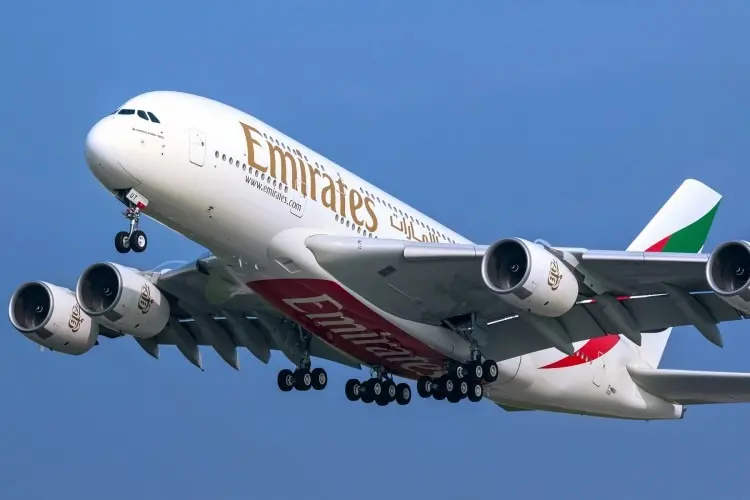
Emirates is bringing its Airbus A380 superjumbo, the world’s largest passenger plane to Delhi from October 25, giving Indian travellers another opportunity to experience one of the world's best-known passenger aircraft. The Dubai-based airline is introducing the double-decker aircraft on one of its four daily flights to the Indian capital, as it responds to strong travel demand and growing interest in premium air travel.
The move will make Delhi the third Indian destination served by Emirates' A380, after Mumbai and Bengaluru. The aircraft will operate alongside the airline's upgraded Boeing 777 aircraft, which will continue to serve the other three daily flights between Dubai and Delhi.
For passengers, the change is about more than the arrival of a larger aircraft. The A380 offers four classes of travel, including First Class, Business Class, Premium Economy and Economy Class. Emirates is also expanding its Premium Economy offering on the Delhi route, giving travellers more choices depending on their budget and comfort requirements.
A380 to operate one of four daily Delhi flights

Emirates will deploy the Airbus A380 on one of its four daily services between Dubai and Delhi from October 25. The remaining three services will be operated by retrofitted Boeing 777 aircraft with upgraded cabin interiors.
The airline currently operates 28 weekly flights between Delhi and Dubai. The introduction of the A380 will increase the range of cabin experiences available to passengers without changing the number of daily flights on the route.
The A380 is a double-decker aircraft designed to carry a large number of passengers. Its spacious cabin allows airlines to offer different travel classes on the same flight, from premium First Class accommodation to more affordable Economy Class seating.
Emirates previously flew an A380 to Delhi in 2010 to mark 25 years of its operations in India. The October introduction will bring the aircraft back to the route as a regular scheduled service.
Essa Sulaiman Ahmad, Senior Vice-President for West Asia and Indian Ocean, Commercial Operations at Emirates, said the Indian market had matured and continued to show extremely high demand for travel. He said the airline was looking at opportunities to expand its product offerings in India, with the A380 forming an important part of that approach.
Also read | How Germany responded when a passenger jet triggered a hijack alert over Europe
What can passengers experience on the A380?
The Emirates A380 operating to Delhi will feature four classes: First Class, Business Class, Premium Economy and Economy Class. This gives passengers a wider choice of comfort and service levels when travelling between India and Dubai.
According to aircraft configuration details cited in the supplied report, the aircraft will have 468 seats, comprising 14 in First Class, 76 in Business Class, 56 in Premium Economy and 322 in Economy Class.
First Class: A more exclusive journey
First Class is designed for passengers seeking a more private and premium travel experience. Emirates' A380 First Class product is known for its enclosed private suites on equipped aircraft, offering passengers greater personal space than a standard seat.
The airline's A380 product also includes premium cabin features designed to make long journeys more comfortable. The precise experience can vary according to the aircraft's configuration, so passengers should check the facilities available on their particular flight before booking.
Business Class: More comfort for business travellers
Business Class offers passengers a more spacious seating experience, with lie-flat seats on Emirates' A380 aircraft. This can be particularly useful for travellers who want to rest during the journey or arrive in Dubai ready for work and onward travel.
For business travellers flying between India and the UAE, the upgraded aircraft provides another premium option on a route used for corporate trips, meetings and international connections.
Premium Economy: An additional choice for comfort
One of the key changes for Indian travellers is the expansion of Emirates' Premium Economy cabin.
Premium Economy is positioned between Business Class and Economy Class. It is designed for passengers who want additional comfort without paying for a Business Class ticket.
Emirates has introduced features such as wider seats, additional personal space and enhanced cabin finishes in its Premium Economy product. The airline has also added features to the cabin, including an electric divider, wireless charging and a cocktail table, as part of further product enhancements.
The exact facilities available can vary by aircraft and cabin configuration. Passengers should confirm the features offered on their selected flight.
Economy Class: More choice on a large aircraft
Economy Class will remain available on the A380, making the aircraft accessible to travellers who want to fly on the superjumbo without paying for a premium cabin.
The A380's size allows Emirates to offer several travel classes on one aircraft. However, the number of seats in each class is determined by the airline's cabin layout, and Economy Class passengers should check the fare conditions, baggage allowance and other inclusions when making a booking.
Premium Economy expands across all four Delhi services
The A380 introduction is part of a wider cabin upgrade on Emirates' Delhi route.
The airline plans to offer Premium Economy across all four daily flights to the capital. The three Boeing 777 aircraft operating the other services will also feature upgraded interiors, with First Class, Business Class, Premium Economy and Economy Class available.
The addition of Premium Economy means some seats that could previously have been allocated to Economy Class will be assigned to the higher-priced cabin. Emirates has indicated that the overall seating capacity will remain broadly comparable, although the number of Economy Class seats will be lower on the upgraded aircraft.
For passengers, this means the choice of a more comfortable cabin will not be limited to the A380 service. Travellers will be able to consider Premium Economy on the other daily flights as well.
The airline is carrying out these upgrades as part of a wider retrofit programme covering 219 aircraft. According to the figures shared by the airline, around 104 aircraft have completed retrofits, including 53 A380s and nearly 60 Boeing 777s. New aircraft deliveries are also being configured with enhanced interiors.
The programme is intended to improve the passenger experience across more of Emirates' fleet.
Also read | In a farewell to the skies IAF Chief AP Singh flies final fighter sortie in Indigenous Tejas
Why India remains an important market for Emirates
India is a major market for Emirates, supporting both direct travel to Dubai and onward connections to destinations across its international network.
The airline currently operates 167 weekly flights across nine Indian cities, including Delhi, Mumbai and Kochi. Its Indian network connects travellers to Dubai, where they can continue their journeys to destinations across Europe, Africa, the Americas and other parts of Asia.
Emirates has said that it has carried more than 92 million Indian customers into and out of India over its 41 years of operations in the country. This reflects the importance of the Indian market to the airline.
The A380 deployment also points to the demand on the Delhi-Dubai route. A large aircraft can help an airline accommodate substantial passenger numbers on a single flight while offering several cabin options.
However, the introduction of the A380 does not mean every passenger will experience the same level of demand or that every fare will be premium-priced. The aircraft will carry passengers across all four classes, allowing Emirates to serve different travel budgets and preferences on the same service.
Travel demand remains strong, but recovery is uneven
Emirates' decision to upgrade its Delhi offering comes as the airline continues to restore its international network following the disruption caused by the conflict that began on February 28, 2026.
Essa Sulaiman Ahmad said Emirates had restored 96 per cent of its pre-conflict network, while passenger traffic remained at around 93 per cent of earlier levels. The airline was operating flights to 144 destinations globally, compared with approximately 150 before the conflict.
Although operations have recovered substantially, passenger demand has not returned at the same pace across all segments. Corporate travel, in particular, has taken longer to recover.
Ahmad said company travel advisories and restrictions linked to employee insurance policies continued to affect business travel decisions. In some cases, companies remained cautious about sending employees on trips even when they wanted to resume normal operations.
To reassure customers during the disruption, Emirates introduced greater flexibility in bookings. Ahmad said he had also contacted travel-trade partners during the first five to six days of the conflict to understand their requirements and provide reassurance.
The airline has since seen passenger loads improve as travellers regain confidence in its operations. The figures indicate that while airline networks can return to operation relatively quickly, passenger confidence and corporate travel decisions may take longer to normalise.
Against this background, the A380 introduction and the wider cabin upgrades are part of Emirates' effort to strengthen its product offering in an important market.
Will Emirates increase flights to India?
Emirates has said it continues to see strong demand for travel to and from India. However, any increase in the number of flights will depend on government decisions regarding air service entitlements between the two countries.
Ahmad said the airline's own studies indicated substantial demand in the Indian market, but changes to flight entitlements are not decisions an airline can make independently.
For travellers, an increase in air service entitlements could create opportunities for additional flights and greater choice. For now, Emirates is focusing on its existing network while upgrading the aircraft and cabin products available on key routes.
The airline's current schedule connects nine Indian cities to Dubai, with 167 weekly flights across the country. The A380 deployment to Delhi will add a new aircraft experience to this established network.
What the A380 launch means for Indian travellers
The arrival of Emirates' A380 on the Delhi route brings together three important developments, the continued importance of India as an aviation market, demand for travel between India and Dubai, and the airline's investment in improving its cabin products.
Passengers travelling to Dubai will have the option of flying on a four-class superjumbo, while Premium Economy will also be available across all four daily Delhi services. The upgraded Boeing 777 aircraft will provide another option for those who prefer a different departure time.
The A380's introduction also reflects how airlines are using different aircraft and cabin products to serve markets with substantial passenger demand. Rather than relying only on additional frequencies, airlines can deploy larger aircraft and improve the experience offered across different fare categories.
For Indian travellers, the key benefit is greater choice. Whether travelling for business, leisure, family visits or onward international connections, passengers will have more opportunities to select a cabin that suits their needs and budget.
As Emirates continues to restore its network and invest in aircraft upgrades, the Delhi route will be an important market to watch for changes in passenger demand, premium travel and international connectivity.
Published: 15 Oct 2026, 03:48 pm IST
ABOUT THE AUTHOR

Related Topics
Disclaimer: Kindly avoid objectionable, derogatory, unlawful and lewd comments, while responding to reports. Such comments are punishable under cyber laws. Please keep away from personal attacks. The opinions expressed here are the personal opinions of readers and not that of Mathrubhumi.