
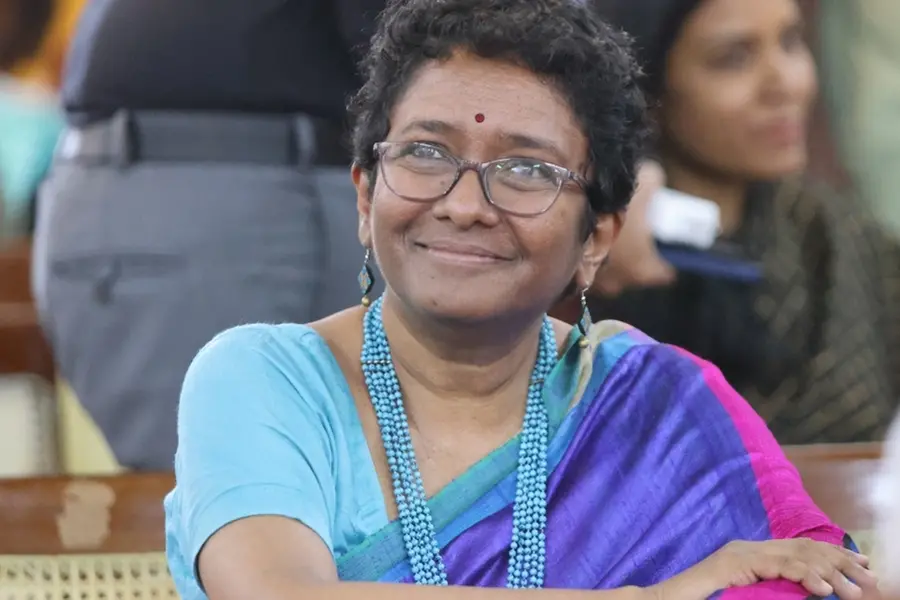
In an interview with Mathrubhumi, Chief Secretary Sarada Muraleedharan discusses the discrimination faced by women, particularly dark-skinned women, who are often categorised as black women in our society, and highlights the urgent need for societal change.
Why was your original post withdrawn?
Within an hour of posting, the response was overwhelming. When I saw it extending beyond my circle of acquaintances and friends, I realised it was becoming controversial. As I am nearing retirement, I wanted to step away from public debates peacefully, which is why I withdrew the post.
However, many people pointed out that this was not just a personal issue but a broader societal concern. They urged me to use my position to highlight the conversation. I agreed, recognising that embracing my identity openly could contribute positively to the discussion on discrimination and identity.
Who encouraged you to repost and bring this issue to light?
My husband and former Chief Secretary Dr V Venu played a key role in convincing me. Several friends also insisted that this issue should not be ignored.
Was the remark made to you directly? What was the context?
Yes, it was said to me directly. However, I prefer not to disclose the person or the specific situation.
Why didn’t you respond at the time?
I am not someone who reacts immediately. I prefer to reflect before responding.
Have you faced more discrimination as a woman or because of your skin colour?
The two cannot be separated. Discrimination affects both women and black women equally. My blackness and my womanhood are intertwined—I cannot separate one from the other.
Even after reaching a high-ranking position, does discrimination persist?
Yes, because the problem lies within society, not in one’s position of authority. Discriminatory attitudes are deeply ingrained and are reflected in all spaces, including positions of power.
Did you experience similar discrimination while holding key positions outside Kerala?
Yes, on many occasions. In Kerala, we can speak openly about these issues. Elsewhere, discussing them is much more difficult.
Did you face such biases while working with the public in Kudumbashree?
Yes, but often, discrimination is disguised as well-intentioned remarks. For example, people have told me with kindness, "It’s okay even if you’re black, at least you’re looking pretty." Such statements imply that blackness is a disadvantage that needs to be compensated for, which is deeply problematic.
You mentioned that this experience was painful. Do past experiences of discrimination still affect you?
I have faced many painful moments, but I don’t dwell on them. My nature is to feel the pain intensely at the moment, process it, and move on.
What do you think about comparisons between you and your husband in terms of governance, using "Black and White" as a metaphor?
You should ask the person who made that comparison. My husband and I have different governance styles. Many assume that because we are married, we function the same way. That’s a misconception—we are independent professionals with distinct approaches to leadership.
Did the discussion around your post unfold as expected?
Yes. For instance, the Uttarakhand Chief Secretary, a woman, reached out to tell me that my post was being widely shared in IAS circles. She said it reminded her of her own childhood experiences.
Opposition leader V.D. Satheesan also called me, sharing his mother’s experiences with discrimination. There were two types of reactions:Some questioned why I was bothered by such mere remarks and others related to my experience and shared their own stories.
Those who dismiss these issues speak from a privileged perspective. They have never experienced discrimination firsthand. Those who have suffered because of their identity understand why this conversation is necessary.
Why do such discriminatory remarks persist despite societal progress?
Discrimination exists in our homes, social circles, workplaces, and subconscious biases. The key is to acknowledge it and challenge our own internalised prejudices. My children have helped me realise this over time.
What message do you have for those facing discrimination?
Your identity is not a flaw—it is your uniqueness. Be proud of who you are. Believe in yourself and recognise your worth. When you embrace your identity with confidence, you send a powerful message to society.
How did your children react to your response?
They were proud and happy. They appreciated that I spoke up. They also mentioned that because our home provided a safe space free from such biases, they never internalised any negativity from the outside world.
What more needs to be done to combat discrimination effectively?
Black individuals, whether celebrities or professionals, must increase their visibility. They should speak out, take leadership roles, and serve as role models. The more society sees and interacts with us in all spaces, the faster perceptions will evolve.
Only through representation, visibility, and continuous dialogue can we reshape societal attitudes and create a more inclusive world.
(The article appeared in the editorial page of Mathrubhumi on March 27 and was translated by Warda Zain)
Published: 27 Mar 2025, 11:04 am IST
ABOUT THE AUTHOR

Related Topics
Disclaimer: Kindly avoid objectionable, derogatory, unlawful and lewd comments, while responding to reports. Such comments are punishable under cyber laws. Please keep away from personal attacks. The opinions expressed here are the personal opinions of readers and not that of Mathrubhumi.