
For India, watching from the sidelines of this new arms race, the implications are profound
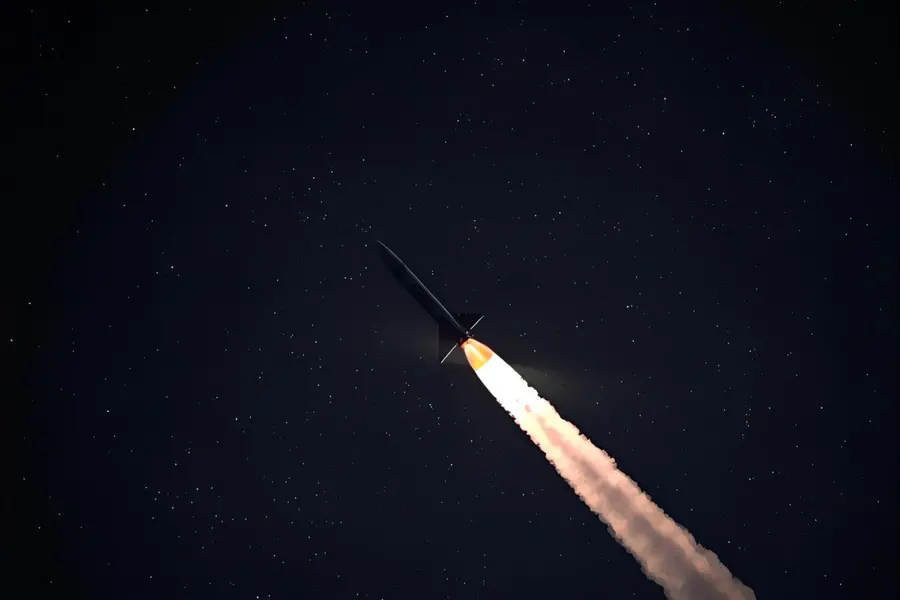
Russia has just tested what may be the most dangerous weapon ever created, a cruise missile powered by a tiny nuclear reactor that can fly around the world for days without stopping, dodging every defence system known to man.
On October 21, General Valery Gerasimov stood before President Vladimir Putin and delivered news that should worry every military planner from Washington to New Delhi: the Burevestnik missile had just flown 14,000 kilometres in 15 hours, and, according to the General, “this is not its limit.”
Think about that for a moment. A missile that doesn’t need to refuel. A missile that can circle the planet, waiting for the perfect moment to strike. A missile that flies so low, just 50 to 100 metres above the ground that radar systems can barely see it coming. Unlike the intercontinental ballistic missiles we’ve grown accustomed to fearing, which arc high into space on predictable trajectories that defenders can track and intercept, the Burevestnik - NATO calls it the SSC-X-9 Skyfall, but Russia named it after the storm petrel, a bird that flies endlessly over the ocean, hugs the terrain like a predator stalking its prey. It zigzags, changes direction constantly, and can approach a target from angles no one expects. How do you defend against something that could be anywhere, coming from any direction, at any time?
The Americans mastered ballistic missile defence by learning to predict where an incoming warhead would be. Massive radar installations and interceptor missiles wait along probable flight paths, ready to knock down threats. But the Burevestnik renders this entire strategy obsolete. There is no predictable path. There is no moment when defences can be concentrated. The missile could fly over the North Pole, loop around South America, cross the Pacific, and then suddenly turn toward its target. Or it could stay airborne for three days, conserving its approach until defences are exhausted and attention has wandered. This isn’t just a technological leap, it’s a fundamental change in the mathematics of nuclear deterrence.
General Gerasimov’s briefing revealed something else that should keep defence ministers awake at night: the Burevestnik achieved this 14,000-kilometre test flight, but it wasn’t pushing its limits. Conventional cruise missiles, like Russia’s own Kh-102, can manage about 4,500 kilometres before their fuel runs out. The Burevestnik, powered by what is essentially a flying nuclear reactor, laughs at such constraints. Some analysts believe it could theoretically stay aloft for weeks if needed, though the psychological impact of a weapon that could be circling overhead, invisible and unstoppable, may be its most powerful feature.
Of course, building such a weapon isn’t simple, and Russia has paid a price for this capability. A Reuters investigation, citing satellite analysis by weapons expert Decker Eveleth, identified a facility 475 kilometres north of Moscow where nine launch pads were spotted under construction in August 2024. Previous Russian tests of nuclear-powered missiles ended in disaster, including a 2019 explosion at a testing site that killed several scientists and released radiation. The world mocked Russia then, calling the project a dangerous fantasy. They’re not mocking anymore. The October 21 test suggests Russia has solved the engineering challenges that make a nuclear-powered cruise missile viable.
For India, watching from the sidelines of this new arms race, the implications are profound. We share a border with China, which is surely taking notes on Russia’s success with the Burevestnik. If Beijing develops a similar system, and it has the technological capability, the entire strategic balance in Asia could shift overnight. Our current missile defence systems, designed to handle Pakistani and Chinese ballistic missiles, would need a complete rethink. The same goes for every nation that has invested billions in defence networks built on the assumption that incoming threats follow the laws of physics that have governed warfare for the past seventy years.
Putin has long promised that Russia would develop weapons the West couldn’t counter. In 2018, he unveiled an animated presentation showing Russian missiles evading American defences, and Western analysts dismissed much of it as propaganda. But one by one, some of those “fantasy weapons” have materialised. The Avangard hypersonic glide vehicle entered service. The Kinzhal air-launched ballistic missile has been used in Ukraine. And now, the Burevestnik appears to have moved from conception to reality. This is no longer a PowerPoint presentation — it’s a working weapon system with launch pads under construction and successful test flights logged.
The world is entering an age where the old rules of deterrence may not apply. When missiles had limited range and predictable paths, nations could calculate risks and responses. When a weapon can come from anywhere, stay in flight indefinitely, and change course at will, those calculations become impossible. We are watching the birth of a weapon that exists in a permanent state of maybe — maybe it’s there, maybe it’s not, maybe it’s coming for you, maybe it’s circling somewhere else. That uncertainty, as much as the destructive power of its nuclear warhead, is what makes the Burevestnik a true game-changer. The storm petrel has taken flight, and the world’s military planners are scrambling to figure out how to bring it down. So far, they haven’t found an answer.
Published: 27 Oct 2025, 02:58 pm IST
Disclaimer: Kindly avoid objectionable, derogatory, unlawful and lewd comments, while responding to reports. Such comments are punishable under cyber laws. Please keep away from personal attacks. The opinions expressed here are the personal opinions of readers and not that of Mathrubhumi.
