
MBDA has successfully tested its next-generation MICA NG missile, a major development that could significantly strengthen India's future Rafale fleet and air combat capabilities.
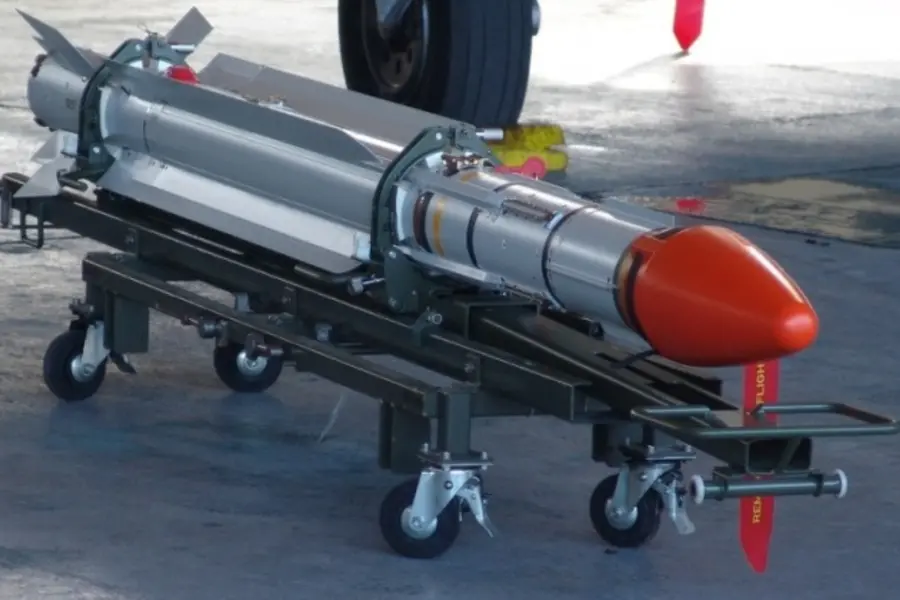
There is exciting news for India's air defence. As India prepares to expand its Rafale fighter jet fleet by buying 114 more aircraft from France, the famous missile maker MBDA has reached an important milestone.
The company has successfully developed the MICA NG, which stands for New Generation Interception, Combat and Self-Defence Missile. In simple words, this is a brand-new air-to-air missile that will arm the Rafale jets in the years to come, making them far more powerful in battle.
MBDA recently announced that it carried out the second development test firing of the MICA NG missile from a Rafale fighter jet. This is a big step forward, as it brings the missile closer to being used in real combat. The very first test was done in June 2025, which marked the beginning of flight testing for this next-generation weapon. Each successful test means the missile is getting ready for action.
Why does this matter so much for India? Recently, India sent a Letter of Request to France for a government-to-government deal worth about ₹3.25 lakh crore to buy 114 Rafale jets for the Indian Air Force. If this deal goes through, India's Rafale fleet will grow a lot, and so will its need for advanced weapons like the MICA NG that are designed to fly with these jets.
Let us understand what makes this missile special. The MICA NG comes in two main versions. One version uses an infrared sensor that tracks the heat coming from an enemy aircraft, just like how you can feel the warmth of a hot engine. The other version uses an active radar seeker that sends out its own radar signals to find, track, and lock onto enemy targets all by itself. Having two options gives pilots more flexibility in different battle situations.
Both versions have a new dual-pulse motor. This is a clever idea. Normally, a missile burns all its fuel at once, like a matchstick that flares up and dies quickly. But the dual-pulse motor can ignite twice during flight. The first burst pushes the missile towards its target, and the second burst gives it extra speed and energy later in the journey. Because of this, the missile stays fast for a longer time, can make sharper turns, and can chase enemy aircraft that try to dodge it. So whether the fight is far away beyond the pilot's eyesight or a close-range dogfight, the MICA NG can handle it well.
The new missile is also much more powerful than the older MICA. It has about 40% more range, meaning it can strike enemy targets up to 100 kilometres away. This allows pilots to spot and destroy threats from a great distance, long before the enemy comes close.
To understand the upgrade, we must look at the old MICA missile, which was introduced in the 2000s. Over time, it became weaker compared to the latest missiles from the United States, China, and Russia. Its biggest problem was the old-style solid-fuel rocket motor, which burned up its fuel soon after launch. This reduced the missile's speed, range, and power in the final stage of flight, which is exactly when it needs to hit the target.
Meanwhile, newer missiles like the European Meteor, the American AIM-120D, and the Chinese PL-15 and PL-16 were built to hit targets at much longer distances. The Meteor, for example, uses a ramjet engine that keeps producing thrust throughout the flight. This gives it a large "no-escape zone", which means once it is fired, the enemy aircraft has very little chance of getting away.
The MICA NG is designed to fix the weaknesses of the old missile. Along with its dual-pulse motor, it uses an advanced AESA radar seeker that can detect targets better and resist enemy jamming, which is when the enemy tries to confuse the missile with fake signals. It also has a new-generation infrared seeker that is more sensitive and smarter, allowing it to track targets very accurately.
This missile is expected to enter service around 2030 and will be used on the Rafale F4 and Rafale F5 jets. It will work alongside the Meteor missile, giving pilots a lighter and more affordable choice. While France may not be building the world's single most advanced missile, the MICA NG is still a modern and capable weapon, far from being outdated.
In terms of size, the MICA NG weighs 112 kilograms, is 3.1 metres long, and has a diameter of 160 millimetres. This makes it compact and lightweight, so it can be easily carried by modern fighter jets like the Rafale. There is also a special version called the VL MICA NG, which can be launched vertically to defend warships and important ground sites from enemy aircraft, drones, and missiles.
Finally, this news is even more important for India because the Indian Air Force already uses MICA missiles on its Rafale jets. Just a few weeks ago, MBDA and the IAF signed an agreement to build an Indian facility for the maintenance, repair, and mid-life upgrade of these missiles. The IAF will run this facility, while MBDA will provide the equipment, tools, technical knowledge, and training. This will speed up servicing, cut delays, and keep India's missile fleet always ready for action.
(Girish Linganna is an award-winning science communicator and a Defence, Aerospace & Geopolitical Analyst. He is the Managing Director of ADD Engineering Components India Pvt. Ltd., a subsidiary of ADD Engineering GmbH, Germany.)
Published: 08 Jun 2026, 08:24 pm IST
Disclaimer: Kindly avoid objectionable, derogatory, unlawful and lewd comments, while responding to reports. Such comments are punishable under cyber laws. Please keep away from personal attacks. The opinions expressed here are the personal opinions of readers and not that of Mathrubhumi.
