

In a country like India, where many states have international borders or coastlines, regions are vulnerable to both land-based and sea-based drug trafficking.
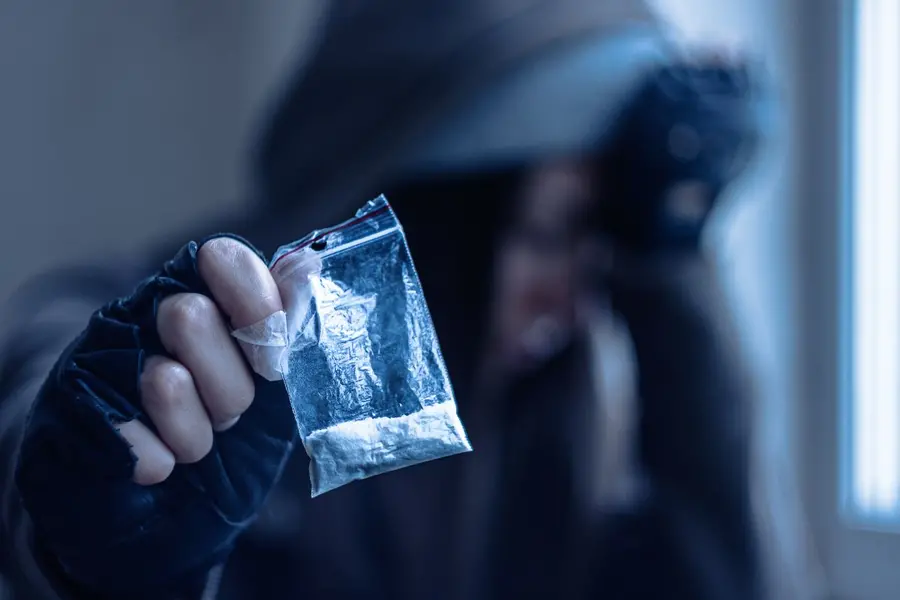
Drug trafficking is a global phenomenon and a borderless threat, posing serious developmental challenges to many nations. It undermines the peaceful coexistence of communities. The types and prevalence of borderland-related crimes and security threats are innumerable, including human trafficking, arms trafficking and wildlife trafficking, apart from drug trafficking. While investigating borderland trafficking, enforcement agencies probe the modes of operation of perpetrators of borderland-related crimes and security threats, the factors promoting such crimes and threats, the victims and perpetrators involved, mitigation responses, the challenges faced in addressing them, and possible solutions.
In a country like India, where many states have international borders or coastlines, regions are vulnerable to both land-based and sea-based drug trafficking. Complicating matters further, each state has different political parties at the helm of power, different administrations, and distinct socio-political and economic issues. Consequently, laxity by one state in controlling drug trafficking can have repercussions in neighbouring states.
Against this backdrop, the Kerala government has initiated Operation Toofan to intensify the crackdown on drug traffickers and peddlers. The move was necessitated by rampant drug abuse among youth, amid fears that if the trend continues over the next decade, the state could lose an entire generation. At the same time, various synthetic drugs are flowing into Kerala from neighbouring states.
Drug abuse among young people and the problems associated with this behaviour have been part of human history for a long time. What is different today, however, is the increased availability of a wide variety of synthetic substances and the declining age at which experimentation with these substances is taking place.
In this context, past experience in Kerala shows that cracking down on drug traffickers and consumers and prohibiting drug use alone cannot prevent or solve illicit drug-related problems in this era of globalisation. As a coastal state, Kerala is in close proximity to international drug trafficking routes. Moreover, large-scale drug consumption among youth is often characterised by a breakdown of the social fabric and social disorder. For example, Kerala is witnessing high rates of divorce, alcoholism, drug consumption and sexual violence. Such developments can lead to anxiety, hopelessness or anger within communities, which in turn may result in political consequences and possible conflict.
At the same time, law enforcement agencies tend to consider any seizure of drugs as an indication of organised crime activity. The drug metrics they produce are usually considered sensitive data and are therefore not easily accessible to the general public. Nevertheless, some consensus has emerged around targeting the ‘big four’ drugs — cannabis (both resin/hashish and leaves/marijuana), cocaine, opiates (heroin, etc.) and synthetic drugs. However, what these labels actually encompass, along with the rationale behind these choices, remains contested, as “a business involving a willing seller and a willing buyer is seen as completely legitimate”, and drug peddling is no exception.
This phenomenon is further magnified when drug flows are measured by the very agency tasked with combating them. Law-enforcement agencies may have incentives to exaggerate the monetary value of seized drugs. In addition, political pressures may lead different agencies to claim credit for the same seizure or arrest, creating a risk of double-counting. Massive arrests can also be made more with a view to impressing state and Central government agencies (“give them the data they want”) than to actually fighting the drug menace. As a result, such arrests are often selective, targeting “small fish”, and fail to translate into an actual reduction in drug flows.
Recognising the scale of the challenge, Union Home Minister Amit Shah on January 9, 2026, announced a crackdown on narcotics from March 31 through a three-year nationwide campaign aimed at eradicating the drug menace. Stressing that no single state can tackle the drug crisis in isolation, Shah said fragmented national approaches allow drug cartels to exploit legal loopholes and expand their influence. He reiterated the government’s commitment to Prime Minister Narendra Modi’s vision of a “Drug-Free India by 2047”, saying Indian agencies had prepared a roadmap to dismantle narcotics syndicates under a strict “Zero Tolerance” policy.
“Not one gram of narcotics will be allowed to enter India or use the country as a transit route,” he said.
The Home Minister, however, devoted much of his address to the lack of global consensus on anti-drug laws, arguing that inconsistent definitions of banned substances and varying punishments across jurisdictions had weakened international enforcement efforts.
“Unless there is a high degree of global alignment on what is designated as controlled substances, as well as common standard penalties for drug trafficking, drug cartels will continue to take advantage of the inconsistencies in policy,” he said.
To address this, Shah proposed a four-point framework for international cooperation: a uniform global definition of prohibited narcotics, standardised punishments for trafficking offences, streamlined extradition of drug kingpins, and real-time intelligence sharing among countries.
“A world of 8 billion people, 195 nations, and 250,000 kilometres of international borders cannot tackle the problem of drugs through fragmented approaches,” he said.
Meanwhile, states across southern India have launched their own initiatives to tackle the menace. The Kerala government has launched “Operation Toofan: The Narco Hunt”, featuring intensive vigilance and school-level awareness programmes led by MLAs, the police and the Excise Department. The state-level crackdown specifically targets drug syndicates, synthetic drug trafficking and supply chains operating near educational institutions.
Similarly, the Tamil Nadu government has launched “Drug-Free Tamil Nadu”, a multi-sectoral campaign aimed at eradicating narcotics through policing, community vigilance and education. Karnataka’s anti-drug campaigns primarily focus on “Nasha Mukt Campus” (Drug-Free Campus) initiatives to protect youth from substance abuse through awareness drives, policy directives and community engagement programmes.
The Andhra Pradesh government is running the Elite Anti-Narcotics Group for Law Enforcement (EAGLE) task force, which includes grassroots community rallies, school-based awareness programmes and anonymous reporting drop boxes in educational institutions. Telangana’s anti-drug initiative is primarily driven by the Telangana Anti-Narcotics Bureau (TGANB), the EAGLE (Elite Action Group for Drug Law Enforcement) task force, and “Operation Sankalp”, aimed at dismantling drug networks and educating youth.
Yet, despite intensified campaigns by every state and the Central government, the drug menace continues to grow.
This underscores the need for a multi-sectoral approach within the public healthcare system to curb the risk of social, economic and health crises related to drugs and substance abuse in Kerala. Law enforcement through arrests, prosecution and disruption of drug distribution networks remains an important strategy. However, corruption, poor community-police relations and a lack of awareness about the unique provisions of the Narcotic Drugs and Psychotropic Substances Act continue to be major hurdles.
Beyond enforcement, awareness creation, counselling and economic empowerment are important forms of social support. Support through love, acceptance and protection provided by families, communities, faith-based organisations and non-governmental organisations has been reported as helpful in addressing challenges such as stigma, family problems and unemployment.
In this regard, anti-drug campaigns can draw inspiration from the recently concluded ‘Leaders’ Declaration on the Fight Against Drug Trafficking’, held in Évian-les-Bains, a commune in the Haute-Savoie department in eastern France, on June 16, 2026. The declaration stated:
“We will spare no effort to reduce demand and minimize the adverse public health and social consequences of drug use. We will do so by adopting a comprehensive approach that includes awareness-raising and health measures for prevention, treatment, risk reduction and recovery. We will enhance awareness-raising and knowledge-sharing on emerging drug threats, support effective law enforcement and public health responses, and strengthen national drug observatories, or similar entities, and early warning mechanisms on new substances and consumption patterns, with a particular focus on those especially exposed.”
The author is former Director General of National Academy of Customs, Indirect Taxes & Narcotics
Published: 22 Jun 2026, 03:17 pm IST
ABOUT THE AUTHOR
Disclaimer: Kindly avoid objectionable, derogatory, unlawful and lewd comments, while responding to reports. Such comments are punishable under cyber laws. Please keep away from personal attacks. The opinions expressed here are the personal opinions of readers and not that of Mathrubhumi.