

Witness how tiny figures of gods, goddesses, known as Bommai golus capture the essence of Navarathri's festive spirits.
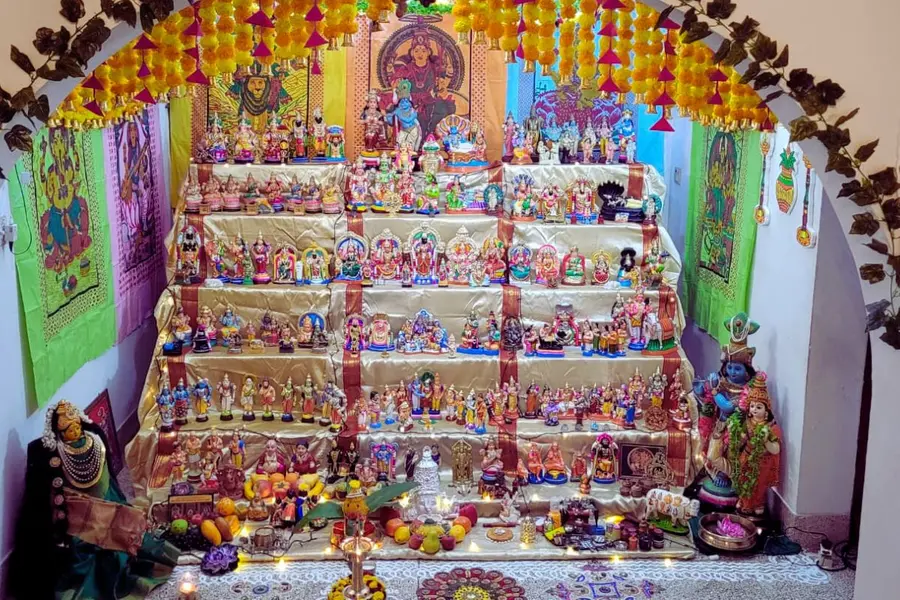
The beautiful notes of “Sri Chakra Raja Simhasaneswari Sree Lalitha Ambike”, a ragamalika keerthanam, drift through the air, blending with the fragrant tendrils of incense and the delicate scent of jasmine. The vivid Bommai golus are carefully arranged across the living hall, each doll reflecting decades of devotion and artistry.
TR Bhageerathy, a homemaker from Chirayath Madom, Irinjalakuda, Thrissur, moves gracefully with an aarti in the room, offering her prayers to Divine Shakti. The golus she tends have been preserved for more than 90 years, a cherished inheritance passed down through generations.
Speaking to Mathrubhumi, Bhageerathy shares her memories, the family’s time-honoured practices, and the cultural significance of Navaratri and the enduring tradition of Bommai golu, keeping the festival’s spirit alive for future generations.
The essence of Navarathri
Navarathri is essentially the worship of the Divine Mother in her many forms, Durga, Lakshmi, Saraswathi, and other forms of 'Sakthi', namely Shailputri, Brahmacharini, Chandraghanta, Kushmanda, Skandamata, Katyayani, Kaalratri, Mahagauri, and Siddhidatri, says Bhageerathy.
Each day is dedicated to a different aspect of the Goddess. We prepare naivedyam offerings, mainly navadhanyam (nine sacred pulses that include rice, wheat, green gram, chickpeas, black gram, horse gram, sesame seeds, and white beans), payasam, and other simple dishes, as part of the rituals.
"For us, Navarathri is a celebration of womanhood itself,” she said.
Guests are invited to visit the golus. When they come, we offer return gifts to women that include turmeric, kumkum, betel leaves, sweets, and sometimes pieces of silk cloth, as tokens of respect and gratitude. It is our way of honouring their presence and gracing the golus.
Rituals of music and prayer
Navarathri evenings are marked by music and devotion. “Chanting the Lalitha Sahasranamam or Lalithambal Shobhanam is common,” explains Bhageerathy. “But music and dance are equally important. Singing together brings a sense of unity and joy. It is a season where devotion, art, and community blend beautifully.”
Traditionally, golus are displayed for nine days. “But this year, it extends to eleven,” Bhageerathy explains. The golus are arranged on padis(steps) in odd numbers. The dates depend on the lunar calendar. On Amavasya or Karutha Vavu, the golus must be set up.
The Goddess is symbolised through a 'kalasham', a silver pot filled with rice, turmeric, and coins, decorated with mango leaves and topped with a coconut. “This ritual is usually done by married women,” she adds.
Stories in clay, wood, and colour
Among the most significant are the Marappachi dolls, carved out of sandalwood or redwood. “They represent family unity, father, mother, and child, and are considered symbols of well-being,” Bhageerathy says.
Figures of gods and goddesses are common, such as Krishna, Shiva, different forms of Devi, etc. But there are also themed sets like Arupadai Veedu (Lord Muruga’s six abodes), Thevaram stories (linked to Lord Shiva), Aandal Kalyanam, and Meenakshi Kalyanam are some among them. Each display is like a living retelling of our sacred lore.
Golu through the ages
Bhageerathy proudly shows the family’s oldest golus, some dating back over 90 years. “These dolls are blessings from our ancestors. My son Ashok says they are like family treasures, inherited and preserved with care.”
Ashok explains how they keep the dolls intact: “We wrap the golus in cotton cloth to protect them from humidity and insects. That is why even the oldest ones remain in good condition. But times have changed. Earlier, golus were made of mud and clay. Now, fibre, plaster of Paris, and even plastic are common,” he says.
“The older dolls had a natural glow and fine finish. Today’s machine-made ones look artificial, with darker colours and less charm.”
Despite changing times, one belief endures: once you begin the tradition of keeping golus, it must never be broken. “That is why we continue, year after year,” Bhageerathy adds.
Published: 22 Sept 2025, 06:25 pm IST
ABOUT THE AUTHOR
Disclaimer: Kindly avoid objectionable, derogatory, unlawful and lewd comments, while responding to reports. Such comments are punishable under cyber laws. Please keep away from personal attacks. The opinions expressed here are the personal opinions of readers and not that of Mathrubhumi.