
Explore Kerala`s prominent Saraswati temples and traditions for Vijayadashami. Discover the significance of Vidyarambham, the ritualistic initiation into learning.
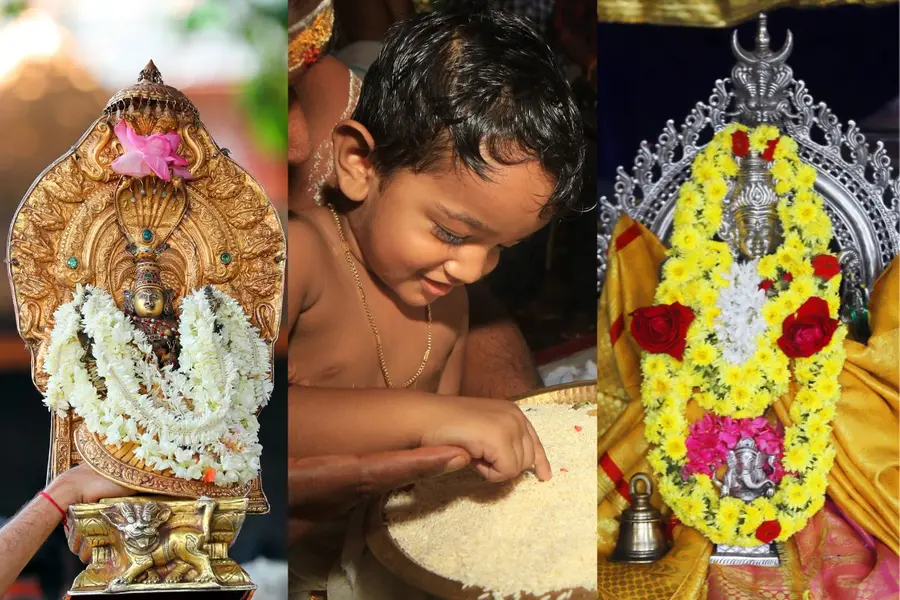
According to Hindu and Saktheya (Shaktism) traditions, Navaratri, is a festival of worship and arts dedicated to Adiparashakti, the divine goddess. The Sanskrit term ‘Navaratri’ literally means nine nights. Among these, the last three days, Durgashtami, Mahanavami, and Vijayadashami, hold special significance. Vijayadashami marks the day when the Goddess triumphed over the demon Mahishasura, as per mythology. While this day is celebrated as Dussehra in North India, in Kerala, it is observed with devotion and rituals at homes and temples alike.
During Navratri,Goddess Saraswati, the deity of knowledge and learning, receives special veneration during these nine days, with numerous temples across Kerala performing dedicated pujas in her honour.
One's Navarathri will only be complete on visiting any Saraswati temple on the day of Vijayadashami. Here is a quick guide to some prominent Saraswati temples spanning across Kerala for worship and to take kids for Vidyarambham, the initial opening of them to the world of letters.
Prominent Saraswati Temples in Kerala
- Panachikkad Dakshina Mookambika Temple, Kottayam
Often called the Dakshina Mookambika, this ancient temple is renowned for its unique rituals. Here, Lord Vishnu is the primary deity, with Goddess Saraswati worshipped after him. The idol, originally from a forest shrine, faces east and is housed within a thatched structure, symbolising her divine presence.
- Dakshina Mookambika Temple, North Paravur, Ernakulam
This temple mirrors Panachikkad in its devotion to Mookambika. Goddess Saraswati, clad in white and seated on a white lotus, holds a book and a lotus in her left hands and an alphabet and explanatory seal in her right. Legend has it that the ruler of Paravur was blessed in a dream to enshrine the goddess locally when his journey to Kollur became difficult due to old age. The lotus pond surrounding the sanctum symbolises the Souparnika River, while sub-deities enhance the spiritual ambience.
- Poojappura Saraswati Temple, Thiruvananthapuram
The temple is historically significant for Navratri celebrations. Devotees offer Kavadis, such as Agnikkavadi, Mayilkavadi, and Suryakavadi, on Vijayadashami.
- TV Puram Swayambhu Saraswati Temple, Vaikom
The goddess here is believed to sit on the back of a swan, holding a veena, sacred scriptures, and amrita kumbha.
- Thattarambalam Sree Saraswati Devi Temple, Mavelikkara, Alappuzha
Dating back nearly a thousand years, this temple was built by a goldsmith from Tamil Nadu under the patronage of the Odanadu king.
- Varkala Sivagiri Sharada Temple, Varkala, Kollam
Consecrated by Sree Narayana Guru in 1912, this temple enshrines Saraswati on a white lotus. Navratri and Vidyarambha ceremonies draw devotees from across the state.
- Shri Pallikunnu Mookambika Temple, Kannur
Modelled after Kollur Mookambika, Pallikkunnu is a key pilgrimage site in North Kerala. Its main festivals include Navratri and Pooram.
Other famous temples
- Kollur Shri Mookambika Devi Temple, Karnataka
One of South India’s most revered pilgrimage centres is located on the southern bank of the Souparnika in Kollur, Karnataka. Nestled at the foothills of the Kudajadri Hills, this magnificent temple is dedicated to Goddess Mookambika. The temple warmly welcomes people of all castes and religions, making it a place of devotion and inclusivity for everyone.
- Padmanabhapuram Thevarkettu Saraswati Temple, Thiruvananthapuram
Navarathri is an important festival for the residents of Thiruvananthapuram. The temple rituals were initiated by Swathi Thirunal, the Maharaja of Travancore. The goddess is ceremoniously taken from the palace to the Padmanabha Swamy Temple for puja, accompanied by nine kirtans composed by the king in nine ragas.
Vidyarambham traditions in Kerala
Kerala is home to numerous temples renowned for Vidyarambham, the ritual initiation of children into learning. Beyond the temples dedicated primarily to Goddess Saraswati, many Devi temples across the state, such as Chandanakavu, Pattupurakkavu Bhagavathi temple, Kalpathi, and Kumaranellur Devi Temple, play an important role in this tradition. These temples not only preserve local customs and cultural programmes but also celebrate multi-form goddess worship throughout the day. For instance, at Chottanikkara Temple, Saraswati is revered in the morning, Lakshmi in the afternoon, and Durga in the evening.
In recent years, many organisations and centres across Kerala, irrespective of religious background, have also begun performing Vidyarambham, reflecting the festival’s universal significance in education and culture.
The ritual
The ritual itself is both symbolic and endearing. Typically, a priest or elder guides the child, usually between the ages of two and five, through the ceremony. The child’s finger is gently guided to write auspicious letters, such as the Sanskrit characters representing Goddess Saraswati’s name, on their tongue with a piece of gold. The child is then led to trace letters on a mound of rice grains, symbolising knowledge, prosperity, and the nourishment of learning.
Kerala’s Navratri and Vijayadashami celebrations thus weave a rich tapestry of devotion, tradition, art, and education, making the state a unique centre for spiritual and cultural observances.
Published: 01 Oct 2025, 09:53 pm IST
Disclaimer: Kindly avoid objectionable, derogatory, unlawful and lewd comments, while responding to reports. Such comments are punishable under cyber laws. Please keep away from personal attacks. The opinions expressed here are the personal opinions of readers and not that of Mathrubhumi.
