
The Kerala digital revolution is more than about smartphones and connectivity. It is a matter of empowerment, inclusion, and equity.
Kerala is ready to write a new chapter in its centuries-old history of social reform and progressive administration. On August 21, 2025, Chief Minister Pinarayi Vijayan will formally announce in Thiruvananthapuram that the state has attained an accomplishment no other place in India has yet to achieve: one hundred percent digital literacy.
The declaration follows decades of planning, relentless enforcement, and education of more than 21.87 lakh citizens above the age of fourteen. For a community that initially amazed the country by attaining almost comprehensive conventional literacy in the late twentieth century, this new achievement represents a shift into the digital era.
The declaration is symbolic; it is a revolution that is already remaking Kerala's economy, education system, health, governance, tourism, entertainment, and even the lives of its oldest citizens.
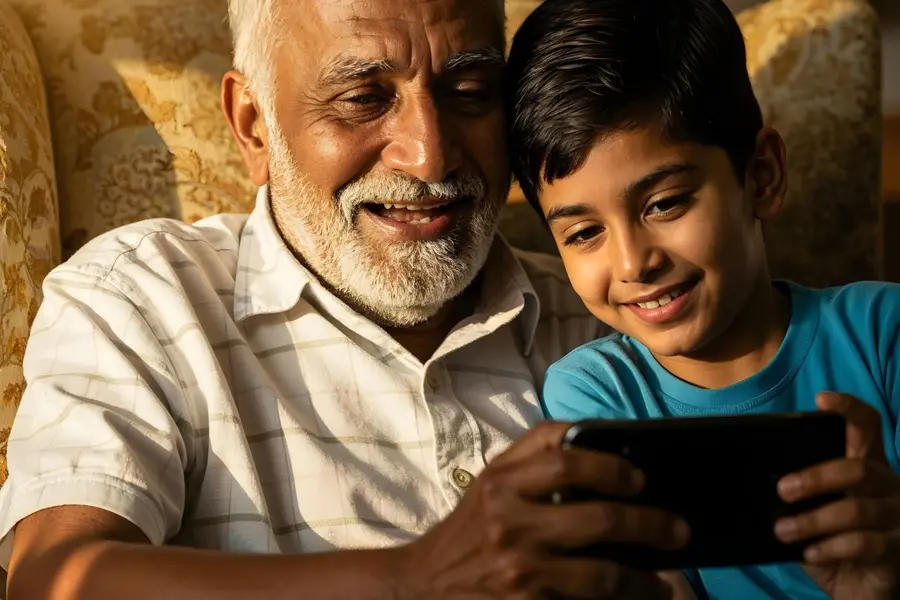
Nothing better describes this revolution than the tale of MA Abdullah Maulavi, who reached 105 years of age this year. Living testament to how digital education has no age divide, Abdullah was taught how to operate smartphones, view YouTube, and scroll through Facebook as part of the state's Digi Keralam scheme. A centenarian surfing the web with ease is not just a heart-warming tale but proof of Kerala's determination to leave no citizen behind in the digital race. Abdullah's generation used to have to wait days for mail to turn up and couldn't even believe electricity would reach villages everywhere, but nowadays he can access the broader world in an instant.
He is not the only one. Among the almost 22 lakh individuals trained, many are over the age of 80, thereby establishing that Kerala's digital dream was not aimed at the youth and the urban alone but at the whole society.
Digital literacy in Kerala isn't being taught about how to operate devices in silos. It is how to drive digital practices into the fabric of society. The government's flagship portals like K-Smart have already demonstrated the effects of such integration in practical life. For example, citizens can now register marriages through remote video-KYC procedures, submit official documents online and get the approvals without visiting various government offices.
By July 2025, K-Smart had handled approximately 22.8 lakh files and earned more than ₹1,759 crore in revenue, providing proof that digital literacy is not just a social success but also an economic driver. This increasing efficiency in governance has rendered the delivery of services quicker, less corrupt, and more transparent.
The future, as Digital India officials and experts note, is one in which all citizens are at once consumers and contributors to a digital economy.
The seeds of such success have been sown in Kerala's past experiments with information technology and literacy movements. The state that first undertook the People's Plan Campaign in the 1990s and invested large amounts in local self-government also introduced Akshaya centres in 2002 to make computers accessible to common folk.
The centres were subsequently the mainstay for digital literacy initiatives. Now they are bridges connecting rural society with new technologies, offering services from bill payments to online submission of forms.
When the central government initiated its Pradhan Mantri Gramin Digital Saksharta Abhiyan (PMGDISHA), Kerala already had a head start. Digi Keralam developed this foundation and developed it into a state-level project, with the goal not only to train people in the use of digital tools but to create an ecosystem in which such skills became a prerequisite.
The effect of digital literacy on the education system of Kerala has been most remarkable. In the last decade, classrooms in Kerala have progressively digitised, with the pace kicking up during the pandemic when online learning became inevitable. Now that the milestone of digital literacy has been reached, the state is moving into a new era in which digital content will be uniform across schools.
From the next academic year, students will get dashboards, self-study portals, and digital progress cards, available for parents and teachers to see as well. Over 80,000 teachers have already been trained in artificial intelligence, with a plan to cover two lakh educators by early 2025.
Such initiatives as Vijnana Keralam also seek to train half a million final-year students in job-ready skills, linking classroom studies with job opportunities. Setup of digital libraries in constituencies like Vypeen is yet another indicator that access to resources is being democratised.
Such change guarantees Kerala's celebrated social capital -- its well-educated youth -- is now more able to meet the challenges of a global digital economy.
Even healthcare stands on the brink of a digital revolution. With increasing citizens familiar with smartphones and internet services, telemedicine is no longer a concept in science fiction but an achievable reality. Patients in far-flung villages are able to consult physicians through video calls, review their medical records securely online, and receive reminders for vaccinations or drug regimens. Elderly citizens, too, have had their reliance on physical mobility for medical consultations diminished.
Abdullah, at the age of 105, can watch health videos on YouTube or avail themselves of tele-consultations from the comfort of their home. With Kerala's population still ageing -- one of India's fastest ageing populations -- the rewards of digital health are enormous. Not only does it alleviate physical infrastructure, but also ensures independent living for the elderly, which vastly increases overall quality of life.
Tourism, one of Kerala's economic pillars, is another sector that is being transformed by digital literacy.
As 'God's Own Country', Kerala draws millions of tourists annually, which amounts to close to 10 percent of its GDP. With a digitally-educated populace, service agents even in remote regions of the state can now take up online reservation systems, market homestays on digital portals, and provide travelers with augmented reality encounters of heritage destinations or eco-tourism routes.
Travellers can integrate with local enterprises easily, while entrepreneurs can access international markets. For an industry that survives on communication and accessibility, digital literacy is downright revolutionary. It improves hygiene norms, operational efficiency, and marketing scope, keeping Kerala competitive in a global tourism scenario.
The ripple effect reaches entertainment and media too. With the older generation now familiar with smartphones, there is increasing pressure for content that appeals across age groups. Local YouTube channels, online news sites, and streaming services are already seeing new viewers.
Centenarians on social media, unthinkable just a decade ago, mark the broadening range of digital reach. Media companies are responding to this trend by creating more local-language online content, interactive elements, and people-led journalism initiatives.
Digital literacy is also transforming the way people consume news. Individuals are less reliant on the old newspapers and TV stations, making use of mobile alerts, live streams, and active platforms. For reporters, it implies a reframing of narration methods and the adoption of multimedia modes to remain active in a digitally enriched context.
Economists contend that Kerala's success in digital literacy will also trigger entrepreneurship as well as innovation. The construction of the Digital Science Park, close to Technocity in Thiruvananthapuram, scheduled for completion by 2026, is one such sign of things to come. The center is planned to develop into a hub for artificial intelligence, robotics, and high-end research, with space for incubation of startups as well as collaborations with universities across the world.
Parallel to this, the Kerala University of Digital Sciences, Innovation and Technology popularly named the Digital University Kerala founded in 2020 has already started molding a digitally enabled generation. These institutions collectively will make sure that the skills learned through digital literacy courses do not stay at a level of primary use but grow into high-level innovation and problem-solving.
The success was not without its challenges. There was doubt whether digital literacy could ever be universal, considering the social and economic inequalities within the state. Critics remembered past doubts raised by economists like Thomas Isaac, who in 2018 noted that digital transactions and cashless economies couldn't possibly succeed without widespread cultural acceptance. But Kerala's literacy culture, along with its participatory culture, was fertile ground.
The systematic attempt to train elderly people, homemakers, fishermen, and wage labourers was aimed at bringing people on board. Unlike other parts of India that tended to restrict digital literacy initiatives to students and young professionals, Kerala broadened its scope to show that a digital world can be inclusive.
What the future holds for Kerala is a question that policymakers, business leaders, and ordinary citizens are increasingly asking themselves. With digital literacy now common, next comes deepening digital inclusion. This means not only providing access to devices and the internet but also ensuring ethical usage, privacy of data, and digital rights.
As the global digital economy is transformed by artificial intelligence, extended reality, and the metaverse, Kerala needs to train its citizens for being responsible participants. Schools and universities already incorporate AI into the curriculum, but lifelong education will become necessary.
Training older citizens in online fraud, cyber security, and ethical digital behavior is as vital as teaching children coding. Being a digitally literate society means being one that knows not just how to operate the tools but also how to interrogate and regulate them.
Digital sustainability is another frontier. With Kerala also being famous for its green consciousness, technological tools can take efforts in the direction of managing renewable energy, smart transportation, and circular economy actions even further.
E-vehicles, solar homes, and waste management systems connected to digital platforms can make Kerala even more the leader in sustainable lifestyle. Disasters, which the state is often plagued by in the shape of floods and landslides, could also be handled better with digitally literate citizens who can act on early warnings, obtain up-to-date information, and organize relief on websites.
Civic participation will also be revolutionized as citizens employ digital technologies to track governance, engage in public discourse, and call for accountability.
At least for the time being, the accomplishment, therefore, is worthy of celebration. When the Chief Minister releases the official statement on August 21, Kerala will serve as an inspiration to the rest of India. Other states struggling to take digital literacy beyond urban areas can draw lessons from Kerala. The success proves that political will, institutional cooperation, and people's participation can make digital literacy universal.
Far more importantly, Kerala's experience demonstrates that digital literacy is not an indulgence of the elite but a necessity for all citizens in the twenty-first century. From 14-year-old school students gearing up for global jobs to 105-year-old seniors finding new means of staying in touch with family, every citizen stands to benefit from this change.
The Kerala digital revolution is more than about smartphones and connectivity. It is a matter of empowerment, inclusion, and equity. It is a matter of building a society in which access to information and services becomes independent of geography, class, and age.
In turning this page in its history, the state continues the legacy of past literacy campaigns that had made education a right and not a privilege. Today, the same energy drives the digital revolution, making Kerala a testing ground for India's future. The rest of India, and the world for that matter, will watch with interest.
If Kerala's digital literacy can change lives from the fishing communities of Kozhikode to Thiruvananthapuram's IT clusters, then a more comprehensive digital revolution for India may not be very far away.
Published: 21 Aug 2025, 12:00 pm IST
Disclaimer: Kindly avoid objectionable, derogatory, unlawful and lewd comments, while responding to reports. Such comments are punishable under cyber laws. Please keep away from personal attacks. The opinions expressed here are the personal opinions of readers and not that of Mathrubhumi.
