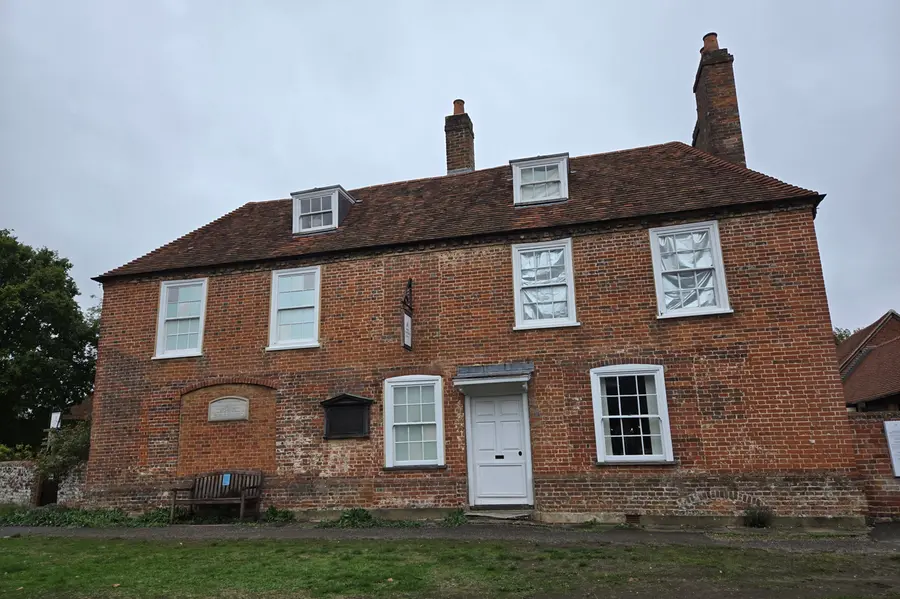
It was a cold and windy day in Hampshire when I finally arrived at a place I had wanted to see for a long time — the home of Jane Austen.

It was a magical moment walking into this small cottage in the quiet village of Chawton. I had come here out of my love for a writer whose stories had travelled far beyond England and reached readers like me, thousands of miles away.

Jane Austen may not be a familiar name to everyone. But if you have heard of Pride and Prejudice, you have already met her world. Austen was an English novelist who lived more than 200 years ago and wrote about love, family, society and human nature with wit and humour. Her six novels have become some of the most loved books in English literature.

placeholder
The Donkey carriage used by the novelist

And here, in this very house, many of those words were born. As I stood outside the old-fashioned house, I found myself wondering something that often comes to my mind when I visit the homes of writers from another era: How did they write so much without all the comforts and conveniences we take for granted today?

placeholder
Jane Austen’s writing table

There were no laptops, phones, electric lights or comfortable workspaces. There was only a pen, paper, a small table and super imagination.

A small sign above the entrance announces Jane Austen’s House. We enter through a little wooden gate and walk towards the museum, where books and objects connected to Austen are displayed. From there, the path leads through the garden to the main entrance of the house.

placeholder
The piano which Jane played daily in morning

The drawing room is the first room we see. It is easy to imagine Jane Austen sitting there. There is a piano that she practised every morning. It was also in this room that she read Pride and Prejudice aloud to a neighbour after receiving the first copy of the published novel.

Then comes one of the most exciting moments — seeing the tiny writing table where she wrote.

The table is surprisingly small. A chair sits beside it, and suddenly we feel she is almost present. The table looks portable, allowing Austen to move it around as she wrote. I stood there for a while, looking at it and thinking about the number of words, characters and stories that must have passed across that little surface.

For me, there was another special moment. In one of the rooms, visitors can write the name of their favourite Austen character on small pieces of paper and put them on a wall. Many of the little notes carried the name Bennet, reminding me of how deeply the characters from Pride and Prejudice have stayed in readers' hearts.

placeholder
Jane’s bedroom

Upstairs are Jane’s bedroom, which she shared with her sister Cassandra, a dressing room, a room connected with family and friends, and a sewing and dress room.

Downstairs, the green dining room gives another glimpse into everyday life in Austen’s time. There is also the simple kitchen, with its fireplace, firewood area and cooking utensils.

placeholder
The kitchen

I also spotted another fascinating reminder of her everyday life — the simple wooden donkey cart that Jane used to visit friends.

What makes this place special is not its grandeur. It is almost the opposite. It is small, quiet and ordinary. And that is precisely what makes it extraordinary.

From these modest rooms came Pride and Prejudice, Sense and Sensibility, Emma, Mansfield Park, Northanger Abbey and Persuasion — six novels that continue to be read across the world.

You don't have to be a serious Austen fan to visit Chawton. Even if you have never read her books, this little house offers something.

And if you have loved Pride and Prejudice, I would say come and see where the magic began.