
On this International Translation Day, the topic is trust—and it is trust that is on the line. Can we trust machines with our languages, our identities, our cultures? Perhaps only if we keep humans central.
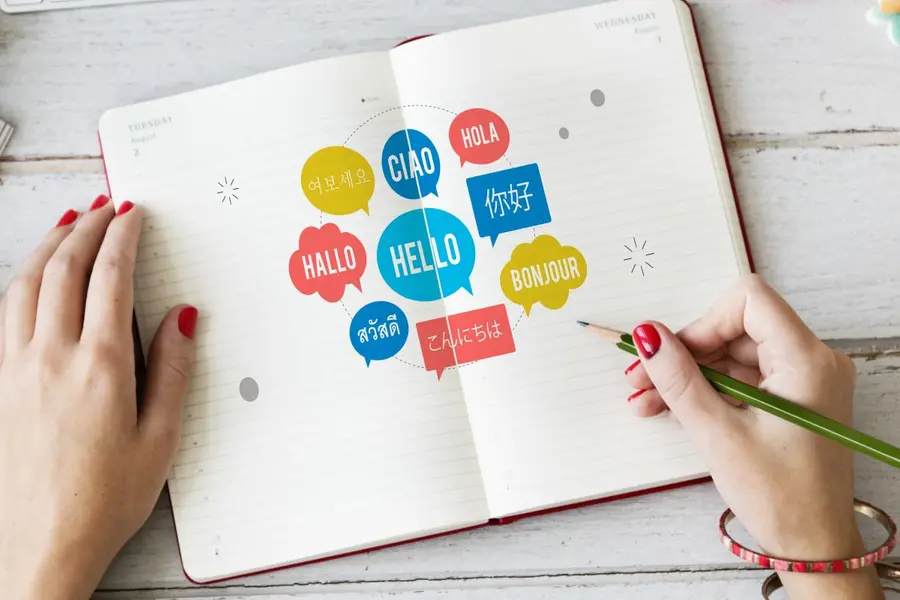
Each September 30, the world stops to pay tribute to a too-often-overlooked practice: translation. International Translation Day, in honor of St Jerome, the Bible's Latin translator, sees the world join together to honour the subtle art of translating meaning from one language to another. But in 2025, that tribute holds not only a looking back to centuries of human brokerage, but an apprehensive gaze forward to an AI-driven future.
To translate, according to Umberto Eco, is "to say nearly the same thing." And in that "nearly" exists a universe. It is across that gap, that difference, that translation enters into contact with the other, the unknown, and provides a means of access to worlds otherwise closed off. And it has always been a bulwark of multilingual humanity: the League of Nations in the 1930s envisioned the Index Translationum to record the world's works of translation, and UNESCO took over later, initiating programmes to disseminate literary jewels beyond their native languages.
As recently as last year, UNESCO supported the publication of a lexicon of untranslatable indigenous terms in Mexico, reaffirming that translation is not only about bridging known languages but preserving the untranslatable.
And yet, translators -- most often women -- have been predicted to vanish in the face of mechanization since the 1950s. But those predictions failed. The post-war machines never displaced the human craft entirely, and digital tools in the late 20th and early 21st centuries have shaped -- but not replaced -- the work. Today in the anthropocene of AI, we are again forced to ask: will human translators survive? If so, how will their role metamorphose?
We are living in an age of unease: translation technology is everywhere. Most of us have gone along silently relying on Google Translate, DeepL, Microsoft Translator, or some other AI-driven system to assist us across borders. But the larger question hangs: can AI ever fully do justice to the "gaps, layers, and hidden meanings" that language does contain? And what becomes of cultural nuance, voice, and identity when translation is automated?
The terrain of AI translation in the present is diverse. Google Translate, Microsoft Translator, DeepL, Amazon Translate, Reverso, and Systran are the market leaders, with recent developers and research engines such as NiuTrans emerging alongside. Joined by computer-assisted translation tools including MemoQ, Trados, Smartcat, Lokalise, Crowdin, and Memsource, which aid professional translators using memories, glossaries, and post-editing assistance, defines the market landscape. The distinctions between them are illustrative: Google supports the broadest range of languages; DeepL is acclaimed for its nuance and expressiveness in European languages; Microsoft and Amazon offer wide integration into corporate environments.
All have strengths, but also their own substantial flaws. Google Translate, arguably the most used, has done more than any technology in the past to bring access to translation to the masses. Released in 2006, it now supports everything from smartphone menus to browser add-ons and video call captions. Its impact has been broad. It reduced the threshold for regular people to communicate or travel between nations. It put pressure on professional translators, as many individuals now settle for "good enough" instant translation. And it set expectations -- translation must be free, immediate, and universal.
But it is far from perfect. Google Translate tends to be bad with longer pieces of text, idioms, or culturally charged vocabulary. It may flatten subtlety, misgender authors, or provide literal translations that lack the author's intent.
Comparative analyses repeatedly identify DeepL as smoother and more accurate in some languages but limited in scope. More concerning, systematic biases intrude: gender stereotyping and cultural assumptions surface in outputs based on the biases of the data upon which these systems are trained.
At the same time, newer tests are forcing real-time speech translation. Microsoft Teams and Google Meet introduce simultaneous interpretation capabilities that echo the speaker's voice in a foreign language. Babel fish-like conversation appears near. Again, however, the concern persists—do such tools carry tone, nuance, or emotion? Or do they reduce speech to flat equivalence?
The reality is that translation is never a matter of substitution. It's an exercise in interpretation. Human translators are not word-substitutes; they are meaning-negotiators, mood-mediators, culture-transactors, and context-managers. They inquire as to what a phrase means to its target audience. They feel irony, decipher wordplay, transmute metaphors. They listen to what is being said, but also to what is not being said. Machines falter in these areas.
Cultural context is the greatest hurdle. A phrase with dense historical or mythic allusion will frequently not make it through machine translation. A joke might become unintelligible. A poem loses its rhythm. Occasionally the most effective translation will not be word-for-word but effect-for-effect -- a decision a human can accomplish, but an algorithm hardly ever.
Endangered and indigenous languages face an even greater challenge. They rarely have the enormous corpora that AI models require. Their syntax could differ significantly from that of English or other prevalent languages. And their lexicons frequently contain spiritual or cultural wisdom that is inextricably tied to context. Human translators in these societies are custodians of meaning rather than mere conduits. Technology can aid -- delivering first drafts, structuring lexicons, creating alignment -- but only under human direction, and with care regarding cultural ownership and data sovereignty.
So the future of translation is not necessarily machines taking over from humans, but machines augmenting humans. Translators are already changing their role: they curate, edit, and translate. The pattern of "AI first draft plus human post-editing" is prevalent. Experts are turning towards high-value work -- literature, marketing, diplomacy -- where creativity and nuance are most valuable and leaving high-volume, low-stakes content such as manuals or menus to machines.
This change will require novel training. Translators of the future will require linguistic and computational literacy. They will require knowledge of prompt engineering, model assessment, domain adaptation, and bias identification. They will not only be writers but engineers of meaning. Their work as cultural brokers will increase, not decrease.
There are high stakes involved. Translation is not just a job; it's a pillar of multilingualism, democracy, and survival of culture. If machine translation erases difference, universes meaning, or marginalizes minority languages, the world could lose diversity. The UNESCO International Decade of Indigenous Languages (2022–2032) reminds us how many languages are at risk. Under these circumstances, translation -- human, aided by AI -- can be an act of conservation.
But risks remain. Errors already enter automated systems into delicate environments such as weather alerts or health orders. A poorly translated sentence costs lives. In film and literature, bungling translations lose artistic voice. In international relations, they lead to diplomatic miscommunication with dire effects. In all of these, human review remains essential.
For the human translator, substance and style are intrinsic abilities machines do not possess. A good translator communicates not just meaning, but mood, rhythm, cultural tone. They decide when to be free, when to be literal. They maintain trust. Their reputation has accountability attached. When things are at stake, people demand a human mind behind them.
The future can be one of constructing a translation ecosystem of trust. Picture AI engines that point out ambiguity and request that humans decide, systems that indicate cultural allusions and provide alternatives, minority language community-driven AI models, or open workflows where it's always apparent what was machine-generated and what was human-edited. That future would maintain the unique human aspects of translation while leveraging the speed and scale of AI.
On this International Translation Day, the topic is trust -- and it is trust that is on the line. Can we trust machines with our languages, our identities, our cultures? Perhaps only if we keep humans central. Translators of the future will be cultural mediators, editors, and keepers of nuance. They will work with machines, but not instead of them.
Translation has ever been "almost" -- never done, never precise, always a compromise. In that zone of "almost," human imagination and sympathy bloom. AI will bring us nearer in terms of speed and scale, but it cannot match the imaginative leap translation demands.
As the world observes this day, let us recall: machines can translate words, but people translate worlds. And for as long as we cherish detail, culture, and identity, we will require translators—flesh-and-blood translators of the untranslatable -- to ensure that what is said in one mouthful of air truly lives in another.
Published: 30 Sept 2025, 12:24 pm IST
Related Topics
Disclaimer: Kindly avoid objectionable, derogatory, unlawful and lewd comments, while responding to reports. Such comments are punishable under cyber laws. Please keep away from personal attacks. The opinions expressed here are the personal opinions of readers and not that of Mathrubhumi.
