
India is willing to manage American unhappiness and accept some risks about Russian reliability because the immediate security benefits seem worth it. That is the reality of Indian defence policy today, and the ₹10,000 crore missile purchase is just the latest proof of it.
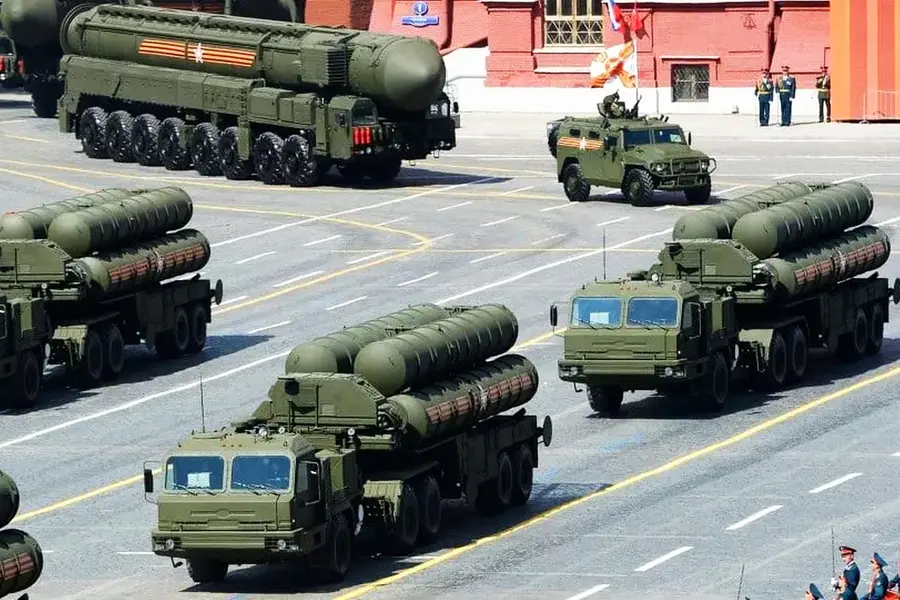
India's Defence Ministry is preparing to spend ₹10,000 crore on new missiles for its Russian-made S-400 air defence systems, and this decision tells us something important about how India sees its security needs today.
The timing is interesting because this purchase comes just months after the Indian Air Force reportedly used these systems in real combat against Pakistan, claiming to have shot down multiple enemy aircraft. What matters is that India's military leadership believes the S-400 has proven its worth on the battlefield.
The S-400 deal was always going to be controversial. When India first ordered five regiments in 2018 for $5.4 billion, it knew this would anger the United States. Washington has been very clear that it does not want its partners buying advanced Russian weapons, and it has threatened sanctions against countries that do so.
Turkey, a NATO ally, actually faced American sanctions for buying the S-400. But India went ahead anyway, and now it wants to buy even more missiles and possibly additional S-400 battalions. This shows that India is willing to risk American displeasure when it comes to what it sees as critical defence needs.
The reason becomes clear when you look at India's military situation. For years, India's long-range air defence was weak. The country had short-range and medium-range systems, but nothing that could hit aircraft or missiles from hundreds of kilometres away.
The S-400 changed that completely. With its most powerful 40N6 missiles, the system can reach targets up to 400 kilometres away. This means India can now shoot down enemy aircraft deep inside Pakistan or China without its own planes having to cross the border. That is a huge strategic advantage, especially when dealing with Pakistan's air force or China's growing military power along the disputed border.
The Indian Air Force's enthusiasm for the S-400 is not just about the technology. It is also about options. India has been trying to modernise its military for decades, but it has struggled to find reliable suppliers.
Western countries often attach conditions to their weapons sales, demanding that India take certain positions on international issues or limiting how India can use the equipment. Russia, on the other hand, has been a more straightforward seller. It provides advanced weapons without asking too many questions about how India plans to use them. This matters greatly to a country like India, which values its strategic autonomy and does not want to become too dependent on any single partner.
The alleged poor performance of French Rafale jets during the same operations where the S-400 supposedly excelled has probably strengthened this view. India paid a lot of money for those Rafale fighters, expecting them to be a game changer. If they did not perform as expected while the Russian system did, that will shape future purchasing decisions. Defence ministries remember what works in actual combat, not just what looks good in sales brochures.
Now India is also considering buying Russian Su-57 fifth-generation fighter jets, which would work together with the S-400 systems. The Su-57 deal is even more significant because it includes technology transfer and local production. This is exactly what India wants for its defence industry.
The country has been trying for years to build more weapons at home instead of importing everything. If Russia is willing to share technology and let India manufacture most of these advanced fighters locally, that is an offer India will find very hard to refuse, regardless of what Washington thinks.
But there are real risks in this approach. Russia's reliability as a supplier has become questionable since its war with Ukraine began. Russian defence factories are working overtime to supply their own military, which might delay exports to India. There are already reports that Russia has struggled to deliver some weapons to India on time. If India becomes too dependent on Russian systems and those supplies get interrupted, it could leave gaps in India's defences at a critical time.
There is also the question of whether the reported success of the S-400 in May is entirely accurate. Military claims during conflicts are often exaggerated. Independent verification of such incidents is difficult, especially when both countries control the information coming out. India's defence establishment might be making major purchasing decisions based on an overly-optimistic assessment of how well these systems actually performed.
The American pressure on India is real, but it has limits. The United States wants India as a partner to balance against China's rise in Asia. Washington cannot afford to push India too hard on the Russia issue because it might drive New Delhi closer to Beijing or make India even more determined to maintain its independent foreign policy.
The Americans have made their displeasure known about the S-400 purchase, but they have not imposed sanctions on India the way they did on Turkey. This suggests Washington understands it has to accept some Russian weapons sales to India if it wants to maintain the broader relationship.
For India, the calculation seems clear. The country faces real threats on two fronts, from Pakistan and China. It needs air defence systems that work, and it needs them now. The S-400 appears to provide capabilities that Western alternatives either cannot match or come with too many strings attached.
India is willing to manage American unhappiness and accept some risks about Russian reliability because the immediate security benefits seem worth it. The fact that India is also pushing for local production and technology transfer shows it is thinking long-term about building its own defence capabilities, even while buying Russian systems in the short term.
Whether this strategy will work in the coming years depends on many factors. Can Russia actually deliver all the systems and missiles India wants while fighting a war in Ukraine? Will the S-400 continue to perform well if it faces more advanced enemy aircraft or different tactical situations? Can India use its purchases from Russia to actually build up its own defence industry, or will it remain dependent on imports? And perhaps most importantly, can India maintain good relationships with both Russia and the West while pursuing this independent path?
These are not easy questions, and the answers will shape India's security for decades to come. What is clear right now is that India has made its choice. It believes the S-400 works, it trusts Russian weapons more than Western alternatives for certain needs, and it is willing to face American pressure to get what it thinks it needs for national defence. That is the reality of Indian defence policy today, and the ₹10,000 crore missile purchase is just the latest proof of it.
The author is a defence, aerospace & geopolitical analyst
Published: 23 Oct 2025, 03:17 pm IST
Disclaimer: Kindly avoid objectionable, derogatory, unlawful and lewd comments, while responding to reports. Such comments are punishable under cyber laws. Please keep away from personal attacks. The opinions expressed here are the personal opinions of readers and not that of Mathrubhumi.
