
Abu Dhabi's story goes beyond oil wealth and towering skyscrapers. Its journey from a modest coastal settlement to a global city is also about leadership, transformation, cultural identity and the people who now call it home.
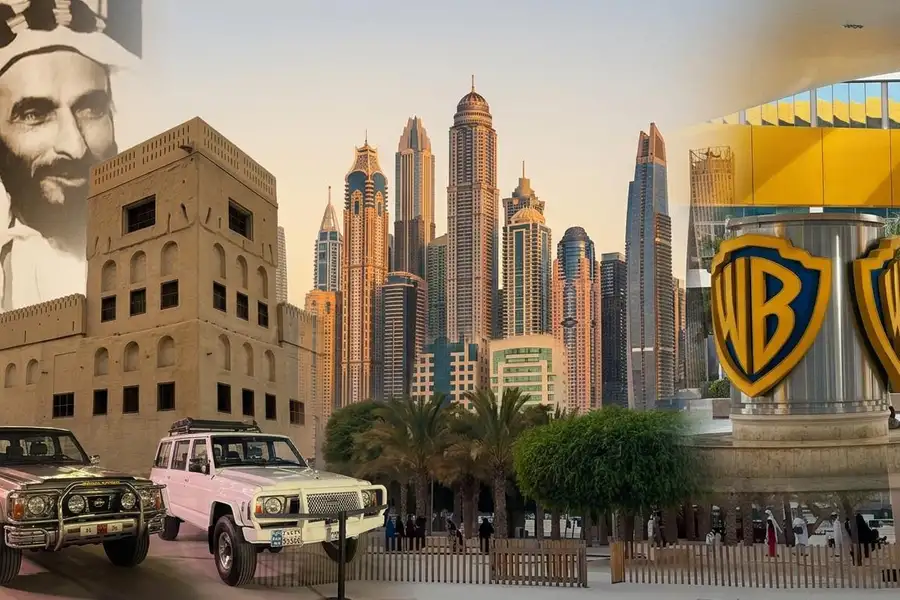
Imagine a place where life once depended on the sea, where men spent months diving for pearls, families lived off fishing and trade, and the future offered little certainty. There were no towering skyscrapers, sprawling shopping malls, luxury hotels or the grand roads that define the city today. What existed was a small coastal settlement, a close-knit community and a way of life shaped by the harsh desert and the waters of the Arabian Gulf.
That place was Abu Dhabi.
Today, it is difficult to imagine that the glittering capital of the United Arab Emirates (UAE), with its impressive skyline, world-class infrastructure and international ambitions, emerged from such humble beginnings. In just a few decades, Abu Dhabi transformed its economic fortunes, helped build a nation and became a city that attracts people from every corner of the world.
But its story is about much more than oil, money and magnificent buildings. It is about survival, vision, opportunity and the determination to build something far greater than what once existed.
And perhaps its greatest transformation can be seen not just in its skyline, but in the lives of the millions of people who have come here seeking work, opportunity and a place to call home.
“Abu Dhabi quietly grows on you and begins to feel like home. Here, you are treated as a person, not judged by your colour, creed or profession. People simply live calmly alongside one another,” says Olga, our Russian tour guide, who has lived in Abu Dhabi for many years after working in the hospitality and aviation sectors. And you can see what she means in her own calm demeanour and the warmth with which she explains the city’s landscapes, history and way of life.
That sense of belonging offers another way to understand Abu Dhabi: not simply as a city that has grown rapidly, but as a place where people from different parts of the world have built their lives together.
1. Before the skyscrapers: A settlement fighting to survive
Long before Abu Dhabi became synonymous with wealth and modernity, life here was far from easy.
The story of the settlement goes back to the 18th century, when members of the Bani Yas tribal confederation discovered freshwater on Abu Dhabi Island in 1761. The availability of water encouraged people to settle in the area, laying the foundations of what would eventually become the emirate's capital.
There were no grand ambitions of becoming a global city then. Survival was the priority.
Fishing, pearl diving, date cultivation and trade formed the backbone of the local economy. The sea was both a source of livelihood and a lifeline for the community. Generations of men ventured into the waters of the Arabian Gulf, spending long, difficult months diving for natural pearls that were traded across regional and international markets.
Pearl diving was not merely an occupation. It shaped the economy, traditions, relationships and everyday lives of the people. Families depended on the earnings of divers, while merchants, sailors and boat owners were all part of an industry that connected the region to the wider world.
But the work was dangerous, earnings were uncertain and life was physically demanding. The collapse of the natural pearl trade in the early 20th century, particularly with the arrival of cultured pearls from Japan and the effects of the global economic downturn, dealt a severe blow to the region's traditional economy.
For a place already facing the challenges of a harsh environment and limited resources, the future was uncertain.
Yet Abu Dhabi's story was far from over.
2. Qasr Al Hosn: Where the story of Abu Dhabi stands
To understand just how far Abu Dhabi has travelled, a visit to Qasr Al Hosn offers a glimpse into its past.
Standing amid the modern city, this historic fort is a reminder of a time when Abu Dhabi was a very different place.
Its origins date back to the 18th century, when a watchtower was built to protect the island's freshwater source. Over time, the structure developed into a fort and became the seat of the ruling family and an important centre of governance.
It witnessed the growth of the settlement, the rise of the ruling family and the changes that eventually transformed Abu Dhabi into the capital of a modern nation.
Today, surrounded by a city of glass towers, busy roads and modern buildings, Qasr Al Hosn presents a striking contrast. It is a reminder that beneath the modern skyline lies a history shaped by communities that built their lives around the sea and survived through trade, hard work and resilience.
The fort is more than a historical attraction. It is a physical link between the Abu Dhabi that once was and the city that exists today.
3. Oil changed everything, but what happened next mattered more
If there was one turning point that changed Abu Dhabi's economic fortunes, it was the discovery of oil.
Oil was discovered in commercial quantities at the Umm Shaif offshore field in 1958. The first exports of Abu Dhabi crude followed in the early 1960s, opening the door to an economic transformation that would reshape the emirate.
For a settlement that had struggled through difficult economic periods, oil brought opportunities on an entirely different scale.
But the real change was not simply that Abu Dhabi had discovered a valuable natural resource. It was what the emirate began building with the wealth it generated.
Revenue from oil helped finance roads, schools, hospitals, housing, electricity, water infrastructure and essential public services. Communities that had once depended heavily on traditional livelihoods began experiencing a different standard of living.
The changes were visible in everyday life. Better roads connected communities, schools created opportunities for children, hospitals improved access to healthcare and new infrastructure supported businesses and industries.
The arrival of oil also brought workers, professionals and businesses from outside the region, setting the stage for Abu Dhabi's transformation into an increasingly international city.
Oil provided the financial means. Turning that opportunity into lasting development required a much larger vision.
4. Sheikh Zayed: The vision that helped build a nation
No account of Abu Dhabi's transformation is complete without Sheikh Zayed bin Sultan Al Nahyan.
When Sheikh Zayed became the Ruler of Abu Dhabi in 1966, he inherited an emirate at the beginning of a major economic transition. He recognised that the wealth generated by oil could be used to improve people's lives and build a stronger future.
His development priorities included education, healthcare, housing, infrastructure and better living conditions for local communities.
But his vision extended beyond the boundaries of Abu Dhabi.
He believed that the emirates could achieve greater security, stability and progress by coming together as one nation. Working alongside Sheikh Rashid bin Saeed Al Maktoum of Dubai and the other rulers, he helped lead the efforts to establish a federation.
On December 2, 1971, the United Arab Emirates was formed, initially bringing together six emirates. Ras Al Khaimah joined in February 1972.
Abu Dhabi became the capital of the new country.
It was a defining moment, not only for the emirate but for the entire region. The formation of the UAE created a federal nation with a shared political framework and a common vision for development.
The story of Abu Dhabi had now become part of a much bigger story: the making of the United Arab Emirates.
5. From oil money to opportunities for the world
The discovery of oil may have set Abu Dhabi on its path to prosperity, but its ambitions did not stop there.
As the city developed, so did its economic priorities. Investment expanded into industries such as finance, manufacturing, aviation, tourism, technology, renewable energy and culture.
The development of roads, ports, airports and business districts helped create an environment in which companies could operate, industries could grow and people could find new opportunities.
Today, Abu Dhabi is home to international businesses, financial institutions, hospitality groups, technology companies and professionals from different parts of the world.
For many, the city represents an opportunity to build a career, support their families, start a business or pursue a better life.
This is another important part of Abu Dhabi's transformation. What was once a small settlement dependent on a handful of traditional economic activities has become a place where livelihoods are connected to industries spanning the globe.
Its growth has also been shaped by the people who arrived here, bringing with them different skills, languages, cultures, food and traditions.
6. A city that became home to the world
Perhaps one of the most visible changes in Abu Dhabi is the diversity of the people who call it home.
Walk through its streets, visit its restaurants or spend time in its shopping and entertainment districts, and the city's international character becomes difficult to miss.
People from India, the Philippines, the United Kingdom, Russia, Africa and numerous other countries have made Abu Dhabi part of their lives. They work in its offices, hospitals, hotels, restaurants, construction sites, schools and businesses.
For many expatriates, the emirate is more than a workplace. It is where they have raised families, built friendships, established businesses and found opportunities that may not have been available to them elsewhere.
This is where Olga's observation becomes particularly relevant.
She described Abu Dhabi as a place that grows on you in a quiet, almost homely way, where people can live alongside one another without being constantly defined by their colour, creed or profession.
Her words offer a personal perspective on something that cannot be measured through economic growth figures or the number of buildings constructed.
A city may become wealthy through investment and development, but it becomes home through the everyday experiences of the people who live in it.
Abu Dhabi's multicultural character is one of the defining features of its modern identity. While people bring their own traditions and cultures, they also become part of a shared urban life.
It is a transformation that goes beyond geography and economics. It is also about the creation of a place where millions of people from different backgrounds have found ways to live and work together.
7. From a desert economy to a city of culture, entertainment and experiences
Abu Dhabi's ambitions are no longer defined by oil wealth or its impressive skyline alone.
The emirate is increasingly investing in experiences that bring together culture, technology, entertainment, nature and tourism.
Saadiyat Island, for instance, reflects its ambition to become an international cultural destination. Museums, exhibitions and immersive experiences are helping introduce visitors to different forms of art and storytelling.
The Zayed National Museum offers an opportunity to explore the history and heritage of the UAE, while teamLab Phenomena introduces visitors to a very different world, where technology, movement, light and art come together.
Elsewhere, the city offers experiences that reveal another side of its identity.
At Jubail Mangrove Park, visitors can explore a natural ecosystem through boardwalks and kayaking. The National Aquarium introduces people to marine life, while The Butterfly Gardens offers a closer look at the world of butterflies.
On Yas Island, Warner Bros. World and other entertainment attractions demonstrate how Abu Dhabi is expanding its appeal to families and international travellers.
These developments reflect a wider ambition: to create a city where visitors do not simply arrive, stay in a hotel and leave, but discover different experiences that encourage them to return.
8. A taste of the world, with traditions of its own
One of the most interesting ways to experience Abu Dhabi's international character is through its food.
In a city where people from different nationalities have made their homes, food becomes a meeting point for cultures.
Traditional Emirati cuisine offers a connection to the country's history and way of life. At ‘Erth’, visitors can explore dishes and ingredients rooted in local culinary traditions, including the relationship between food, hospitality and the desert environment.
At the same time, Abu Dhabi's restaurant scene brings together flavours from across the world.
Indian cuisine has a visible presence, with restaurants such as ‘Martabaan’ by chef Hemant Oberoi and ‘Namak’ offering their own interpretations of Indian culinary traditions.
Japanese cuisine, Latin American influences and other international food experiences add to the city's diverse dining landscape.
Restaurants such as ‘OTORO’ and ‘Maté’ offer opportunities to explore these different culinary traditions, while the wider dining scene reflects the tastes of a population drawn from numerous countries.
This diversity is more than a matter of choice for diners. It is a reflection of the people who have helped shape Abu Dhabi.
The city has grown by welcoming people from different parts of the world, and its food culture offers a delicious illustration of how those cultures exist alongside one another.
9. The next chapter: Building a future beyond oil
Abu Dhabi's transformation is still underway.
As the world moves towards new technologies, cleaner energy and changing economic models, the emirate is working to strengthen industries beyond traditional oil production.
Artificial intelligence, advanced manufacturing, financial services, renewable energy, tourism and cultural development are among the areas receiving attention and investment.
The emphasis is increasingly on creating an economy that can sustain growth and provide opportunities for future generations.
At the same time, development brings challenges. Economic diversification, environmental protection, heritage preservation and the need to maintain a high quality of life must all be balanced.
The preservation of historic places such as Qasr Al Hosn, investments in cultural institutions and efforts to protect natural environments such as mangrove forests show how the emirate is attempting to connect its past with its future.
The question is no longer simply how far Abu Dhabi can grow, but how it can sustain that growth while retaining the identity and values that have shaped it.
10. From a small coastal settlement to millions of stories
Standing in modern Abu Dhabi, it is easy to be impressed by the skyscrapers, luxury hotels, grand museums and extraordinary attractions.
But perhaps the most remarkable thing about the city is how different it is from the place that existed just a few generations ago.
There was a time when life here depended on the sea, when pearl divers ventured into dangerous waters and families built their livelihoods around fishing and trade. Today, the same emirate is home to international businesses, cultural institutions, advanced infrastructure and people from across the world.
Oil changed its economic fortunes. Vision and investment helped turn that wealth into development. The formation of the UAE gave it a new national identity. And the people who arrived from different parts of the world helped shape the city it has become.
Olga's words offer a fitting way to look at this transformation. Abu Dhabi, she suggested, does not necessarily win you over all at once. It grows on you quietly, through the sense of familiarity, the people you meet and the life you gradually build.
Perhaps that is what makes the story of Abu Dhabi so compelling.
It is not just about how a small coastal settlement became a wealthy capital. It is about how a place once shaped by the struggle to survive became a place where millions have found the opportunity to live, work, dream and build a future.
From pearl-diving boats to skyscrapers, from a small settlement to the capital of a modern nation, Abu Dhabi's journey is a reminder of how dramatically a place can change when opportunity meets vision.
It began with a community trying to make a living from the sea. Today, it is a city where people from across the world come to build a life.
-This article is based on the author's first-hand experience of visiting Abu Dhabi, exploring its landmarks, cultural attractions and local experiences, and interacting with people of the city.
Published: 12 Nov 2026, 12:30 pm IST


ABOUT THE AUTHOR

Disclaimer: Kindly avoid objectionable, derogatory, unlawful and lewd comments, while responding to reports. Such comments are punishable under cyber laws. Please keep away from personal attacks. The opinions expressed here are the personal opinions of readers and not that of Mathrubhumi.