
Before the jets even flew, US cyber forces had already blinded Iran's radar systems, jammed their communication networks, and crippled their ability to detect or respond.
For years, ordinary Iranians did not know something extraordinary was happening right above their heads — hidden inside the traffic cameras lining Tehran's streets. Those cameras, the ones meant to catch speeding cars, had been quietly hacked by Israeli intelligence. Nobody noticed. Nobody suspected. And that silent hack became the first thread that eventually pulled down one of the most feared leaders on earth.
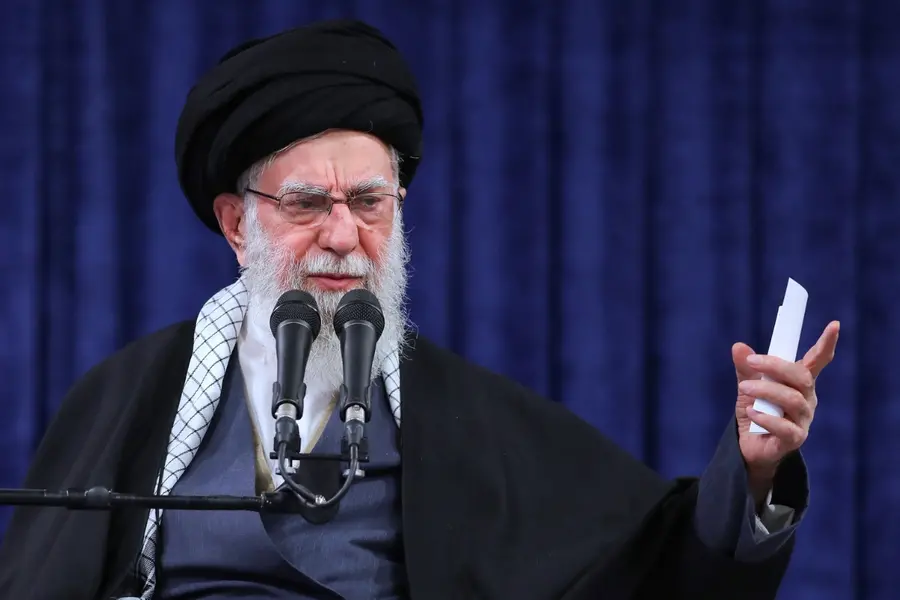
Ayatollah Ali Khamenei, the Supreme Leader of Iran, was killed in a US-Israeli air strike on Saturday, 28th February, near Pasteur Street in Tehran — the heavily guarded area where he worked. But this was not some sudden or lucky attack. It was the result of years of invisible, patient, and deeply calculated work done through technology that most of us cannot even imagine.
The Camera That Changed Everything
Israeli intelligence had secretly taken control of almost all traffic cameras in Tehran over many years. One particular camera had a very useful angle — it could see right inside a quiet but important section of Khamenei's heavily protected compound. Think of it like your neighbour secretly watching your front door through a pinhole every single day for years, noting when you leave, when you return, who visits you — except in this case, the "neighbour" was Israel, and the "front door" was the Supreme Leader of Iran.
Advanced computer programs then collected all this visual information and built detailed profiles of security guards — their home addresses, their daily travel routes, what time they reported for duty, and which leader they were assigned to protect. Intelligence officers call this building a "pattern of life." Simply put — if you watch someone long enough, you can predict exactly where they will be and when.
Jamming Phones So No One Could Warn Him
On the morning of the strike, Israeli intelligence did something clever. They interfered with about a dozen mobile phone towers near Pasteur Street. When Khamenei's security team tried to call each other or send warnings, all they heard was a busy tone. No call went through. No warning reached anyone in time. It was as if someone had quietly cut every telephone wire in the building before a robbery — except this was done digitally, invisibly, and within seconds.
The Missile That Can Hit A Dining Table From 1,000 km Away
Israeli fighter jets did not even need to enter Iranian airspace. They fired special missiles called Sparrow — weapons so accurate that they can strike a target as small as a dining table from more than 1,000 kilometres away. The jets stayed safely outside Iran's reach while the missiles did the job.
Before the jets even flew, US cyber forces had already blinded Iran's radar systems, jammed their communication networks, and crippled their ability to detect or respond. As US General Dan Caine explained, they first took away Iran's ability to see — and then they struck. Around 200 Israeli jets carried out the largest military flyover in Israeli Air Force history, hitting nearly 500 targets in total.
Years Of Invisible Work
This entire operation was built over years using three powerful tools working together — Israel's elite signals intelligence unit called Unit 8200, human spies recruited inside Iran by Mossad, and a mathematical technique called social network analysis that processes billions of pieces of data to find hidden connections between people and places. During a 12-day war last June, this same intelligence network had already killed more than a dozen Iranian nuclear scientists and senior military officials within minutes. That was the warning the world missed.
What India Must Understand
India lives in a neighbourhood where two nuclear-armed countries — Pakistan and China — are not always friendly. What happened in Tehran is a loud and clear lesson. Modern wars are not won first on the battlefield. They are won first in the invisible world of data, surveillance, satellites, and cyber operations.
The country that knows more about its enemy than the enemy knows about itself — wins. Israel spent years watching, collecting, analysing, and waiting. When the moment came, the operation lasted minutes.
India must invest deeply in signals intelligence, cyber warfare capabilities, satellite surveillance, and homegrown technology that can protect its own systems while watching adversaries. India must also remember that its own infrastructure — cameras, phone towers, communication networks — must be hardened against exactly the kind of secret access Israel had inside Tehran.
Khamenei ruled with an iron fist for decades. He survived assassinations, wars, and revolutions. In the end, it was not a soldier who found him — it was a hacked traffic camera, a computer algorithm, and a missile guided by data.
That is the world India is living in today. The question is whether India is ready for it.
The author is a Defence, Aerospace & Geopolitical Analyst
Published: 05 Mar 2026, 03:52 pm IST
Disclaimer: Kindly avoid objectionable, derogatory, unlawful and lewd comments, while responding to reports. Such comments are punishable under cyber laws. Please keep away from personal attacks. The opinions expressed here are the personal opinions of readers and not that of Mathrubhumi.
