
Explore how cities can transform pollution into clean air & valuable resources like biochar & building materials. A sustainable urban revolution!
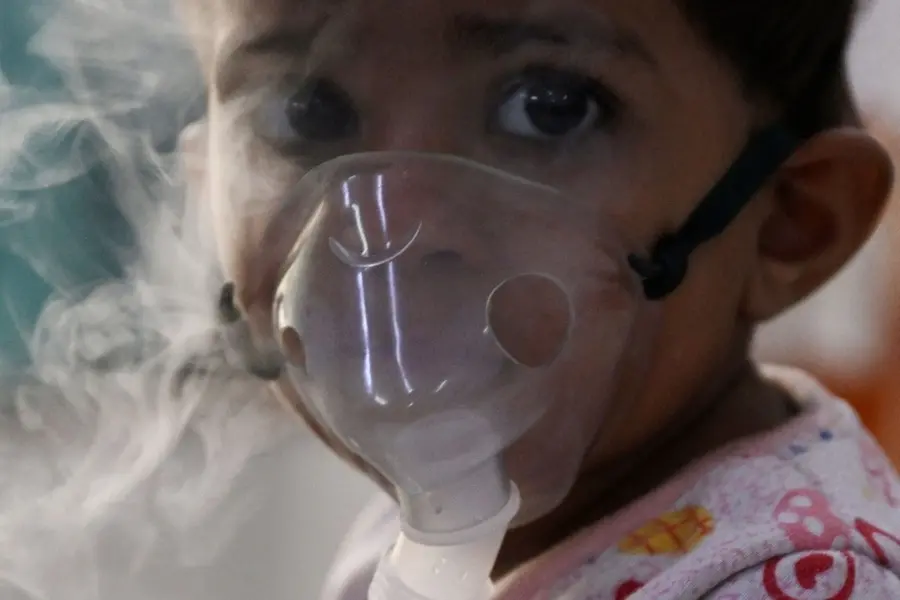
Imagine a city where air pollution is captured, purified, and repurposed. With the integration of smog towers, rooftop purifiers, and chemical scrubbers, particulate matter and harmful gases can be transformed into biochar, fertilizers, and construction materials. This visionary system promises cleaner skies, healthier residents, and a sustainable, resource-driven approach to urban living.
Imagine walking through a city where the air carries neither the acrid sting of vehicle exhaust nor the choking haze of construction dust. A place where the sky, even in the middle of winter, is no longer a dull gray, and stepping outside does not require holding a cloth mask to your face. For millions of residents in cities like Delhi, this is still a dream, a vision of what urban living could be without the relentless assault of pollution. Yet, it is not an impossible dream. Scientists, engineers, and innovators around the world are increasingly exploring ways to treat polluted urban air not just as a health hazard, but as a resource—something that can be captured, processed, and even repurposed, creating a future where clean air is accessible, and pollution is no longer waste but a potential commodity.
This vision is based on the concept of a city-scale air purification and resource recovery system-the multi-layered approach to cleaning the atmosphere in densely populated areas while simultaneously extracting useful materials from the pollutants. In homes and offices, air purifiers have become common, but they treat very small, locally bound volumes of air. Scaling this solution to the whole metropolis, where millions of cubic meters circulate every hour and pollutants vary greatly by type and concentration, presents quite the challenge. Particulate matter, nitrogen oxides, sulfur dioxide, carbon monoxide, VOCs, and even trace heavy metals all combine into a toxic cocktail affecting respiratory health, the cardiovascular system, and overall quality of life. Tackling this problem demands a radical rethinking of how urban environments manage their air.
A multi-layered air capture system offers one way to approach this. Imagine a network of strategically placed air capture units, located at traffic hotspots, industrial zones, and residential neighborhoods. These units combine principles already in use in smog towers, electrostatic precipitators, and chemical scrubbers, but applied at a scale large enough to influence ambient air quality. The first layer of these units would focus on particulate matter, the microscopic dust and soot particles known as PM2.5 and PM10 that penetrate deep into the lungs and enter the bloodstream. HEPA filters, widely used in household purifiers, can be adapted to industrial-scale units, while electrostatic precipitators can attract charged particles, trapping them effectively. Cyclone separators could remove larger dust and debris using centrifugal force, directing them into collection bins for further processing. This collected particulate matter is not waste; it is a resource, potentially convertible into biochar for soil enrichment, or into construction materials such as cement, bricks, and asphalt, reducing reliance on virgin resources.
Beyond particulates, gaseous pollutants like nitrogen oxides and sulfur dioxide must be treated chemically. Wet scrubbers capture acidic gases from the air, while activated carbon or zeolite layers absorb volatile organic compounds, many of which pose a threat to human health. Catalytic converters can convert carbon monoxide into carbon dioxide, itself a greenhouse gas but one that can be further processed for industrial uses. Thus, by the time air is released again into streets and rooftops, it is much cleaner, scrubbed free not only of visible smog but also of the invisible chemical irritants silently compromising health over time.
The real genius of such a system lies not only in cleaning the air but also in repurposing what is captured. Particulate matter, once filtered, can be divided based on composition. Carbon-rich soot can be transformed into biochar, a type of charcoal that enhances soil fertility while sequestering carbon, thereby reducing greenhouse gas levels. Mineral-laden dust can be incorporated into construction materials, turning the very thing that once threatened urban health into a building resource. Nitrogen oxides, when combined with water and base chemicals, can yield nitric acid or ammonium nitrate, both valuable fertilizers that can support agriculture. Sulfur dioxide can be transformed into gypsum, a critical ingredient in plaster and cement, while carbon dioxide can be compressed and stored for industrial use or converted into synthetic fuels through chemical processes using renewable hydrogen. Even volatile organic compounds, often a byproduct of industrial processes and vehicular emissions, can be recycled for solvents or safely incinerated to recover energy.
In such a system, infrastructure would need to be implemented in a thoughtful way. Such smog towers and large filtration units that could process large volumes of air would be installed along high-density urban corridors notorious for their traffic jams and heavy vehicle emissions. Industrial zones, with higher concentrations of pollutants, can install dedicated chemical scrubbers and catalytic systems to capture pollution at its very source. Rooftop purifiers within residential areas can serve to create a distributed system contributing toward overall air quality improvements. Sensors would monitor particulate and gaseous pollutants in real time, enabling the system to adjust operations dynamically: ramping up filtration during peak hours of pollution and reducing energy consumption when air quality improves.
Energy consumption is one of the main considerations at city-scale air purification. Electrifying such machines around a metropolis would significantly draw on electricity supplies, and if that energy is sourced from fossil fuels, the process risks paradoxically contributing to the very problem it is intended to address. As such, a transition toward renewable energy sources becomes unavoidable. Solar panels fitted on smog towers and rooftops, small-scale wind turbines, and grid-based green energy can therefore power the filtration units sustainably. Even the water consumed by wet scrubbers can be recovered for cooling, irrigation, or other non-potable purposes, further streamlining the system and ensuring the least possible environmental impact.
While such a system can accrue great benefit, the challenges are correspondingly formidable. The capital investment in deploying purification units city-wide is massive. Operational costs for maintenance, filter replacement, and chemical processing continue indefinitely. Ensuring that toxic byproducts are handled without risk to the workforce or the environment requires a high degree of chemical engineering expertise and strict protocols that avoid accidental exposure or spillage. Moreover, scaling up such a system to broadly cover a whole city is a very difficult logistical task. Focusing efforts on hotspots based on level of pollution and/or vulnerable populations would be a pragmatic approach toward an eventual ramp-up of technology and financing.
Future developments might employ AI and machine learning, enabling technology to pace performance for maximum efficiency. Sensors feeding real-time pollution data into an AI system could trigger airflow, adjust filter densities, and activate chemical scrubbers in an automated manner to maximize efficiency while minimizing energy consumption. Such intelligence could also coordinate rooftop purifiers operated by residents to create a decentralized yet interlinked network that amplifies the system's overall impact. The approach transforms pollution control from a purely reactive measure into a proactive, intelligent, and collaborative effort engaging citizens, industry, and government agencies.
Community participation is crucial to success, where urban residents can be part of the solution by contributing rooftop micro-purifiers or supporting green spaces that complement mechanical filtration. Education campaigns can raise awareness about how their individual actions, such as reducing vehicle use, minimizing open waste burning, and supporting renewable energy, improve the efficiency of the purification system. In such a way, technology, policy, and citizen engagement converge into a sustainable model of urban air management.
It is no longer a futuristic view from science fiction that one would imagine a city where clean air has become a reality. Cities like Beijing and Delhi have experimented with smog towers and large-scale air purifiers, providing proof of concept for localized interventions. Yet, the next frontier in creating integrated systems lies in not only purifying the air but also capturing and reusing pollutants. By treating pollution as a resource rather than waste, such a model aligns environmental health with economic opportunity, transforming what has long been a hazard into materials that support construction, agriculture, and energy production.
Ultimately, city-scale air purification represents more than an engineering challenge; it is a statement about what urban life can become in the 21st century. It acknowledges that air is not just a passive backdrop for daily life, but rather an active, shared resource-its quality determining health, productivity, and quality of life. In this light, cities would move beyond temporary fixes like emergency masks or occasional smog alerts to permanent infrastructure for air quality management, safeguarding residents while generating economic and environmental value.
Envisioning such a system forces a reimagining of urban design in and of itself. Buildings and streets can be aligned to maximize airflow through purification units, green spaces integrated to complement the mechanical filtration, and patterns of traffic flow altered to reduce peak emissions. Industrial processes can be redone to facilitate pollutant capture at the source, making the factories contributors to city health rather than net polluters. In this approach, pollution management is integrated into the planning of the city, not an afterthought. Though there are considerable technical and financial barriers, the payoffs are transformative: just a reduction of particulate matter could prevent thousands of premature deaths annually, reduce respiratory ailments, and increase productivity. Capturing and converting gaseous pollutants provides raw materials that reduce reliance on imported fertilizers, building materials, and industrial inputs. The combination of cleaner air and productive reuse turns environmental management into a driver of innovation and economic growth.
The narrative of the city-scale air purification is also one about human ingenuity and resilience. It reflects a readiness to confront an enormous problem with imagination and technical skill, turning despair into possibility. Rather than accepting smog as inevitable, the vision reclaims urban space for health, creativity, and human flourishing. By joining together technology with community engagement and sustainable practices, it points the way toward cities where clean air is not a privilege but a right. It reframes the challenge of pollution as an opportunity. To dream of a world where dust, soot, nitrogen oxides, carbon monoxide, and volatile organic compounds-all those things that once threatened human life-are tamed and repurposed. Where the first breaths of each morning are refreshing in their assurance of safety, and where walking in a city is not a gamble but a delight. Where urban life and ecological care are compatible, and where systems mirror scientific rigor and civic aspiration in equal measure. While ambitious-sounding today, the vision could be realized incrementally.
Pilot installations in high-pollution neighborhoods, partnerships with industries to capture concentrated emissions, and investments in renewable-powered filtration units can scale the impact. Each smog tower, each rooftop purifier, and each kilogram of repurposed particulate matter represents an actual advance toward a future where urban air is not a silent killer but a celebrated resource. With ingenuity, commitment, and collaboration, cities like Delhi can transform their skies, proving that what is most vital to life-the air we breathe-can also be the most preciously cared for and intelligently managed. In fact, the dream of clean urban air is achievable. It requires vision, technology, policy, and human participation in concert. Treating pollution both as a hazard and as a resource, capturing what has long been invisible and turning it into something tangible, cities of the future can offer both health and opportunity. In such a city, every breath becomes a reminder of what is possible when human innovation meets collective responsibility—a city where the sky is not a limit, but a promise.
Published: 05 Dec 2025, 03:08 pm IST
Related Topics
Disclaimer: Kindly avoid objectionable, derogatory, unlawful and lewd comments, while responding to reports. Such comments are punishable under cyber laws. Please keep away from personal attacks. The opinions expressed here are the personal opinions of readers and not that of Mathrubhumi.
