
In a bid to plug a critical heavy-lift gap, the MoD has floated an RFI to damp lease three ultra-heavy helicopters for the IAF, seeking 20-tonne payload machines that can fly at over 5,500 metres to support Himalayan logistics, rapid troop moves and disaster relief, with an option to buy later.
In a move aimed at strengthening Indian Air Force's heavy-life capabilities, the Ministry of Defence has issued a Request for Information (RFI) for the procurement of three Ultra Heavy Lift Helicopters (UHLHs) under a damp lease arrangement for an initial period of two years, with an option to purchase the platforms later. This move seeks to rapidly bridge a major operational shortfall in India's heavy-lift helicopter fleet, especially for critical missions involving high-altitude logistics, rapid troop deployment, disaster relief and supply chain support along the country’s northern and western borders.
The requirement reflects India's growing need for stronger air mobility in difficult terrains, particularly across the Himalayan region bordering China, where conventional logistics remain challenging.
Also Read: Blue Shark vs F-35C: China’s affordable answer to America’s lightning
With increasing strategic demands and the need for faster deployment capabilities, the induction of ultra-heavy helicopters is expected to significantly improve the IAF's operational flexibility.
What is the need for ultra-heavy helicopters?
India's defence logistics requirements are among the most complex globally due to the extreme terrain conditions in border areas such as Ladakh, Arunachal Pradesh and Siachen. Supplying remote military outposts, transporting artillery, vehicles, engineering equipment and humanitarian relief materials often requires platforms capable of carrying exceptionally heavy loads into high-altitude environments.
While the IAF currently operates medium-lift helicopters such as the Chinook, there remains a clear gap in true ultra-heavy capability. The Ministry's requirement for helicopters capable of lifting at least 20,000 kilograms internally or as an underslung load is designed to address this challenge directly.
Such aircraft would allow the armed forces to transport larger payloads in fewer missions, improving both efficiency and readiness.
Also Read: Why Lockheed's latest drone killer, JAGM Quad Launcher, is a gamechanger
Beyond military operations, these helicopters would also play a critical role during natural disasters such as earthquakes, floods and landslides, where large-scale rescue and relief operations often depend on rapid deployment into inaccessible areas.
Key operational requirements
The RFI outlines demanding operational standards, underscoring the critical role these helicopters are expected to perform. The aircraft must be capable of lifting a minimum payload of 20 tonnes, sustaining cruise speeds above 230 kilometres per hour and operating at altitudes exceeding 5,500 metres.
This high-altitude capability is essential for deployment in mountainous sectors where oxygen levels, weather conditions and terrain significantly complicate aviation operations.
Additionally, the helicopters must be able to carry at least 45 fully-equipped troops or accommodate 20 stretchers in casualty evacuation missions. They are also required to include advanced day-and-night visual systems for monitoring underslung cargo, ensuring operational precision in challenging conditions.
Survivability remains another major focus. The Ministry has mandated the integration of advanced electronic warfare and self-protection systems, including Radar Warning Receivers, Missile Approach Warning Systems and Counter Measure Dispensing Systems to safeguard aircraft operating in potentially hostile environments.
The damp lease model
The decision to pursue a damp lease model reflects the urgency of the IAF’s operational requirement. Under this arrangement, the helicopters would be inducted along with maintenance crews and technical support from the vendor, allowing for much faster operational deployment than traditional acquisition programmes.
Also Read: How Asteria-DGCA bribery scandal clouds India's drone boom
This strategy enables India to quickly field critical heavy-lift capability without waiting for the lengthy timelines associated with full-scale procurement. At the same time, the lease-to-buy option provides the Ministry with flexibility to evaluate the platform’s operational suitability before making a permanent investment.
In an era where military responsiveness is increasingly vital, such flexible procurement strategies are becoming more attractive.
Boeing CH-47 Chinook
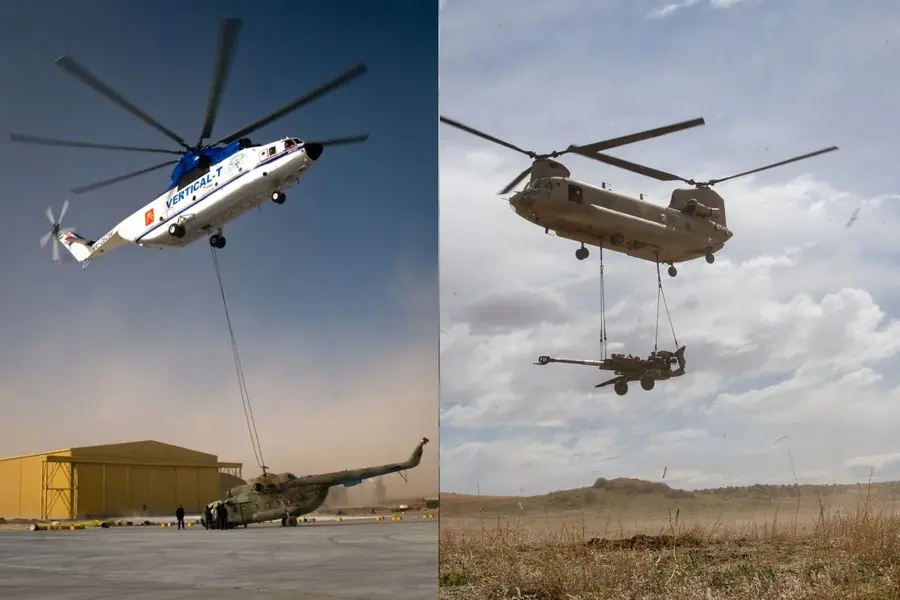
One of the most likely contenders is the Boeing CH-47 Chinook, already operated by the Indian Air Force. The Chinook offers several strategic advantages, including established infrastructure, existing pilot and crew familiarity, proven reliability and easier maintenance integration within India’s current defence ecosystem.
Its compatibility with Western systems and NATO-standard avionics also supports broader interoperability goals, particularly as India continues to diversify its defence procurement relationships.
While the Chinook is highly capable and versatile, its payload capacity may not fully match the Ministry’s ultra-heavy requirements, which could be a limiting factor depending on mission priorities.
Mil Mi-26: Maximum Payload and legacy experience
The Russian-built Mil Mi-26 remains the world's most powerful production helicopter and is widely regarded as the only platform fully capable of meeting the IAF's specified 20-tonne payload requirement under extreme Himalayan conditions.
India has prior experience operating the Mi-26, which gives it a certain legacy advantage. Its unmatched lift capability makes it particularly valuable for oversized cargo transport, large-scale troop movements and difficult high-altitude logistics.
However, challenges remain. The Mi-26's older design, maintenance complexity, dependence on Russian logistics and broader geopolitical considerations may affect its attractiveness in the current strategic environment.
Mil Mi-26 Vs CH-47 Chinook comparison
From a purely technical perspective, the Mi-26 appears better aligned with the Ministry's operational demands due to its superior payload and true ultra-heavy classification. If India's primary objective is to maximize lift capability for strategic logistics in mountainous regions, the Mi-26 could be the stronger candidate.
However, the Chinook may present a more practical and operationally sustainable solution. Its existing service history within the IAF, stronger support ecosystem, lower complexity and faster deployment potential could make it more attractive despite lower lift performance.
Ultimately, the final decision may depend on whether India prioritizes maximum payload capacity or broader lifecycle efficiency, interoperability and logistical ease.
The procurement of ultra-heavy helicopters extends beyond immediate military applications. These aircraft could dramatically improve India's disaster response capability, enabling rapid deployment of rescue teams, heavy engineering equipment and humanitarian aid during national emergencies.
This dual-use value significantly enhances the strategic return on investment, particularly for a country frequently affected by natural disasters and challenging terrain conditions.
India's move to procure ultra-heavy lift helicopters marks a crucial modernization effort in strengthening national security, operational readiness and disaster response capability.
The programme highlights the growing importance of strategic mobility in modern defence planning and reflects a pragmatic shift toward faster, flexible capability acquisition.
Whether the IAF ultimately selects the proven brute force of the Mi-26 or the operationally integrated Chinook, the programme is poised to significantly strengthen India's heavy-lift aviation capabilities.
In an increasingly complex regional security environment, such platforms will not only serve as logistical workhorses but also as vital strategic assets supporting India's military preparedness and national resilience.
Published: 30 Apr 2026, 10:39 am IST
Disclaimer: Kindly avoid objectionable, derogatory, unlawful and lewd comments, while responding to reports. Such comments are punishable under cyber laws. Please keep away from personal attacks. The opinions expressed here are the personal opinions of readers and not that of Mathrubhumi.
