
The J-35 is a single-seat, multi-role fighter aircraft. In simple words, only one pilot flies it, and it can do many jobs.
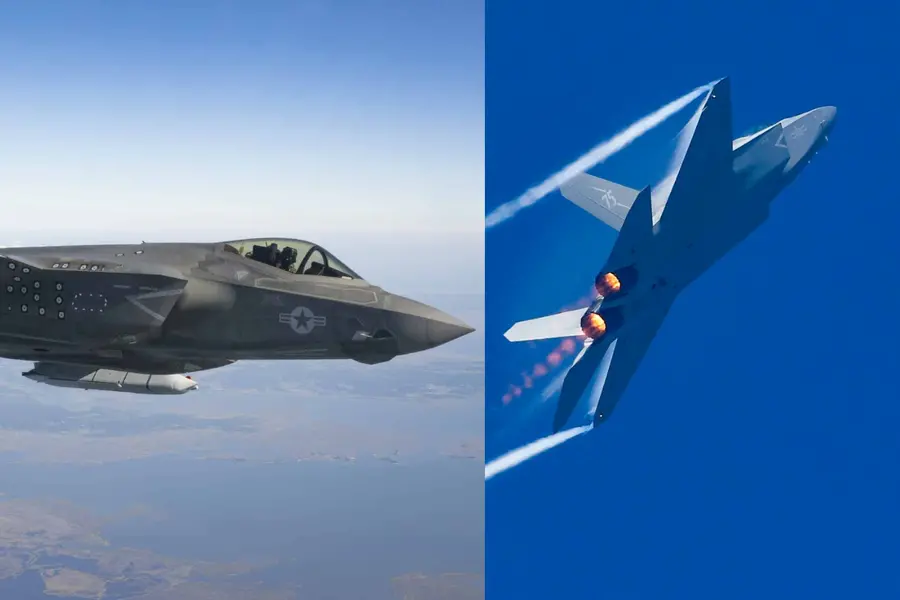
China has officially given a name to its much-talked-about Shenyang J-35 stealth fighter. It is now called the "Blue Shark." Experts believe that giving an official name usually means the aircraft is almost ready for real service, not just testing. This is a big step forward for China's air power, especially for its navy.
If this is correct, then China now has two stealth fighters that are almost or fully ready. The first one is the Chengdu J-20, which is already in service. With the J-35 joining soon, China becomes the only country in the world, apart from the United States, to have this kind of capability. That is a major moment in modern military history.
The J-35 is a single-seat, multi-role fighter aircraft. In simple words, only one pilot flies it, and it can do many jobs. It can fight enemy planes in the sky and also attack targets on the ground or at sea. This means it gives the Chinese Navy strong ability to both attack and defend from an aircraft carrier in the middle of the ocean.
Why the name matters
Apart from being just a fancy branding move, naming the aircraft shows something important. It suggests that the J-35 is moving from the testing stage into actual use with the People's Liberation Army Navy (PLAN). The name also follows the Chinese Navy's naming style. They love naming their aircraft after sharks. For example, the Shenyang J-15 is called the "Flying Shark," and the upgraded J-15D is known as the "Electric Shark." So "Blue Shark" fits perfectly into this family.
The official announcement came from Shenyang Aircraft Corporation on April 23. The name was first heard at the Zhuhai Airshow in November 2024 and had been in discussion since 2022. So this is more like a confirmation of something the world already suspected.
A long journey of development
The aircraft has come a long way since its very first test flight in October 2012. Over the years, engineers have redesigned it, given it better engines, and made it more stealthy and aerodynamic. Finally, in 2021, it managed its first catapult launch test, which is a very tough thing to achieve.
The J-35 is mainly built for the navy, but a land-based version called the J-35A also exists. The carrier version is special because it has foldable wings, so it takes less space on a ship, and stronger landing gear to handle the rough landing on a moving aircraft carrier. It also has an arrestor hook and a catapult launch system to operate from modern Chinese carriers like the Fujian.
The J-35 is believed to have strong stealth capability. It has internal weapon bays and a sharp, angled design that helps it hide from enemy radar. It also uses hidden engine pathways, which means the engine is not directly visible, making the plane harder to detect.
Reports say the J-35 can carry weapons in a flexible way. It can hold missiles or bombs inside the aircraft and also attach extra weapons outside on six hard points when needed. This includes advanced Chinese missiles like the PL-15 and PL-21. Its combat range is about 1,200 km (746 miles), and its maximum takeoff weight is around 30,000 kg (66,139 pounds).
J-35 vs F-35C: The Key Differences
The American F-35C "Lightning" is the world's most advanced carrier-based stealth fighter. The J-35 is China's answer to it, but the two are not exactly the same. The F-35C has a single engine, while the J-35 uses two engines, which gives it more thrust and a backup if one fails. The F-35C's stealth technology, software systems, and sensor fusion are considered more mature and battle-tested. The American jet also benefits from years of operational experience and combat readiness.
The J-35, on the other hand, is newer and still proving itself. Its biggest weakness so far has been the engine, which China has been working on for years. In terms of cost, the J-35 is expected to be much cheaper to produce. So while the F-35C leads in technology and experience, the J-35 may win in numbers and affordability.
Not fully ready yet
To be honest, the J-35 can fly, has been produced in limited numbers, and has been tested on aircraft carriers. But it is not yet fully ready for active duty. This stage is called low-rate initial production (LRIP). It simply means China is building a small number of aircraft to train pilots, test systems, and fix design problems before mass production begins.
The plane could be ready for full service soon, but only if the right engine is finalised. The engine has been the biggest headache for Chinese engineers for years.
(The author is an science communicator and a defence, aerospace & geopolitical analyst.)
Published: 27 Apr 2026, 01:52 pm IST
Related Topics
Disclaimer: Kindly avoid objectionable, derogatory, unlawful and lewd comments, while responding to reports. Such comments are punishable under cyber laws. Please keep away from personal attacks. The opinions expressed here are the personal opinions of readers and not that of Mathrubhumi.
