
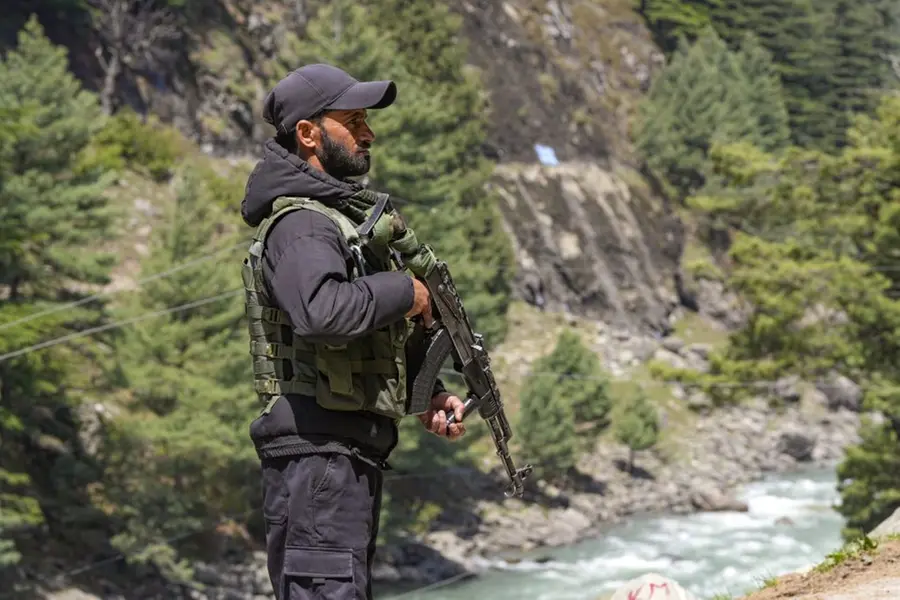
Terror struck south Kashmir's scenic Pahalgam on Tuesday, April 22. A total of 26 lives were lost in barbaric attack. The Resistance Front (TRF), a group backed by Pakistan-based Lashkar-e-Taiba (LeT), was quick to claim responsibility for the attack.
This tragedy has sparked a serious question: Was this a failure of India’s intelligence agencies? The answer is not black and white. The situation is complicated, with signs of both intelligence weaknesses and partial successes.
Also Read

Signs That Intelligence May Have Failed
1. The Scale and Planning of the Attack: This was one of the deadliest attacks in the region since the Pulwama bombing in 2019. That such a well-planned, large-scale assault happened in a famous tourist spot -- also called the 'Mini Switzerland' -- raises doubts about real-time security and monitoring. It shows that terrorists were able to plan and act without being stopped.
2. Missed Action on Reconnaissance Clues: There were reports that Indian intelligence agencies had noticed suspicious activities in the area earlier. Terrorists were seen doing reconnaissance, meaning they were checking the area before the attack. But no strong action was taken to stop them or to boost security. That points to a failure in using intelligence to prevent the attack.
3. Tourists as Targets, But No Extra Security: This area attracts thousands of tourists every year. Given this, and the fact that US Vice President JD Vance was visiting India during this time, there should have been extra precautions. Sadly, there weren't.
Why It's Not a Total Failure
1. Some Intelligence Did Exist: Agencies like RAW and IB did gather inputs about militant movement in Pahalgam. This shows that the system was working to some extent, but the execution of follow-up actions fell short.
2. Challenging Ground Reality: Jammu and Kashmir is a sensitive region, made more dangerous because of support from across the border in Pakistan. Terrorists often use local guides, hidden networks, and encrypted communications, making it tough to catch them before they strike.
3. Government's View and Quick Response: Home Minister Amit Shah has said that this was a well-planned act of terror by TRF, and not due to a total security failure. After the attack, security forces quickly acted, killing one terrorist and starting a major search for others. This shows some level of readiness.
A Balanced View
This attack was not a complete intelligence failure, but it was definitely a failure in translating intelligence into immediate action. Intelligence agencies knew something was up, but they did not have exact details like the timing or size of the attack. In many counter-terror cases, such gaps are common -- but that does not excuse the delay in response.
Considering the importance of Pahalgam as a tourist hub and the timing with the US Vice President's visit, a better threat assessment should have been made. The system underestimated the risk.
Another angle to consider is Pakistan's role. The TRF relies on Pakistan's Inter Services Intelligence (ISI) for support. Just days before the attack, Pakistan Army Chief General Asim Munir gave a statement calling Kashmir the country's 'jugular vein', which could have motivated such a bold strike. These factors put extra pressure on Indian intelligence, which already struggles with both internal and cross-border threats.
India must learn from this painful incident. It is not just about blaming agencies—it is about fixing what went wrong. Some steps we must take include:
* Better real-time surveillance in high-risk zones
* Stronger coordination between state and central security agencies
* More protection for tourist areas, especially in Kashmir
* Use of advanced technology and international support, especially from the U.S., to improve counter-terror efforts
This attack should push us to improve—not to point fingers. It is not just about failure -- it is about learning and upgrading.
The author is a defence analyst
Published: 23 Apr 2025, 01:39 pm IST
Disclaimer: Kindly avoid objectionable, derogatory, unlawful and lewd comments, while responding to reports. Such comments are punishable under cyber laws. Please keep away from personal attacks. The opinions expressed here are the personal opinions of readers and not that of Mathrubhumi.