
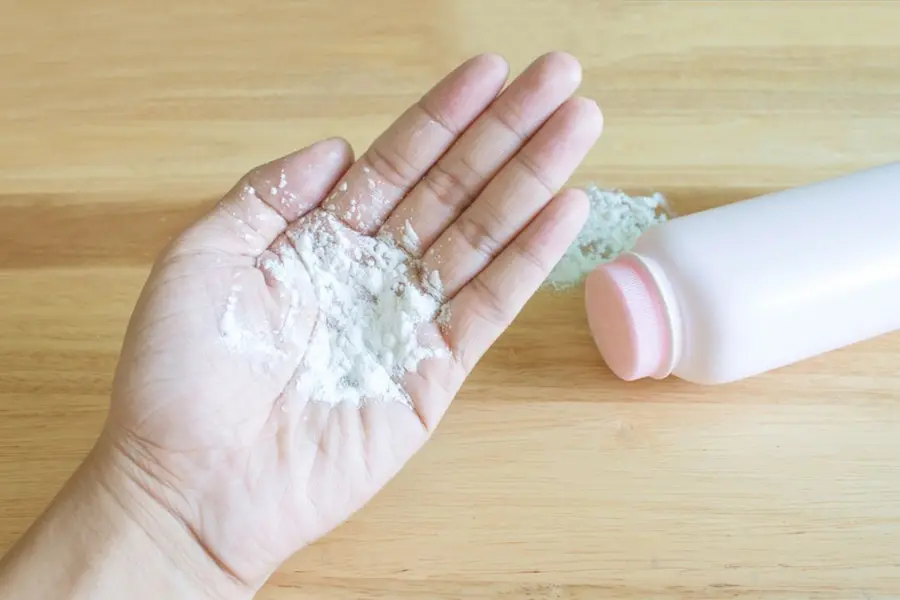
The World Health Organization's cancer agency, the International Agency for Research on Cancer (IARC), has recently classified talc as "probably carcinogenic to humans," sparking renewed concerns about the safety of talcum powder.
Dr. Salil Patkar, a Consultant-Medical Oncologist at Fortis Hiranandani Hospital in Vashi (Navi Mumbai), highlighted the importance of this classification, noting that the widespread use of talcum powder means many people are unaware of its potential risks.
"Although the evidence isn't conclusive yet, it's wise to be cautious when it comes to public health," Dr. Patkar said. He explained that talc particles could travel through the reproductive system and potentially cause inflammation and damage to the ovaries, which might increase the risk of ovarian cancer.
The IARC's classification was based on limited evidence linking talc to ovarian cancer in humans, sufficient evidence of cancer in experimental animals, and strong mechanistic evidence showing that talc exhibits carcinogenic characteristics in human primary cells and experimental systems.
Numerous studies have indicated a higher incidence of ovarian cancer in women who reported using body powder in the perineal region. Additionally, increased rates of ovarian cancer have been observed among women exposed to talc in the pulp and paper industry.
Dr. Patkar emphasized the need for awareness about these potential risks, especially among women. He suggested using alternative products, such as cornstarch-based powders, and called on manufacturers to inform consumers about the potential dangers and provide safer options.
The WHO's announcement has drawn attention, but experts caution against seeing it as definitive proof. While the IARC found limited evidence that talc could cause ovarian cancer in humans, sufficient evidence linked it to cancer in rats, and strong evidence suggested it shows carcinogenic signs in human cells, there remains some uncertainty.The possibility of asbestos contamination in some talc samples could not be entirely ruled out.
Talc is a naturally occurring mineral used in many products, including baby powder and cosmetics. Most people encounter it in these forms, but the most significant exposure occurs during mining, processing, or product manufacturing.
Given the current evidence, Dr. Patkar advises exercising caution with talcum powder use and considering safer alternatives.
The announcement comes just weeks after US pharmaceutical and cosmetics giant Johnson & Johnson agreed to pay $700 million to settle allegations it misled customers about the safety of its talcum-based powder products.
Johnson & Johnson did not admit wrongdoing in its settlement, even though it withdrew the product from the North American market in 2020. A summary of studies published in 2020 covering 250,000 women in the United States did not find a statistical link between the use of talc on the genitals and the risk of ovarian cancer.
Also on Friday, the IARC classified acrylonitrile, a chemical compound used to make polymers, as "carcinogenic to humans", its highest warning level. It cited "sufficient evidence" linking acrylonitrile to lung cancer. The polymers made with acrylonitrile are used in everything from fibres in clothes to carpets, plastics and other consumer products.
Published: 08 Jul 2024, 03:45 pm IST
Related Topics
Disclaimer: Kindly avoid objectionable, derogatory, unlawful and lewd comments, while responding to reports. Such comments are punishable under cyber laws. Please keep away from personal attacks. The opinions expressed here are the personal opinions of readers and not that of Mathrubhumi.
