
He appeared to be an ordinary neighbour in Goa, but police later linked Mahanand Naik to a chilling trail of women who disappeared after being lured with marriage promises.
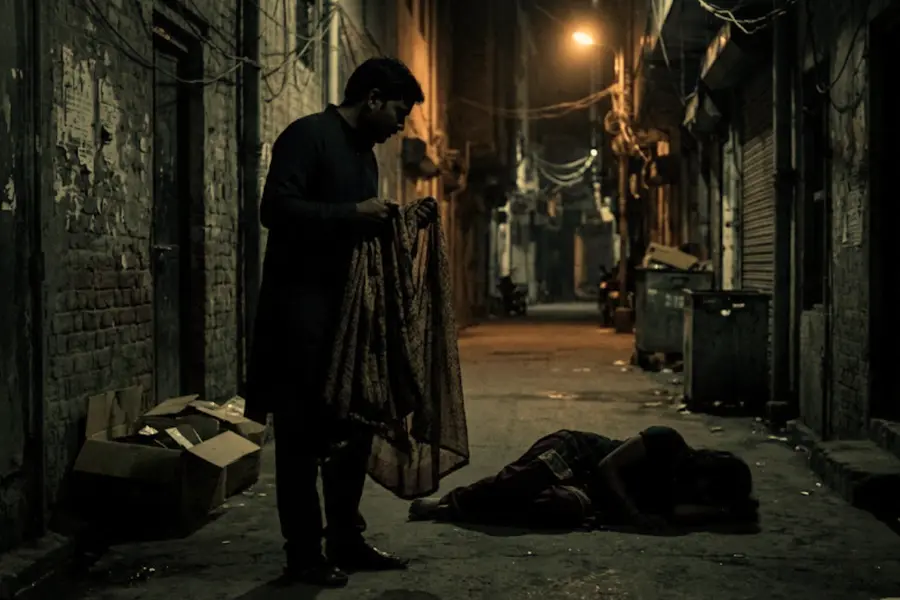
The coastal state of Goa is known to the world for its sun-drenched beaches, quiet, sleepy villages, and laid-back pace of life. But behind this idyllic facade, in the lush, shaded plantations of Ponda, a monster operated in plain sight for fifteen years.
He was not an imposing figure. Unemployed, mild-mannered, and frail, Mahanand Naik looked like any average neighbour in the small agricultural hamlet of Taravalem. He spent his days at home looking after his young daughter while his wife went to work at a government research institute and worked as a clerk for the Indian Council of Agricultural Research (ICAR). To his neighbours, he was largely an unassuming figure—a former auto-rickshaw driver who operated his own vehicle until 2005, when it became too old and was scrapped. Yet beneath this mask of harmless domesticity lurked one of India’s most lethal serial killers—a predator known to detectives as the "Dupatta Killer".
Also read | The serial-killer tailor: Chilling case of India's highway reaper
For a decade, Mahanand had driven a three-wheeled auto-rickshaw through the winding roads of Ponda. The job gave him something far more valuable than a modest income: complete freedom of movement and an intimate knowledge of Goa’s geographical backroads—the deserted hillocks, quiet riverbanks, cashew groves, and secluded railway tunnels.
By 2005, his rickshaw was scrapped, leaving him jobless. But his real hunt had begun long before his vehicle hit the junkyard. Mahanand did not kill out of sudden rage; he was a cold, calculating strategist who preyed on the vulnerabilities of local culture.
He targeted young women aged 22 to 35 from lower-middle-class families. He studied his prey, looking for those longing for companionship and marriage. Mahanand knew that in traditional families, an elopement brought deep social disgrace. He gambled on the tragic fact that if a young woman suddenly vanished, her heartbroken parents might choose silence over a public police report, assuming their daughter had run off with a lover.
Also read | The Pune serial killings: How four college students turned a quiet city into a nightmare
Mahanand’s approach was a masterclass in psychological manipulation. He would charm his victims, spinning romantic promises of marriage and a shared future. Once he had swept the unsuspecting woman off her feet, he would set the deadly trap.
He would arrange a secret rendezvous, telling the young woman that it was time to meet his parents to get their formal blessing for the wedding. To ensure she made a good impression on her prospective in-laws, he insisted she dress in her finest attire and adorn herself with all the gold jewellery she owned—a traditional symbol of prosperity and prestige.
Eager and trusting, his victims showed up draped in gold. But Mahanand never took them home.
Also read | Chandrakant Jha : The Butcher of Delhi
Instead, he guided them into the isolated silence of cashew plantations or thick forest trails. There, before they could comprehend the danger, Mahanand would seize the fabric of their own dupatta—the long scarf draped around their shoulders—and strangle them from behind.
Once the victim was lifeless, he methodically stripped her of her gold ornaments and, in many cases, her clothes to erase any immediate clues to her identity. He then tossed the bodies into deep brush or muddy rivers, leaving the Goan wilderness to destroy the evidence. Mahanand would take the stolen gold directly to local goldsmiths, melting down the ornaments for cash.
The body count quietly mounted year after year.
- Darshana Naik (1994): Found hanging from a cashew tree 30 kilometres from her home. At the time, authorities ruled it a tragic suicide.
- Vasanti Gawade (1995): A 19-year-old girl lured into the isolated brush of Bethora village, strangled with her scarf, and stripped of her gold.
- Sunita Gaonkar (2003), Anjani Gaonkar (2005), and Kesar Naik (2007): Just a few among a long list of women who walked into the woods with a man they trusted and never walked back out.
In total, Mahanand would later confess to strangling between 16 and 18 women. When police eventually recovered highly decomposed remains across the district, they routinely filed them away as "unnatural deaths" or suicides, failing to connect the thread connecting the missing women of Ponda.
Mahanand’s spree could have been halted in its tracks in 1995.
After Vasanti Gawade vanished, her sharp-eyed cousin told police that he had seen her riding through Ponda with Mahanand in his rickshaw. Detective instincts kicked in, and police picked up Mahanand for questioning.
However, before investigators could crack the case, a mob of local auto-rickshaw operators staged a massive protest at the police station, standing up for their fellow driver. Succumbing to public pressure and lacking concrete physical evidence, the police released him. That fatal oversight gave Mahanand a free pass to kill for another 14 years.
Also read | Love, deceit and murder: A notorious case that is too chilling for India to forget
Serial killers often fall because of their own arrogance, and Mahanand was no exception. His downfall did not begin with a murder investigation, but with a crime committed right on his doorstep.
In April 2009, a 23-year-old woman, a close friend of Mahanand’s wife, took a brave step into the Ponda police station. She reported that Mahanand had brutally raped her and was relentlessly harassing and blackmailing her over the phone.
When police picked up Mahanand on April 20, 2009, they began digging into his phone records. That dig revealed a sinister connection: his mobile number was linked to another young woman who had mysteriously vanished in January—30-year-old Yogita Naik.
Under the harsh lights of the interrogation room, the frail, quiet man began to break. What started as a rape inquiry opened a trapdoor into pure horror. Mahanand didn't just confess to Yogita's murder—strangled with her dupatta in a Morlem cashew plantation for Rs 80,000 worth of gold—he began listing murder after murder, losing track of the names of the women he had lured into the shadows over fifteen years.
The terrifying confessions of Goa's "Dupatta Killer," Mahanand Naik, did not just shatter the peace of local families; they detonated right on his own doorstep. While investigators worked to map out a horrific 15-year trail of blood and deception, a parallel tragedy was quietly unfolding for the killer's immediate family.
Mahanand’s wife, Pooja, a clerk working in a central government office, suddenly found her world upended. With her husband locked behind bars after being arrested for a heinous rape that blew the lid off his serial murders, the fury of Shiroda turned toward the killer's home. Enraged villagers, pointing to the fact that Mahanand’s victims mostly hailed from within and around their own community, directed their raw anger toward Pooja, accusing her of being equally involved in her husband's dark deeds.
On May 1, 2009, a furious mob marched on Mahanand’s home, torching the structure and burning it to ashes. Left with nothing and shunned entirely by neighbours, Pooja and the couple's one-and-a-half-year-old daughter became targets of intense hostility.
Seeking safety, Pooja tried to stay at her mother's place, but even those doors were barred against her out of fear and local stigma. Carrying a baby and desperate for refuge, the young mother and her toddler wandered, only to be turned away from multiple places because terror gripped the surrounding towns. Having taken a 40-day child care leave from her government post, Pooja found herself entirely stranded, even requesting central government residential quarters for protection.
Her nightmare finally pierced the wall of public isolation when the state’s prominent women's organisation, Bailancho Ekvott, stepped in. Auda Viegas, the chief of the organisation, intervened to move Pooja and her baby to a secure, undisclosed location.
"She was not allowed to stay at her mother's place after her husband's house was set on fire by the mob," Viegas recounted. "She had nowhere to go, so we decided to give her shelter and move her to a safe place".
While the Ponda police subjected Pooja to extensive interrogations to determine if she had any inkling of her husband's gruesome double life, authorities ultimately ruled out her direct involvement in the crimes. Yet, the cloud of suspicion lingered heavily in the public eye.
"If Pooja is involved in the crime, she should be punished," Viegas noted, making it clear that the organisation would cooperate fully with law enforcement. "She said that police should investigate how much she knows about her husband's gory tales. We will not interfere in the police investigations. But we can't leave her on the streets with the child".
As the legal machinery ground forward for the state's most notorious serial killer, his family remained trapped in the wreckage, a stark reminder of the devastation left.
Securing convictions for a 15-year murder spree proved a legal nightmare. Because many bodies were reduced to mere bones or had been lost to time, forensic DNA testing was often inconclusive, leading to acquittals in over ten cases due to the benefit of the doubt.
Yet, the law ultimately caught up with the Dupatta Killer:
- Rape Conviction (2010): Sentenced to 7 years in prison for the assault on his wife's friend—the brave woman who ended his reign of terror.
- First Life Sentence (2011): Convicted for the 1995 murder and robbery of 19-year-old Vasanti Gawade, a conviction upheld by the Bombay High Court.
- Second Life Sentence (2012): Convicted for the 2009 murder and robbery of Yogita Naik, also upheld on appeal.
He was incarcerated at the Central Jail in Colvale, Goa.
In June 2023, Naik was granted a 21-day furlough by prison authorities. This caused public shock and raised fears, particularly for the woman who had helped to get him arrested.
Today, Mahanand Naik sits behind bars, serving multiple life sentences. His story remains a chilling testament to how easily a predator can hide behind an ordinary face—and how local stigma and institutional oversight can turn a tranquil paradise into a hunting ground.
The author is a bestselling true crime author and creator-producer of the hit TV shows Savdhaan India & Ishq Kills and producer of Crime Patrol and Fear Files. To read more stories from Anirban, click HERE
Published: 01 Oct 2026, 02:30 pm IST
Related Topics
Disclaimer: Kindly avoid objectionable, derogatory, unlawful and lewd comments, while responding to reports. Such comments are punishable under cyber laws. Please keep away from personal attacks. The opinions expressed here are the personal opinions of readers and not that of Mathrubhumi.
