The Pune serial killings: How four college students turned a quiet city into a nightmare
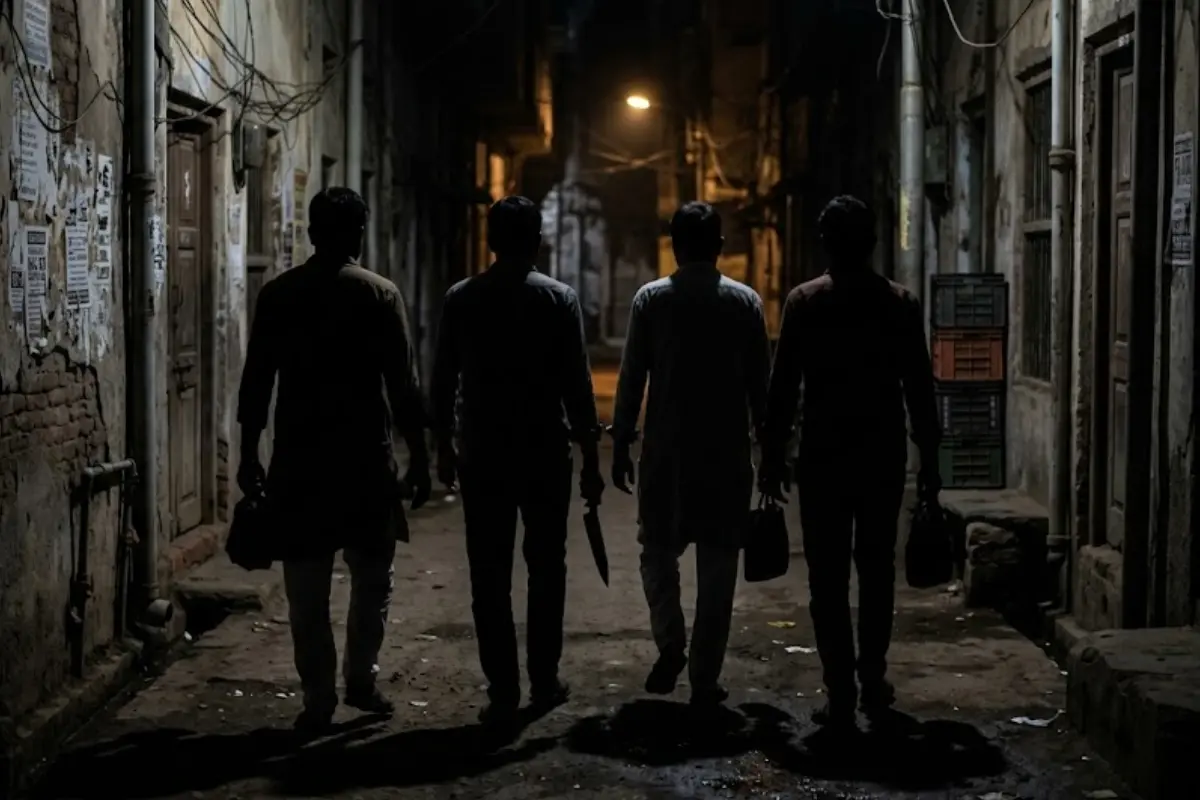
It was 1976. Poona was the ultimate, quiet paradise for retirees—a peaceful town situated about 90 kilometres from its loud, fast-paced big brother, Mumbai. The city moved at a relaxed pace, retaining its quaint charm, and went to sleep by 10 PM. Major, horrific crimes were virtually non-existent; normal life was so laid-back it could give Calcutta a run for its money.
Serial killers usually operate as lonely, solo wolves listening to twisted voices inside their own heads. Cases of group serial killings—like Auto Shankar’s crew in India, Chicago’s Ripper Crew, or Poland’s Skin Hunters—are rare exceptions. But Poona was about to be rocked to its core when four young art students formed a deadly pack, graduating into a school of murder that would claim the lives of 10 innocent Punekars in just over a year.
They were commercial art students at the Abhinav Kala Mahavidyalaya on Tilak Road: Rajendra Jakkal, Dilip Sutar, Shantaram Jagtap, and Munawar Harun Shah. Hailing from lower-middle-class backgrounds, their parents had all but given up on them. They stole scooters to fund their drinking habits, eve-teased female students, and got into violent scraps.
One afternoon near the college cycle stand, a terrified first-year student named Rashmi lowered her head to avoid eye contact. Jagtap, his polka-dotted shirt open to show off his chest, let out a loud whistle. Jakkal leapt in front of her, blocking her path and threatening her while staring at her, before a deep baritone professor interrupted.
After the professor reprimanded them—warning that one more mistake would mean goodbye to their futures—the boys retreated to down drinks. Jagtap slammed a steel glass to the floor, demanding to know what their future held. Munawar Shah, a stone-cold sober Muslim who didn't touch liquor, called out to their accepted alpha leader, Jakkal. Staring blankly at the wall, Jakkal declared like a twisted seer:
"We will have money, we will be famous, and we will spit on the world!!"
When the others laughed, Jakkal snapped back: "Abbey chutiye!! Paisa chahiye ki nahi?" The master plan was born.
VICTIM 1: A BARREL AT THE BOTTOM OF PESHWE LAKE
On January 14, 1976, the gang sat inside Hotel Vishwa, a tiny, crowded eatery behind their college owned by Sundar Hegde. Sundar's son, Prakash Hegde, was a student at the same college. Watching the daily stream of customers, Jakkal unveiled his plot: kidnap Prakash and demand a heavy ransom. Shah choked on his tea—stealing bikes was one thing, but kidnapping?
Also read | The serial-killer tailor: Chilling case of India's highway reaper
The next day, January 15, the four, joined by classmate Suhas Chandok, picked up Prakash under the pretext of copying his class notes. They drove him 5 kilometres away to Jakkal’s private tin shed on Karve Road. Inside, Jakkal slapped Prakash across the face, tearing his lip open. The naive boy begged, reminding them that he always saluted them in the hallways. The gang took turns beating him relentlessly before Jakkal forced him to write a ransom letter.
On the morning of January 16, Sundar Hegde found the crumpled letter wrapped around a stone on his portico. It claimed Prakash had left of his own free will and demanded 1 lakh rupees. But Sundar immediately knew his son was in danger: the letter was signed "Prakash," but at home, the family exclusively called him "Devdas."
Sundar rushed to file a Missing Person Report. What neither the police nor the grieving parents knew was that Prakash was already dead. The previous night, immediately after the letter was penned, Jagtap used a blue nylon rope—leveraging strangulation knots he learned in the NCC—to throttle Prakash at Peshwe Park. They shoved his body into a metal barrel, weighed it down with heavy stones, and dumped it into Peshwe Lake.
Also read | Woman shot dead over husband's debts? Chilling Pune murder
The ransom drop was never organised or followed up on—it was an amateurish, half-baked failure. When classmate Suhas Chandok panicked, yelling that his hands weren't dirty, Jakkal cold-bloodedly warned him: "If you open your fat mouth, you will be joining Prakash at the bottom of the lake." Chandok fled the group for good.
THE BOTCHED HEIST IN KOLHAPUR
To escape the heat, the gang went undercover to Kolhapur. Funds ran dry, scooters were stolen, and tempers flared. Jakkal, who had an uncanny knack for scouting victims by analysing their clothes, posture, and routines, spotted a well-dressed businessman named Agarwal in the Gujari Bazaar area. Agarwal carried a suitcase, frequented jewellery shops, wore a thick gold chain, and drove a brand-new Fiat.
After tailing him for a week, the gang struck in August 1976. Breaking a downstairs window, they crept into Agarwal’s first-floor bedroom an hour after he retired. Agarwal awoke to four hooded men wielding a knife and a signature blue nylon rope, demanding he open his safe.
What the gang didn't expect was that Agarwal slept with a licensed revolver under his pillow. He whipped out the gun and opened fire. As bullets whizzed past them, the terrifying foursome fled for their lives, leaving behind their blue nylon rope. The police logged it as just another failed burglary.
BLOOD IN VIJAYNAGAR: THE JOSHI TRIPLE MURDER
Frustrated, the gang hid out in Bombay before returning to Poona. In the Karve Road shed, Jagtap challenged Jakkal: "What happened to us becoming rich, famous and spitting at the world?" Jakkal vanished for a week, only to return with a new target: an elderly couple living without servants or guns.
On October 31, 1976, in the quiet, isolated suburb of Vijaynagar Colony, the gang approached a house bearing a simple nameplate: Joshi’s. Wearing hoods, they barged in when the door opened, holding Achyut Joshi and his wife Usha at knifepoint on the sofa. When demanded for jewellery, a quaking Usha admitted it was all in a bank locker.
Also read | Crime Files: The horror of ‘Psycho Shankar’ you won’t forget
Enraged, Jakkal took Achyut's wallet containing a few hundred rupees, while Sutar snatched the mangalsutra from Usha’s neck, laughing: "You won't have any use for this where you are going." They bound the couple's hands and feet, stuffed their mouths with cloth, and Jagtap used his trusted blue nylon rope to strangle both to death.
Suddenly, the doorbell rang. Sutar peeked through the hole: "Boss, ladka hai! Sattra-athra saal ka lag raha hai!"
It was Anand Joshi, the couple’s 17-year-old son. As he walked in, Sutar and Shah tackled him. Seeing his slaughtered parents, Anand shrieked in horror. Jakkal stuffed a wad of cloth into his mouth and forced the terrified, weeping teenager to strip completely naked. As Anand stood shivering, Jakkal gave a nod, and another blue nylon rope was tightened around the boy's neck until he was dead.
Before leaving, the killers unmasked and sprayed heavy perfume across every room. Jakkal boasted to his boys: "Police ka kutta bhi humhe soong-ke dhund nahi payega!!" They made off with a few thousand rupees, the mangalsutra, and Achyut’s wristwatch.
Assistant Commissioner of Police Madhusudan Hulyalkar arrived at the horrific scene the next morning. Forensics found zero fingerprints—the killers wore gloves. The sniffer dogs drew a complete blank due to the perfume. ACP Hulyalkar deduced the killers were experts, operated in a group of two or more, used carefully tied strangulation knots, and forced the boy to strip voluntarily. But without a link to Prakash Hegde’s hidden corpse or the Kolhapur break-in, the murder remained an isolated, unsolved mystery.
When asked why he stripped the boy, Jakkal laughed to his gang: "Nanga thodi bhagega humare peechay?"
FIERCE RESISTANCE ON SHANKARSETH ROAD
The thrill of killing had taken over. On November 22, 1976, Jakkal targeted Yashomati Bafna, a woman living alone in a bungalow on Shankarseth Road. But when the gang broke in, they were blindsided: Bafna had two brave servants present.
A chaotic brawl broke out. One servant kicked Shah squarely in the stomach. Panic erupted, and Sutar screamed: "Boss, let's go!!!" The gang was forced to scale a barbed-wire fence to escape, bruised, battered, and humiliated. Their bruised male egos left them hungering for a brutal, high-profile strike.
THE SLAUGHTER AT BHANDARKAR ROAD: THE PENTA-MURDER
On the icy evening of December 1, 1976, the gang hit the bungalow named Smriti on Bhandarkar Road, home to the revered 88-year-old Sanskrit scholar Kashinath Shastri Abhyankar. Living with him were his wife Indirabai (76), grandson Dhananjay (19), granddaughter Jai (21), and their faithful live-in maid Sakubai Wagh (60).
At 8 PM, the doorbell rang. Expecting his parents, Gajanan and Hirabai, who were out for dinner, Dhananjay opened the door, only to be forced inside at knifepoint. They gagged him and forced him to lead them through the bungalow.
Indirabai wept, begging: "Please let my grandson go! Take us hostage!"
Instead, the gang stuffed the mouths of Kashinath, Indirabai, Sakubai, and Dhananjay with balls of cloth, bound their limbs, and systematically strangled all four with their blue nylon ropes.
They saved 21-year-old Jai for last. Trembling as her entire family lay dead before her, Jakkal held a knife to her throat and commanded: "Take your clothes off."
Jai folded her hands, crying, "Please let me go. I don't want to die!" Jakkal barked the order again. Layer by layer, Jai was forced to strip naked in front of the four men. After she showed them where the household valuables were kept, Sutar stepped forward with a leer to rape her.
Jakkal blocked Sutar, uttering a cold "No," before looping the blue nylon rope around Jai’s neck. As she stared at him with pleading eyes, Jakkal pulled with all his strength until her screams became gurgles, her body spasmed, and her eyes bulged.
When Gajanan and Hirabai returned home from dinner, they found the front door ajar and collapsed in horror at the sight of five corpses strewn across their home.
POONA UNDER SIEGE
Eight brutal murders in 31 days pushed Poona into an apocalypse of terror. The sleepy city came to a total standstill. Markets closed by 6 PM. Families locked themselves indoors, took turns staying awake on guard duty, and placed sharp weapons and knives inside briefcases and bedstands.
ACP Hulyalkar and newly joined, detail-oriented Inspector Manikrao Damame knew they were dealing with the same ruthless crew—the knot work, gagging, forced stripping, and perfume were identical. Yet, the trail went ice-cold for three months.
THE FINAL MISTAKE: THE WATERY GRAVE
On March 23, 1977, the gang returned to their old college grounds for their final victim: Anil Gokhale.
Anil was walking home after missing his elder brother, Jayant, at Alka Talkies. Jakkal pulled up on his motorcycle, offering him a ride. Trusting his college mate, Anil got on. Jakkal diverted to his Karve Road shed, where the other three lay in wait. They beat Anil, robbed him of his money, strangled him with the blue nylon rope, and wired his corpse to an iron ladder weighted down with heavy boulders. They dumped the assembly into the Mula-Mutha River near Bund Garden.
They assumed the body would sink forever—like Prakash in the still Peshwe Lake. But three critical errors sealed their fate:
Anil’s brother Jayant immediately filed a missing person report.
The killers forgot to remove Anil’s college ID card from his pocket.
The river’s strong currents unfastened the boulders from the ladder.
The next evening, the corpse floated to the surface near Yerawada. Inspector Damame rushed to the riverbank and inspected the body tied to the ladder. In the pocket, he found a soaked college ID for Anil Gokhale from Abhinav Kala Mahavidyalaya. Then, Damame spotted the knot on the blue nylon rope around the neck—it was identical to the Abhyankar and Joshi crime scenes!
Damame sprinted to ACP Hulyalkar. Comparing photographs, the investigators realised the same blue rope and knot tied all 9 bodies together.
THE TRAP CLOSES: EGO AND CONFESSION
Police descended upon Abhinav Kala Mahavidyalaya. When Sutar rushed to Jakkal in a panic to report that Anil's body had floated up, Jakkal exploded at Jagtap: "Behnchod Jagtap!! You couldn't tie the boulders properly?"
As Jakkal tried to stroll casually off campus, Inspector Damame placed a heavy hand on his shoulder: "Tumhara naam Rajendra Jakkal hai? Chala! Come to the police station."
In custody, Jakkal tried to play it cool by claiming an alibi with Sutar, Shah, and Jagtap. Brought in for separate questioning, the four gave wildly conflicting stories.
ACP Hulyalkar stepped in as the master interrogator. Passing Jakkal a cigarette and lighting a match, Hulyalkar adopted a friendly, helpless posture, appealing for "help" with the scary cases. Jakkal’s massive ego took the bait. Trying to show off his intelligence, Jakkal slipped catastrophically:
"I think that there might be a connection between the Prakash Hegde and the Anil Gokhale murder!"
Hulyalkar froze internally, asking innocently why he thought so. "They both studied in the same college..." Jakkal replied casually.
Hulyalkar stormed out and pulled the long-forgotten missing persons file on Prakash Hegde. Up until that moment, Prakash was only listed as missing—Jakkal was the only person in Poona who knew he had been murdered!
Though forced to temporarily release the boys due to lack of direct physical evidence, plainclothes officers trailed them. Overheard conversations mentioning "Boss," combined with Bafna's original burglary statement recording the gang calling their leader "Boss," confirmed Hulyalkar’s suspicions.
The final break came when police grilled a jumpy student named Satish Gore. The killers, hungry for fame, had bragged to Gore about the details of the massacres. Gore broke down under threat of police pressure and confessed everything. He also pointed cops to Suhas Chandok, who verified the Hegde kidnapping and murder.
JUSTICE AT YERAWADA
On March 30, 1977, all four were formally arrested and confessed to the nightmare. They led police to Peshwe Lake, where the rusting iron barrel containing Prakash Hegde's remains was hauled to the surface. A raid on the Karve Road tin shed uncovered a mountain of stolen loot from the Joshi and Abhyankar homes.
The trial began on May 15, 1978, with Special Public Prosecutor Shamrao G. Samant handling the case. On September 28, 1978, Pune Sessions Court Judge Waman Narayan Bapat sentenced all four to death by hanging.
For the next five years, the condemned killers deployed every desperate trick to escape the gallows:
Munawar Shah authored a jail book titled Yes I am Guilty in Marathi, painting himself as an innocent bystander, while claiming he needed time to learn Arabic, study Homeopathy, and translate the Quran.
Shantaram Jagtap wrote a book titled Kalyan Marg, translated a yoga book, and claimed he was studying Buddhism and translating the Dhammapada into Marathi.
They offered to donate their vital organs to avoid execution.
Jakkal’s lawyer appealed that hanging was too painful, demanding death by the electric chair. Outraged citizens and bereaved families fought back, securing written statements from ten leading doctors across India proving hanging was the least painful execution method. Furthermore, 1,000 prominent Punekars signed a joint petition demanding no mercy.
President Neelam Sanjiva Reddy rejected their mercy petitions, and the Supreme Court dismissed their final appeals.
On November 27, 1983—six and a half years after their arrest—Rajendra Jakkal, Dilip Sutar, Shantaram Jagtap, and Munawar Shah were walked to the gallows at Yerawada Jail and hanged by the neck until dead.
AFTERMATH OF A NIGHTMARE
Years later, the scars remain. In 1998, 74-year-old Sundar Hegde reflected on the loss of his son Prakash, "When your time comes, not even God can save you. Prakash's time had come, and he went away."
ACP Madhusudan Hulyalkar went on to earn a PhD in Psychology post-retirement to understand the criminal mind. Witness Suhas Chandok, now a commercial artist, simply stated: "I am trying hard to forget all about it. It has affected me a lot." The bloodbath would go on to inspire films like Maaficha Sakshidar (1986) starring Nana Patekar and Anurag Kashyap's Paanch (2003).
Jakkal promised his crew they would become rich, famous, and spit on the world. Instead, they found eternal infamy—and to this day, the world spits on their graves.
The author is a bestselling true crime author and creator-producer of the hit TV shows Savdhaan India & Ishq Kills and producer of Crime Patrol and Fear Files. To read more stories from Anirban, click HERE