
With artificial intelligence increasingly entering conversations about creativity and literature, the panel was drawn towards books that felt unmistakably human
London: Reading a book a day might sound like a dream for any avid reader. But imagine doing it for six months, with 162 more books waiting in the queue and the responsibility of deciding which one deserves one of literature's most prestigious awards.
That was the challenge facing British classicist Mary Beard, who chaired this year's Booker Prize judging panel. Having spent much of her career reading and lecturing on the epics of Homer and Virgil, Beard embarked on an entirely different literary marathon this year: reading 163 works of fiction in six months.
Also Read

"I've never worked as hard in my life. I mean, writing a book is easier than that. It was a revelation and a privilege," Beard told AFP.
The task was anything but leisurely. Alongside four fellow judges, she had to read every submission, debate its merits and eventually narrow the field to six shortlisted novels. The winner will be announced in London on Monday, with the successful author receiving £50,000 ($67,400) and the possibility of a career-changing literary breakthrough.
Behind the glamour of the Booker Prize lies a demanding process that has fascinated readers and writers since the award was established in 1969.
A book a day, sometimes more
The reading marathon began around December last year, when the judges started receiving cartons containing roughly 30 books at a time. The schedule was unforgiving: one book a day, sometimes more, with little room to fall behind.
There was also an unusual condition attached to the assignment. The judges were not allowed to reveal what they were reading, keeping the process under wraps until the prize announcement.
For Beard, staying silent proved easier than keeping up with the reading. At one point, when she fell behind schedule, she retreated to a seaside hotel in Greece, where she spent up to 12 hours a day reading.
For the others, the books travelled everywhere.
Writer and critic Rebecca Liu recalled reading a few pages while waiting in a nightclub queue. Pulp frontman Jarvis Cocker had to fit the novels around his band's touring schedule, even swapping physical copies for digital editions on his iPad.
"It's quite dull when you're travelling," Cocker said at a press conference in September. But the books offered an escape. They "took me somewhere, it was like having somebody".
He also recalled joining one of the judges' meetings from Australia in the middle of the night, wearing a bathrobe and holding a glass of wine.
Poet Raymond Antrobus found the experience more emotionally demanding. A month into the process, he said he was crying every night, with the books beginning to influence his dreams.
"You're trying to enter these people's universes that they've created, but also their ambition, that's a very human thing," he said.
Heated debates behind closed doors
Reading all 163 entries was only the beginning. Each book was read by all five judges, giving every submission five opportunities to make an impression.
The panel first selected a longlist of 13 books, popularly known as the Booker Dozen. Those titles were then read again before the judges settled on the six-book shortlist. The same process of discussion and reassessment continued as they worked towards choosing the winner.
The final deliberations were held during three-hour closed-door meetings at London's luxury department store Fortnum & Mason.
And the discussions were not always polite literary exchanges.
American poet Patricia Lockwood recalled standing up frequently and even "tossing books across the room". At one point, disagreements became so intense that she compared the judges to "pigs in the mud".
One method used to navigate the disagreements was the 'traffic light' system. Each judge classified a book as green, amber or red, depending on their assessment.
The most interesting discussions, Beard explained, emerged when opinions diverged, with a book receiving both enthusiastic approval and outright rejection.
There are no fixed judging criteria for the Booker Prize, a feature that has attracted criticism over the years. This time, however, the panel found two questions useful in guiding its discussions: Would you read the book again? And would you recommend it to someone else?
Even the judges' pets became part of the process, albeit unintentionally. Lockwood joked that her cat had helped select a book by "bleeding over it".
A shortlist that celebrates human imperfections
The Booker Prize has increasingly brought voices from beyond the traditional literary establishment into its judging panels. This year's group included Cocker and Lockwood, alongside Beard, Liu and Antrobus.
But beyond their different backgrounds and reading habits, the judges eventually found common ground in what they wanted the shortlist to represent.
With artificial intelligence increasingly entering conversations about creativity and literature, the panel was drawn towards books that felt unmistakably human.
Liu said the judges became particularly conscious of this towards the end of the process, looking for works that embraced imperfections rather than striving for neatness or predictability.
"I think we consciously towards the end wanted to make a human shortlist ... things that celebrated the flaws, that were strange and weird," she said.
For Beard, the six-month exercise was both an extraordinary privilege and the hardest reading assignment of her life. For the rest of the panel, it was an equally consuming journey through 163 imagined worlds, each competing for a place in literary history.
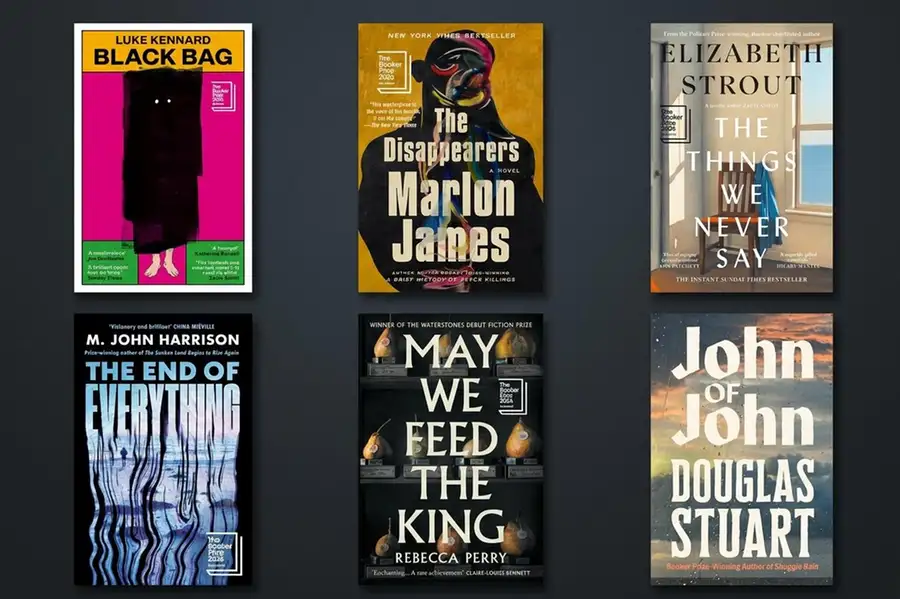
This year’s Booker shortlist
- The Disappearers by Marlon James
- John of John by Douglas Stuart
- May We Feed the King by Rebecca Perry
- The End of Everything by M. John Harrison
- The Things We Never Say by Elizabeth Strout
- Black Bag by Luke Kennard
Now, after months of reading, disagreements, re-reading and deliberation, only one question remains: which of the six shortlisted books will take home the Booker Prize?
(With agency inputs)
Published: 09 Nov 2026, 03:10 pm IST


Related Topics
Disclaimer: Kindly avoid objectionable, derogatory, unlawful and lewd comments, while responding to reports. Such comments are punishable under cyber laws. Please keep away from personal attacks. The opinions expressed here are the personal opinions of readers and not that of Mathrubhumi.