
Dr Nithya Mariam John explores how Nobel laureate Anne Carson blends classical scholarship, visual imagery and experimental forms to portray love, grief and human emotions
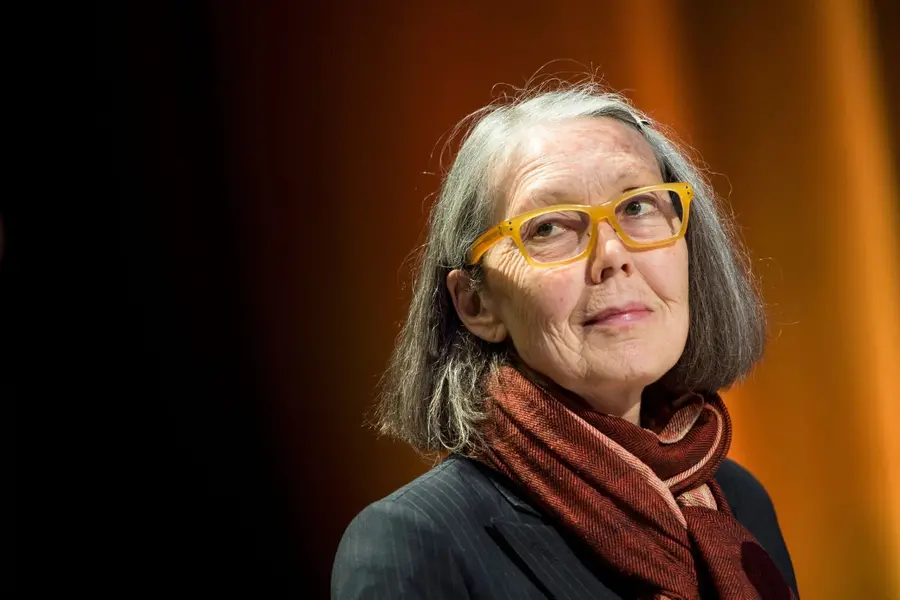
The Canadian poet, translator and essayist brings classical erudition, visual imagery and formal experimentation to her exploration of human emotions, writes Dr Nithya Mariam John.
“Give me a world, you have taken the world I was.”
This line by Anne Carson captures the emotional intensity that defines much of her writing. The Canadian poet, translator and essayist, who has won the 2026 Nobel Prize in Literature, is known for exploring love, desire, grief and longing through the lens of a classicist. What makes her writing distinctive is the way she brings together ancient literature, philosophical inquiry and the intimate experiences of everyday life.
Born in Toronto in 1950, Carson developed an interest in Greek literature at a young age. Her engagement with classical texts would become a defining feature of her literary imagination. However, her writing does not remain confined to the traditions of poetry or classical scholarship. Instead, she moves freely between poetry, prose, essays, translation and narrative, often blurring the boundaries between these forms.
In my reading of Carson, one of the most striking aspects of her work is the absence of rigid generic demarcations. Her poems and prose resist conventional divisions between literary genres, while their visual quality makes even abstract emotions tangible.
Her works, including The Bittersweet: An Essay (1986), Glass, Irony and God (1992), Plainwater: Essays and Poetry (1995), Autobiography of Red: A Novel in Verse (1998) and The Beauty of the Husband (2001), demonstrate this distinctive approach. Across these books, Carson continually experiments with the relationship between form and feeling.
Consider her poem ‘O Small Sad Ecstasy of Love’:
What luck – here you are
coming
along the stars!
I did a road trip
all over my mind and heart
and
there you were
kneeling by the roadside
with your little toolkit
fixing something.
What I find compelling about these lines is the way Carson gives a physical shape to an abstract emotion. Love becomes a journey across the mind and heart, and the beloved appears unexpectedly by the roadside, equipped with a toolkit. The image is at once ordinary and extraordinary. It makes an inner experience visible without diminishing its complexity.
Carson employs a similar technique when she explores metaphysical questions. In ‘The Book of Isaiah, Part 1’, she writes:
Once God and Isaiah were friends.
God and Isaiah used to converse nightly, Isaiah would rush into the garden.
They conversed under the Branch, night streamed down.
From the sole of the foot to the head God would make Isaiah ring.
Here, a theological relationship becomes an intensely physical experience. The language of friendship and love gradually gives way to pain, as Isaiah struggles to understand his suffering and names it sin.
Grief is another recurring concern in her writing. ‘Father’s Old Blue Cardigan’, a poem largely shaped by her father's illness, uses the image of a cardigan to evoke the weight of dementia and Alzheimer's disease. The garment becomes a metaphor for the burden of illness, while the image of the father sitting in the dark “because he is riding backwards” captures the disorientation associated with a mind losing its hold on the present.
What interests me here is Carson's ability to locate an existential dilemma within an ordinary object. The cardigan is not simply a piece of clothing; it becomes a way of approaching the experience of illness, memory and helplessness.
Her poem ‘Short Talk on Pain’ offers another example of this method. It begins with an everyday observation: “A woman is walking a dog along the edge of a ditch.” The scene leads the speaker to ask, “Why does pain make me so cold? I want to ask her.” Yet the question remains unspoken. The woman continues walking, “going as fast as she can”.
Her experimentation is not limited to language and imagery. Carson also challenges the conventional form of the book itself. Nox (2010), written after the death of her brother, takes the form of a folding, accordion-style box containing photographs, translations, dictionary entries and fragments of text. The format reflects the fragmented nature of memory and grief.
Red Doc> (2013), a sequel to Autobiography of Red, employs narrow columns of poetry reminiscent of newspaper print.
This combination of classical erudition, formal experimentation and visual representation of human emotions has earned Carson several honours, including the MacArthur Fellowship, the Griffin Poetry Prize, the Lannan Literary Award and the PEN/Nabokov Award.
The Nobel Prize in Literature brings renewed attention to a writer whose work consistently challenges the boundaries of literary expression. Carson moves between the ancient and the contemporary, the intellectual and the intimate, and the philosophical and the deeply personal. Her writing reminds us that literature need not remain within the limits of a single genre to explore the complexities of human experience.
When the Nobel Committee contacted her with the news, Carson reportedly described it as “crazy and insane”, saying that she had never expected it. “It is just a normal day here,” she said, adding that she planned to walk in the woods and listen to the quiet.
-Dr Nithya Mariam John, Assistant Professor, PG Department of English, BCM College (Autonomous), Kottayam
Published: 09 Oct 2026, 10:20 am IST
Related Topics
Disclaimer: Kindly avoid objectionable, derogatory, unlawful and lewd comments, while responding to reports. Such comments are punishable under cyber laws. Please keep away from personal attacks. The opinions expressed here are the personal opinions of readers and not that of Mathrubhumi.
