
Proper cultivation involves well-drained, fertile soil, specific planting techniques using stem cuttings, and consistent moisture
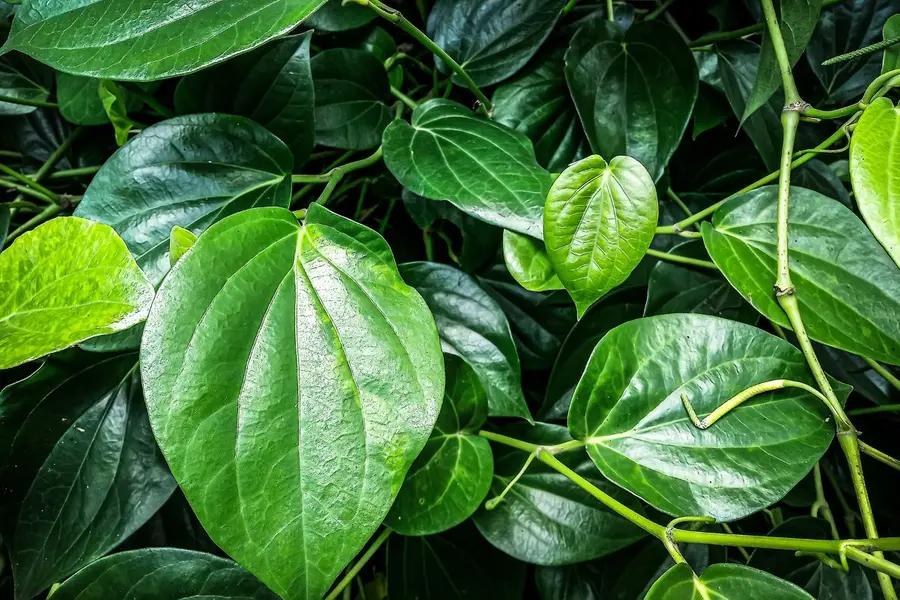
Betel leaf holds a special significance in Indian culture, being an indispensable part of auspicious occasions like weddings, pujas, and the offering of dakshina. The chewing of betel leaf and areca nut together is an integral part of hospitality during many special events.
Ayurveda, which refers to it by the names’ Tamboolavallika’, ‘Tamboolavalli’, and ‘Tamboolam’, had discovered its medicinal value in ancient times. Known by the scientific name Piper betel, it belongs to the Piperaceae plant family.
The leaves and roots are the parts used for their medicinal properties. Its components increase saliva, which aids digestion.
Betel leaf is good for respiratory diseases. It pacifies Vata and Kapha-related ailments.
Chewing betel leaf, which has antiseptic properties, destroys germs in the mouth. It also has antibacterial, anti-inflammatory, and anti-cancer properties.
Betel leaf is also an ingredient in highly effective Ayurvedic medicines such as ‘Thamboola Rasayanam’, ‘Murivenna’, and ‘Chembarathyadi Keram’.
The leaf contains volatile oil, alkaloids, tannin, carbohydrates, protein, and steroid components. A component called terpene is responsible for its pungent, aromatic smell.
How is Betel leaf cultivated?
Believed to be native to Singapore and Malaysia, the betel is a climbing plant. Betel leaf is also cultivated in Kerala.
Well-drained, fertile soil is suitable for betel cultivation. It can also be grown as an intercrop in coconut and areca nut plantations. There are two main growing seasons, May–June and August–September.
What is the ideal soil and preparation method for Betel cultivation?
The ideal soil is fertile, well-drained, and rich in organic matter. Planting beds can be prepared by making mounds and adding compost, powdered cow dung, and slaked lime.
In one cent of land, 30 to 40 beds can be made. The beds should be one metre apart. Pits two feet wide and one foot deep should be dug, and dry leaves should be burned in them. Before planting, 50 grams of slaked lime and 50 grams of neem cake should be added and watered.
How are Betel vines used for planting?
The stem of the betel vine is used as the planting material. The vines are classified according to their age as Kunjikkodi (six months to 2 year-old vine), Ilamkodi (2 to 3 years), and Muthachikodi (3 to 5 years).
From these, healthy stems are cut from the top, all their leaves are plucked off, and vine cuttings with four nodes each are used as planting material. They should be planted in the prepared beds with two nodes buried underground. In each pit, four or five stems can be planted around a small support stake.
How should Betel vines be maintained?
The bed should always be moist. It should be watered twice a day. Tender leaves will begin to appear within 10–15 days. These can be tied to the supports with a rope.
Coiling the vines results in many stems and shoots. To do this, detach the betel vine from the initial small support, pluck off all leaves except the tender ones, coil each vine in the bed, and tie it with banana fibre. A new tender stem will grow from each plucked leaf node.
When and how are Betel leaves harvested and sold?
Betel leaves can be plucked from the vine every one and a half months. They are sold in bundles of 20–30 for convenient handling. They can be wrapped in banana leaves and brought to the market in a basket woven from palm leaves for sale.
Export-quality betel leaves can fetch a price of 300 to 400 rupees per 100 leaves. Tirur betel leaf is prominent in North India and international markets.
Published: 30 Sept 2025, 04:05 pm IST
Related Topics
Disclaimer: Kindly avoid objectionable, derogatory, unlawful and lewd comments, while responding to reports. Such comments are punishable under cyber laws. Please keep away from personal attacks. The opinions expressed here are the personal opinions of readers and not that of Mathrubhumi.
