
India can leverage its Big Data capabilities and technology to create a transparent, accurate, and robust national voters` list, vital for protecting democracy.
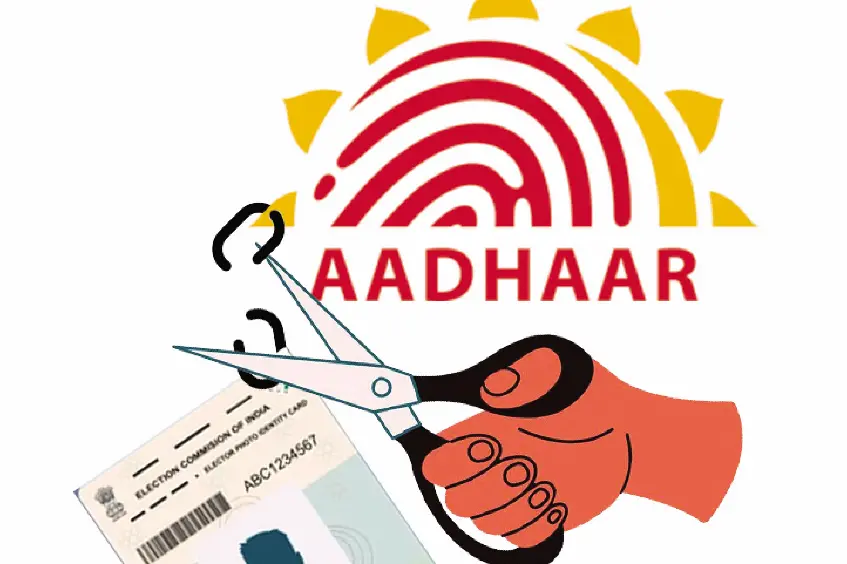
We are a country of Big Data. An estimated 99% of adults have an Aadhaar card, which means 138 crores of people (1380 million) have a government-provided identity card. In addition, the country has 117 crore individuals who use mobile phones – all connected to the Aadhaar card for verification. It has 2.5 billion bank accounts, again all connected to Aadhaar cards as an identity. That’s not all. The country has around 10 crore passport holders. Plus, there are 80 crore PAN cards, again linked with Aadhaar cards for identification purposes. A consolidated number of driving licenses across the country, issued by various state governments, is another big data that is also based on the Aadhaar identity of the recipient. The ongoing census of India will again lead to another huge figure about the number of citizens. And, all of such data resides with the government – making it the largest depository of data on Indian citizens.
Out of an estimated Indian population of 1.46 billion, about 1 billion would be aged above 18 years and are thus, eligible to vote. Curiously, the Election Commission of India (EC) has listed only 96.88 crores (968.8 million) people in its all-India voters list as eligible to participate in the 2024 Lok Sabha elections. Moreover, the Commission keeps ordering special intensive revision of the voters list – not only discarding all other identities of citizens but also declaring that its diktats alone is the law, though estimates say 65 crores of 96 crore in the voters list have an Aadhaar verification.. The pugnacious attitude of the Election Commission has raised many doubts about not just the credibility of its activities, but the veracity of the very data on which it is mandated to conduct free and fair elections to Parliament and State legislatures.
Across democracies of the world, a voters’ list is a prime data, which is updated on an annual basis through various registrations. Both the US and the UK follow this procedure. However, India, which claims to be the largest of democracies and also an info-tech super power, is erratic on this issue. From time to time, it sends government servants to voter households to verify whether they are Indian citizens and are entitled to vote or not. Article 324 of the Constitution of India as well as the Representation of the People Act, 1950, mandates the EC for the preparation and maintenance of electoral rolls for each constituency. The EC website informs about the preparation of the voters list of the 2024 Lok Sabha elections through a special summary revision (SSR) of the existing list.
The SSR is described as, “the activity of House-to-House visit carried out by the booth level officers (BLOs) during the pre-revision period to identify all un-enrolled eligible citizens, prospective electors with reference to the subsequent qualifying dates, multiple entries/dead electors/permanently shifted electors and for the correction of entries in the electoral roll.”
Not satisfied by the SSR of 2024, the Commission ordered a Special Intensive Revision (SIR) in Bihar recently to eliminate what they call the illegal entrants. Following the controversy around SIR and Supreme Court intervention, the Commission has now extended SIR to all States going to elections in 2026.
Unfortunately and rather strangely, both SSR and SIR do not accept any citizen’s data including Aadhaar number, which has emerged as the key citizen identity card over the years. The Commission trusts its own previous data, which needs to be updated for various reasons. That made the Supreme Court of India ordering the EC to treat Aadhaar card as a basic identity for voters during the hearing on the controversial Bihar SIR.
Following the Supreme Court order, political parties and various stakeholders have raised concerns about the integrity of the voters list prepared by the Election Commission through processes, which they describe as “non-transparent”. The political slogan of ‘Vote Chori’ or theft of votes has emerged in the process. As of now, the EC’s credibility with the public has hit rock bottom.
Compounding the Commission’s low credibility is the fact that some states continue to maintain two voters list. One is for local body elections, while the other is for Assembly and Lok Sabha elections. This obviously compromises the integrity of all election data – throwing it open to manipulations. One wonders if the Commission has hatched an escape route from the vicious circle it has landed itself in through all these confusions and allegations.
It is high time that the EC learns a lesson from private sector telecom service providers or the government’s own system of issuing passports to its citizens. Both these entities rely on Aadhaar card numbers. This has made the services swift and easy for citizens to avail it. In India, anyone can get a mobile SIM card in five minutes now, thanks to the government's decision to allow telecom operators to link the Aadhaar card with the mobile number of the customer.
This was allowed after years of representations by private telecom operators after these companies realised it was an expensive proposition to keep the scanned copies of identity cards of millions of subscribers in a data bank, and that too for the use of government agencies such as the police. Reliance Telecom's entry into the sector with the Jio brand ensured such a proposal was pushed and accepted by the government in 2015, saving over Rs 500 crore for the industry.
The Unique Identification Authority of India (UIAD) which issues Aadhaar numbers, had charged Rs 20 each from the telecom operators initially with every link of the SIM. The biggest beneficiary of this process were the telecom subscribers and also the security agencies of the country. With an Aadhaar number linked to a mobile phone, these agencies are able to track the miscreants across the country easily through the mobile network.
Unlike what the BLOs are currently doing with voters' data with SSR and SIR, the security agencies do not need to undertake a wild goose chase since they know the exact identity and movement of the fugitives, if the mobile phones of the latter are alive in the telecom network.
This brings up the question as to why the EC is not using available technology options to verify and maintain a robust and error-free voters’ list, which is mandated by the Constitution. If the EC has an issue with Aadhaar as a basic identity, it certainly has various technology options to further verify the identity of the citizens concerned through mobile numbers, which will exactly point out how long and where the voters are residing for months and years.
For example, a migrant worker from Bihar may be in Kerala for his livelihood, but his mobile SIM card issued in Bihar will give all information on when the SIM was purchased and where the user is actually present and has been working for months/years. Even if the same worker takes a SIM from Kerala, his Aadhaar card will show up his personal data from Bihar.
Such a process can completely eliminate EC’s claims of illegal immigrants. And, there is the passport database of the government itself. So what if it has only 10 per cent of the present population, but it is another available data-repository to verify citizen’s identity. So are bank accounts that can reveal most economic activities of an individual. Even the data of 80 crore PAN cards, linked to Aadhaar, is available. The death and birth data of each state, now digital, too is available. Added to this will be new census data, which is going to be all digital – making the Commission’s job easy to identify the veracity of its voter’s list. Any technology application that can collate all such official data will enable the EC to make its data much more robust.
One has witnessed how a technology company such as Tata Consultancy Services (TCS) has eliminated huge queues for passports across the country. The reason TCS was roped in was that the Ministry of External Affairs did not have a technology solution to streamline the seamless data processing of passports.
It is time that the EC wakes up to the reality that the integrity of its data, the voter’s list, is crucial to the functioning of a robust democratic system. Instead of sending mostly unskilled and uncommitted BLOs to homes of 140 crore people, which in itself is a herculean task, the Commission needs to look at using technology options to create a big data of Indian voters similar to developed countries.
Not only models to create such data with minimum errors are available across continents, but home-grown technology companies are also capable of developing a secure Indian model for such big data. In any case, controversial SSRs and SIRs – as these stand now – are much avoidable.
Our myopic politicians and the government officials habituated in old analog systems may not naturally warm up to a technology solution for securing the core data crucial to protect Indian democracy. Indeed, the present process of making a voter's list grants enormous discretionary powers to those, who manage it and make political capital out of it.
I hope good wisdom prevails on the powers that be and they soon come to realise that India, with its infotech superpower, can create its own Big Data system of voters at the earliest – towards protecting the hard-fought democracy and freedom.
(The author was a journalist reporting on the telecom revolution of India from the early 90s and shifted to the telecom sector in the 2000s. His last assignment was with the Cellular Operators Association of India as Sr Director)
Published: 01 Jan 2026, 10:42 am IST
Related Topics
Disclaimer: Kindly avoid objectionable, derogatory, unlawful and lewd comments, while responding to reports. Such comments are punishable under cyber laws. Please keep away from personal attacks. The opinions expressed here are the personal opinions of readers and not that of Mathrubhumi.
