
Dr. Bijukumar Damodaran happens to be one of the most versatile and awarded among young filmmakers in Kerala though he has also ventured to make films in other Southern languages
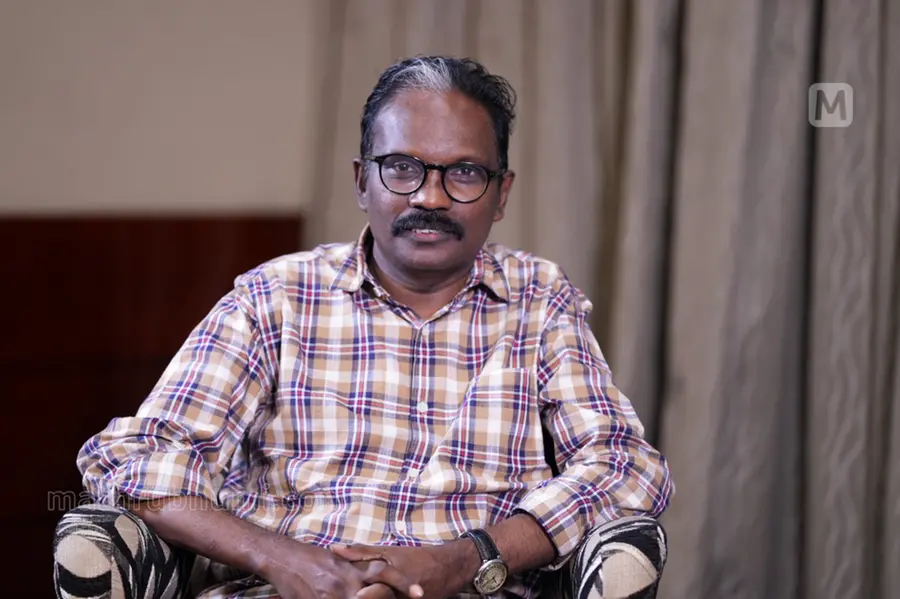
Do not let his plain looks and grounded persona in which sometimes, he lets himself become invisible among a crowd of filmmakers deceive you. Dr. Bijukumar Damodaran happens to be one of the most versatile and awarded among young filmmakers in Kerala though he has also ventured to make films in other Southern languages. Since his first film in 2005, he has participated in film festivals in 37 countries over the past 20 years. His films have been screened in more than 80 countries of which 16 fairs were A category competitive fairs. His films have bagged no less than five National Awards and 36 international awards. He is professionally a homoeopathic medical graduate. He served as jury member for India’s National film awards 2012, India’s Oscar selection jury member 2015, 30th Fajr International film festival, Tehran, Iran 2012 and International Film Festival of Kerala 2011. This year, he found himself jurying the Bengali Panorama at the 31st Kolkata International Film Festival. He opened up in a freewheeling interview.
Also Read

This not your first visit to KIFF. What is your response to the fest since this time you were on a jury?
I attended KIFF eight times. Seven of my films have been screened at KIFF and this time I was a jury member. KIFF is a festival close to my heart. The wonderful festival ambience at Nandan, the big crowds barging in to watch films, the warm hospitality have been the specialty of KIFF. Among Indian film festivals Kerala and Kolkata festivals have a rich audience culture.
How do you think the festival has evolved over the years?
I think every year the number of people coming to watch is increasing. Attracting more people to watch festival every year is very important for a festival. KIFF succeeded in this. Implementing the India premiere status to films in competition, Indian Language films and Bengali films also helped the festival bring new films to the audience. Selection of credible jury members is also commendable.
How do you think were the quality and quantity of the Bengali entries you had to watch as a jury member of the Bengali Panorama?
Unfortunately, it has been very disappointing. The quality of Bengali films we watched was not up to the mark. Bengali films were once pioneers in good Indian Cinema. Quite a good number of artistic, content-driven films were produced from Bengal. The rest of the country looked up to Bengali cinema in the 1950s upto the 1970s. But now there are hardly many artistic films in the Bengali language.
You have been part of some of the best festivals across the world. Do you think these add to your value as a filmmaker for many years?
Yes, sure. Selecting the films and attending more prestigious film festivals across the world as a filmmaker we are getting wider acceptance and more international attention. This will help us bring more responsibility towards making more quality and artistic films now and in the future. Participating in more festivals will also help us get more opportunity to meet many filmmakers, masters and great personalities in cinema across the world.
What is your response to the technological leap into AI in relation to cinema in the near future?
I think AI has a significant role to play in cinema also. AI can be used for the betterment of technical quality. I do not think AI can replace the human imagination in art. We should allow AI to help us technically but not to replace our creativity.
Tell us something about the current state of cinema specially in Kerala and Tamil Nadu?
In Kerala, mainstream cinema is doing well. Many new filmmakers are coming up with different subjects and treatment. Many mainstream films are getting noticed in other states too. But arthouse cinema is struggling just to survive in Kerala. There is no government support or subsidies for art house films. Even acclaimed art house films do not get the chance of a theatrical release in Kerala. Even OTT releases are very few and far between. Sadly, Kerala today lacks the cultural atmosphere to befriend arthouse films.
Let us hear a bit about your two latest films, Invisible Windows and Papa Buka
Invisible Windows and Papa Buka are the first two films in my war trilogy. Invisible Windows shows how the war affects the life of ordinary people and how the government and nation impose fear in the minds of civilians in the name of war. Papa Buka is a co-production with Papua New Guinea and India. It is a memory of shared history of war which affected both countries. The film travels through the memory of World War 2.
Do you feel constrained by your producers in any way? Or, do you enjoy your creative freedom? Explain
All my producers give me full artistic and creative freedom. That has been the major reason for the success of my all films. My producers are aware of what kind of film we are producing, what politics we are saying and what artistic concept we are doing. They all give full creative freedom to me to make films.
Pick 5 favourites from your own films and tell us why
Generally all my films are very lovable to me. If you ask five names then these are as follows:
Perariyathavar (Names Unknown) - It is about a cross section of marginalized society in Kerala and shows the real incidents happening in Kerala during the last ten years at that time, the issues related with the conflict between the government and the marginalized people, eviction of homeless, waste management issues etc.
Akashathinte Niram (Colour of Sky) I consider this to be my most poetical film with visuals and cinematic language
Painting Life - Poetic picturisation of an important subject dealt with in the film
Valiya Chirakulla Pakshikal (Birds With Large Wings) – It is the most heart-breaking I ever made. It depicts a sensitive issue on pepticide tragedy happening in India
Veyilmarangal (Trees Under The Sun) – The film dealt with Dalit issues, forced migration and the violent moods of Nature. It won the ‘Outstanding Artistic Achievement Award’ at Shanghai International Film Festival, 2019.
Your five favourites from Indian filmmakers with reason in one sentence
Pather Panchali, Satyajit Ray - As an all-time master craft
Piravi, Shaji N Karun - A poetic film with minimalist portrayal of grief and political repression and humanism.
Ponthan Mada, T.V.Chandran - A powerful commentary on class, Caste and oppression.
Vasthuhara, G.Aravindan - Explores a universal themes of displacement, Identity, and lasting impact of partition through the perspective of Bengal refugees.
Postscript: Bijukumar, who has just returned from the 30th International Film Festival of Kerala, informs us that his films have been screened in the International Competition Category in the maximum number of categories over the 30-year history of IFFK.
Published: 10 Jan 2026, 11:28 am IST
Disclaimer: Kindly avoid objectionable, derogatory, unlawful and lewd comments, while responding to reports. Such comments are punishable under cyber laws. Please keep away from personal attacks. The opinions expressed here are the personal opinions of readers and not that of Mathrubhumi.