
Gulzar’s Mausam (1975) offers one of Indian cinema’s most unsentimental portrayals of a sex worker through Kajli, a foul-mouthed, unapologetic professional shaped by violence, poverty and betrayal rather than romantic illusion
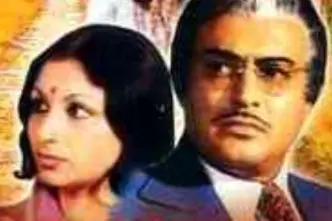
Gulzar's beautiful film Mausam (loosely based on A.J. Cronin's The Judas Tree) comes closest to portraying the prostitute as the no-nonsense professional she is in real life. Kajli, the prostitute in Mausam, bears an uncanny resemblance to Mary (Bette Davis), one of the five prostitutes in Warner Brothers' Marked Woman.
This film was based on the sensational court case of New York on June 6, 1936 in which Charles "Lucky" Luciano was convicted on 61 counts of compulsory prostitution, ending one of the nation's biggest vice investigations. It is as if Kajli (of Mausam) is saying that prostitution will always exist in a capitalist society, of which one necessary facet is the economic and social repression of women. Therefore, there can be neither ‘cure’ for nor end to the trade in women regardless of the number or the intensity of anti-vice investigations.
Writes Anuradha Warrier on Mausam in Conversations over Chai, (14th March 2016): “My usual problem with Gulzar's films - and I honestly have liked many of them - is that while he did tell women's stories, I always got the feeling that they were narrated through the prism of a man's perspective. (Here, too, while the story is Chanda's and later, Kajli's, most of it is told from the perspective of Gill (Sanjeev Kumar) Gulzar's women, while sensitively picturised, were paradoxically very traditional in their attitudes. (Here, too, Kajli breaks down in the end - 'Main adhoori nahin rehna chaahti.') I suppose one could argue that there are women like that, but I've never been able to watch a Gulzar movie without mentally bracing myself for an attitude I cannot get behind.”
Sharmila Tagore won the National Award for her performance in the film in a double role – of mother and daughter. When the grown daughter makes her appearance on screen, the mother, gone completely insane when she believes her lover Dr. Gill has betrayed her, is already dead. When Dr.Gill who had failed to come to marry Chanda (the mother) returned to the hill station after many years, looking out for Chanda, he learns that she is dead and had left behind a daughter following her marriage to a local man who also, was dead.
Kajri, the daughter, trafficked into prostitution, meets Dr. Gill as he goes looking for Chanda and is shocked to find a much younger version of Chanda mouthing filthy expletives as she comes out of a cheap brothel for a bidi at the shop below the brothel where she lives.
Warrier rightly comments, “Never until then, in the annals of Hindi cinema, had there been such a prostitute. Not for Kajli the coy, demure maiden, who is 'pure' despite her profession. Not for her the high flung Urdu of the courtesan, or the refined kathak of the kotha. She is a product of the brothel, a foul-tongued prostitute, pushed into the trade when she is raped by her ‘neighour’ uncle.”

Kajri is an unabashed, plain-talking sex worker. She does not have the time to sit around singing ghazals about broken hearts and unspoken dreams. With no misconceptions about what a man wants when he pays for her services, Kajli is remarkably unapologetic about her profession, and breathes fire and brimstone as she sends Dr Gill packing the first time. Later, when he asks her to 'keep his respect', she tells him, 'Izzatdaar aadmike saath apni badi beizzati hoti hai, saahib.”
Kajli and the brothel madam who looks after her girls like a mother does her children, are perhaps the most outstanding fleshing out of working women by Gulzar marking out an exception in his characterization of the working woman and that too, a cheap sex worker and the sociological metamorphosis she goes through when the elderly Dr. Gill takes her under his protective wing and never uses her for anything remotely linked to sex.
She is shocked at first to discover that Dr. Gill is not interested in her ‘services’ in any form as every man she has come across till then had the single aim of buying sex from her for a few hours. She, in her entire life has never ever met a man who does not want to do anything with her body. This elderly doctor is the first man who has given her food, shelter, clothing and respect, cutting off those who refuse to serve him when she is around such as the Brahmin cook.
Gulzar splits the narrative down the middle - the first half of the film unfolds the hero's unending search for the woman he loved, covering the hilly terrains of the countryside he left behind years ago. The second half is thrust upon the audience with a suddenness that intensifies the shocking brutality of the impact. The hero stops his car on a small town street corner one night to buy some aspirin for his headache from the paan-shop. The coarse, abusive voice of a woman followed by a man running down the rickety wooden stairs of the house above, his footwear flying through the air makes him look up to find the girl he knew many years ago, now a foul-mouthing, bidi-smoking prostitute.
He soon realises that the girl is not his lady love but her daughter. As he proceeds to become familiar with her, she takes him on as one more client. But when he addresses her as beti, (daughter), she turns in disgust, walks to the madam and tells her, "this one wants to adopt me." The earlier set of scenes of the growing love between the young doctor and the girl of the hills (a dual role of mother and daughter portrayed by the same actress, Sharmila Tagore), defines the standard melodrama of the average popular film, the unusually structured flashback being the only relief.
But there is a dramatic change in the narrative, both in terms of treatment and mood, in the second half of the film, when the young prostitute comes to live in this man's holiday home. It is composed of the ageing hero's trying to 'buy' off the young girl from the brothel madam, who refuses with dignity, of the madam's persuasion of Kajri to accept his love, (mistaking his attempt to atone for his guilt as sexual and emotional attraction), of Kajri's vain attempts to first entertain this unusual customer and then to shed her brothel habits of abusive language, smoking, drinking, dressing, etc. Till the narrative slowly builds up to the striking climax, the girl realising who this man truly is, the photograph hidden away in her hand, his car stopping by, and then the two of them driving away with the relationship now on the firmer ground of affection reflective in a father-daughter relationship. But biologically, the two are not related at all. The second half of the film composes a separate order of experience. Yet, one begins to feel a common and necessary link between the two orders, as if one gave rise to the other or was a precondition to its existence.iii
Music and the few songs are very expressive of each emotion as it rolls out in the film. They are necessary to the emotive demands of the story and not just entertaining intrusions. Gulzar chose Madan Mohan to score the music for this film. The soft, low-key, background score was by Sail Chowdhury. Dil Dhoonta Hai is used twice to express the emotional turmoil in the characters. The rhythm, the mood and the rendering once by Lata Mangeshkar and then by Bhupender and Lataji are distanced. For Dr. Gill, it is looking back at his past with his lover, Chanda. The earlier rendering is very different, happy, cheerful and full of promise. Ruke ruke Se Kadam is belted out by Kajri when there is a transformation in her after having lived in Dr. Gills’s house for quite some time. This Is Raag Ahiri Todi, a combination of Ahirbharav and Todi. It is only the number chhadi re chhaki mere gale mein padi that, in retrospect, seems redundant.
Though the film closes on a note of hope, the closure to this brave and bold story is subtle and understated and that is what adds to the beauty and the immortality of the film. It also radically transformed the screen image of Sharmila Tagore from the one she was popularly labelled with and was known for. Sharmila Tagore for her acting received The Silver Lotus Award at the 23rd National Film Festival and the film itself was awarded the Second Best Feature Film. The film was nominated in eight categories at the 24th Filmfare Awards and won in two.
Gulzar democratises his support both for Dr.Gill (Sanjeev Kumar), the mother-daughter duo of Chanda and Kajli and Chanda’s late father (Om Shivpuri). For Mausam at least, he treats his two women, the gone-insane-for-love mother and the prostitute daughter with great dignity never mind Kajli’s foul mouth, smoking bidis, dressed any which way not bothered about codes of decency or decorum. The film presents us with a completely unique version of the sex worker in Indian cinema.
Published: 03 Jan 2026, 11:07 am IST
Related Topics
Disclaimer: Kindly avoid objectionable, derogatory, unlawful and lewd comments, while responding to reports. Such comments are punishable under cyber laws. Please keep away from personal attacks. The opinions expressed here are the personal opinions of readers and not that of Mathrubhumi.