
Amendments to the 1971 National Honour Act give Vande Mataram equal status with the anthem. However, their silence on passive silence directly challenges the Supreme Court’s landmark Bijoe Emmanuel precedent on free speech
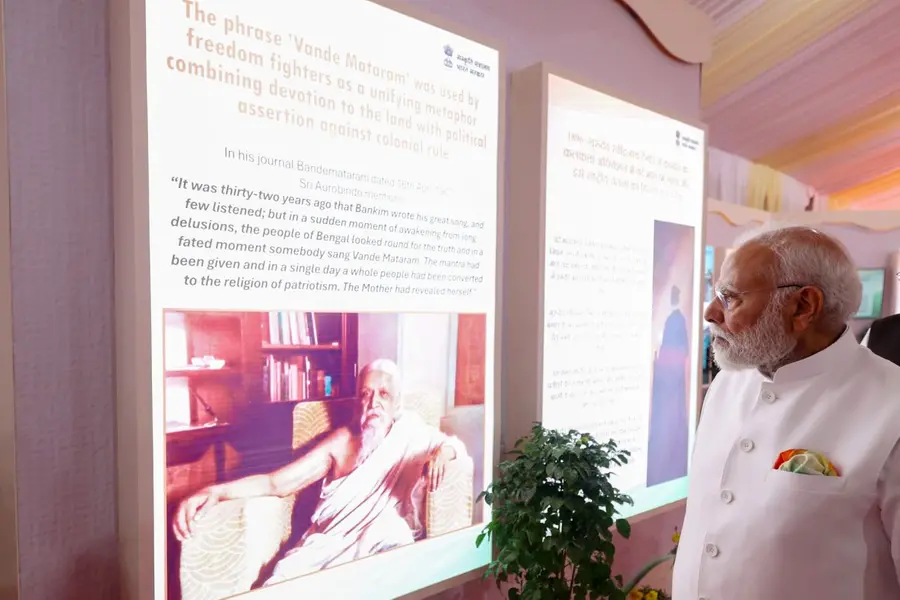
The Prevention of Insults to National Honour (Amendment) Bill, 2026, passed by Parliament on July 30, marks a watershed moment in India's legislative approach to patriotic symbols. The Bill substitutes Section 3 of the 1971 Act to place the National Song, ‘Vande Mataram’, on the exact same penal footing as the National Anthem, prescribing up to three years of imprisonment, a fine, or both for anyone who intentionally "prevents the singing" or "causes disturbance to any assembly engaged in such singing".
However, a close examination of the text reveals that what the Bill leaves unsaid is far more significant than what it enacts. In its attempt to legally enforce reverence, the proposed amendment maintains a deafening silence on the vital distinction between active disruption and passive non-participation. By failing to clarify whether remaining silent while an assembly recites all six stanzas of Vande Mataram constitutes an offence, the draft leaves a precarious void—one that directly threatens fundamental constitutional liberties.
The textual trap
The core of the proposed Section 3 penalizes two specific acts: intentionally preventing the singing, or causing disturbance to an assembly engaged in singing. The Statement of Objects and Reasons explicitly cites Dr Rajendra Prasad’s historic declaration of January 24, 1950, asserting that Vande Mataram "shall be honoured equally with Jana Gana Mana".
Also Read: Vande Mataram Bill explained: What the proposed law says and why it is controversial
Yet, in practical application, executive implementation often blurs the line between "disrespect" and "non-compliance." When executive directives call for the recitation of all six stanzas of Bankim Chandra Chattopadhyay’s composition—passages that move from evocative natural descriptions of the motherland to explicit religious iconography—a critical question arises: Does a citizen who stands respectfully in silence, but chooses not to join in vocalizing the verses, commit an act of "prevention" or "disturbance"?
By remaining silent on passive non-participation, the Bill creates an ambiguous penal standard. In criminal jurisprudence, ambiguity in a penal statute is a direct invitation to executive overreach and arbitrary prosecution.
Bijoe Emmanuel and the Right to Silence
This legislative ambiguity collides directly with four decades of settled constitutional jurisprudence. In the landmark case of Bijoe Emmanuel vs State of Kerala (1986), the Supreme Court of India addressed this exact line of demarcation when three Jehovah’s Witness children were expelled for standing respectfully during the National Anthem without actively singing it.
Writing for the Court, Justice O Chinnappa Reddy established two foundational principles that directly address the statutory silence of the 2026 Bill: first, standing up respectfully during the rendering of a national symbol satisfies the civic obligation of decorum. Silent, respectful non-participation does not constitute "preventing" the singing or "causing disturbance" to others. Secondly, freedom of Speech and Expression under Article 19(1)(a) inherently encompasses the negative right—the right to remain silent. Furthermore, compelling an individual to actively utter words that conflict with their genuine, conscientious religious beliefs violates the Freedom of Conscience guaranteed under Article 25.
With the 2026 Bill passing without explicitly protecting passive non-participation, there is now a risk of criminalizing the very "Right to Silence" that Bijoe Emmanuel affirmed as a hallmark of Indian constitutionalism.
The "Fixed Star" of Barnette
The danger of penalizing passive silence in the name of national unity is a dilemma well-known to constitutional democracies. The Indian doctrine of negative speech draws heavily from transatlantic legal history.
In Minersville School District vs Gobitis (1940), the US Supreme Court initially permitted public schools to expel Jehovah’s Witness children who silently refused to salute the flag and recite the Pledge of Allegiance. Justice Harlan Fiske Stone famously dissented, warning that true liberty protects the individual from state compulsion regarding what they must utter.
Just three years later, in West Virginia State Board of Education v. Barnette (1943), the US Supreme Court reversed Gobitis Justice Robert H Jackson articulated the enduring principle:
"If there is any fixed star in our constitutional constellation, it is that no official, high or petty, can prescribe what shall be orthodox in politics, nationalism, religion, or other matters of opinion or force citizens to confess by word or act their faith therein."
The Barnette ruling established that while the state can penalize active desecration or public harm, it cannot legally compel the physical utterance of a pledge or song.
Article 51-A(a) and the Statutory Burden
The legislative attempt to penalize non-compliance with Vande Mataram faces an additional structural hurdle within the Indian Constitution itself. When the 42nd Amendment introduced Fundamental Duties under Article 51-A(a) in 1976, Parliament mandated citizens:
"...to abide by the Constitution and respect its ideals and institutions, the National Flag and the National Anthem."
The National Song was deliberately omitted from Article 51-A(a). Under the canon of construction Expressio unius est exclusio alterius (the explicit mention of one thing implies the exclusion of another), the Constitution does not construct a fundamental civic duty to perform the National Song in the identical statutory framework as the National Anthem.
While Dr Rajendra Prasad's 1950 statement accorded equal political honour to Vande Mataram, the Supreme Court noted in Shyam Narayan Chouksey vs Union of India (2018) that executive statements do not alter the formal textual boundary of Article 51-A. Therefore, imposing a three-year prison sentence for ambiguous acts surrounding a symbol outside Article 51-A(a) imposes an extraordinarily heavy constitutional burden under the "reasonable restrictions" test of Article 19(2).
Preserving Constitutional Tolerance
A statutory amendment that penalizes disruption but remains silent on the status of respectful silence leaves a dangerous door open to coercion. True national reverence cannot be legislated through penal threats; it flourishes through voluntary civic devotion.
Without explicit safeguards protecting respectful non-participation and freedom of conscience, the Bill risks transforming an iconic song of anti-colonial unity into an instrument of statutory compulsion.
In the words of Justice Chinnappa Reddy in Bijoe Emmanuel:
"Our tradition teaches tolerance; our philosophy preaches tolerance; our Constitution practices tolerance; let us not dilute it."
The author is Deputy Law Secretary to the Government of Kerala. Views expressed are personal.
Published: 03 Aug 2026, 01:00 pm IST
Related Topics
Disclaimer: Kindly avoid objectionable, derogatory, unlawful and lewd comments, while responding to reports. Such comments are punishable under cyber laws. Please keep away from personal attacks. The opinions expressed here are the personal opinions of readers and not that of Mathrubhumi.
