
As humanity races toward ever-greater heights of scientific and technological advancement, the price we pay becomes increasingly evident. Our relentless pursuit of progress has come at the expense of the planet’s health, the well-being of countless species, and the integrity of ecosystems that have thrived for millennia.
This harsh reality begs the question: What are we truly advancing toward if the very foundation of life is being eroded beneath our feet?
Also Read

In the quiet corners of our world, where the untouched wilderness once thrived, there is now a deafening silence. The once-thriving habitats, home to diverse and magnificent creatures, are now barren landscapes, stripped of life and vitality.
The heart-wrenching consequences of our actions are unfolding before us, and yet, the world presses on, often blind to the devastation it leaves in its wake.
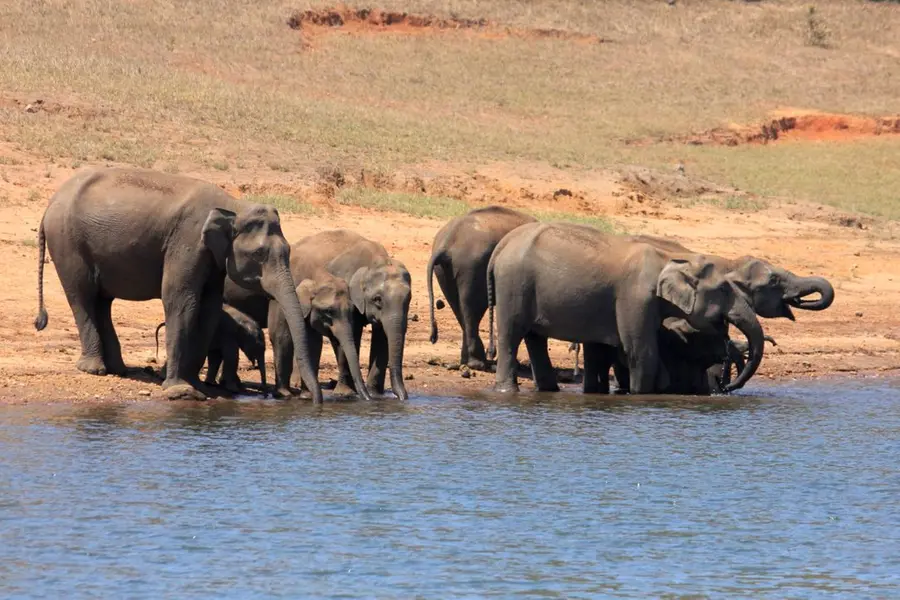
The story of a young mother elephant, a majestic creature of the wild, recently fell victim to the cruelty and recklessness of man -- a story that underscores the depth of our moral failing.
In a harrowing incident, this elephant was not only robbed of her freedom but also of her life in the most brutal way imaginable. Allegedly, vile men, driven by anger and hatred, assaulted this innocent being with flaming hullas soaked in kerosene, igniting a fire that clung to the elephant’s body.
As the flames devoured her flesh, and the spear damaged her spine, this magnificent creature was left to suffer an agonizing death, her cries and the distressing trumpets of her herd witnessing her suffering filling the air.
In that same herd a young bull elephant, confused and frightened, wandered into a village, allegedly leading to the death of a villager. In response, the local authorities, seemingly unprepared and ill-equipped, darted the elephant with tranquilizers, leaving him unable to walk and disabled. The suffering animal was then released back into the forest without proper treatment, abandoned to face his fate alone. The elephant eventually succumbed to his injuries, a casualty of the negligence and cruelty that so often plague human-animal interactions.
The reckless actions of those responsible for these atrocities cannot be overlooked. The West Bengal Forest Department, which allowed and even encouraged the use of 'hulla' (fireballs) to drive away elephants, must be held accountable. These fireballs, made of sticky jute fabric soaked in kerosene and attached to iron rods, were not just tools of deterrence but instruments of torture, inflicting unimaginable pain on the animals they were meant to repel.
Local communities, outraged by these senseless acts of violence, are now demanding justice. Protests are planned, and investigations are underway, but the damage has been done. The elephants are dead, their lives cruelly snuffed out by human hands. These heinous crimes against India's heritage animals are intolerable, and the outcry for justice is growing louder by the day.
The Wildlife Crime Control Bureau and the Ministry of Environment, Forest and Climate Change, Government of India, must act swiftly and decisively to penalize those responsible for these barbaric acts.
These heart-wrenching stories but two examples of the suffering inflicted on the natural world by humanity’s unyielding exploitation in its quest for dominance. It serves as a poignant reminder of the moral responsibilities we bear as stewards of this planet, drawing from three essential themes:
1. the inherent value of nature,
2. our deep spiritual connection with the natural world, and
3. the urgent need to shift from human-centered (anthropocentric) to life-centered (biocentric) values.
These themes are not just intellectual exercises; they are calls to action in a world teetering on the brink. At the core of environmental ethics is the understanding that humans are not the pinnacle of existence but rather equal members of Earth's community.
This humbling realization is both a plea and a command: to see nature not as a resource to be exploited, but as a fellow traveler on this journey of life. Every tree, every river, every animal holds a value that transcends human utility. Their worth is intrinsic, woven into the very fabric of existence, and it is not for us to decide their fate based on our desires.
Yet, we have ignored this truth. We have built empires on the backs of the voiceless, draining the Earth of its lifeblood to fuel our insatiable appetites. In this blind pursuit, we have forgotten that every living being, from the smallest insect to the tallest tree, plays a vital role in the delicate balance of life.
The thoughtless destruction of these lives for the sake of convenience or profit is a tragedy of unfathomable proportions. It is a wound that the Earth bears silently, but one that will not heal without our intervention.
Deep Ecology offers a profound perspective on this crisis, suggesting that the value of non-human life is independent of its usefulness to us. It challenges us to move beyond a mindset that prioritizes endless consumption and instead fosters a deep appreciation for the quality of life.
This is not merely about saving other species; it is about saving ourselves. For in severing our connection to the natural world, we are cutting away at the very roots that sustain us. The loss of a single species is not just a statistic -- it is a piece of our collective soul, lost forever.
The notion that nature possesses inherent value has far-reaching implications. If we recognize this value, we must also acknowledge our moral responsibility to protect it. This is not a matter of legal rights alone but of ethical duty. It is about recognizing the suffering we have caused and making amends before it is too late.
The parallels to historical struggles for human rights are stark; just as we once fought for the dignity of marginalized human groups, we must now extend that fight to encompass all living beings.
The right to exist, to thrive, is not a privilege reserved for humans alone -- it is a universal right that we have no authority to revoke.
Yet, our current legal systems are woefully inadequate to address these moral imperatives. We have granted rights to non-human entities like corporations, yet we hesitate to extend similar rights to sentient beings. This contradiction reveals a deep-seated arrogance, a belief that we are the masters of this planet, entitled to shape it as we see fit. But this arrogance has come at a steep price.
The ecosystems that sustain us are collapsing under the weight of our hubris, and the suffering that ensues is immeasurable. The gap between our ability to foresee the consequences of our actions and our capacity to act responsibly is widening.
As we wield ever-greater technological power, we often fail to consider the long-term effects of our actions. This short-sightedness is not just a failure of imagination; it is a failure of morality. Every species we drive to extinction, every forest we raze, every river we pollute is a testament to our failure to live in harmony with the Earth.
The extinction of a species is not just the end of a biological line -- it is the erasure of a unique chapter in the story of life, a chapter that can never be rewritten. The recognition of the 'will-to-live' in all beings suggests that we are bound by a spiritual connection to the natural world.
This connection is not something to be taken lightly. It is a sacred bond that calls us to nurture, protect, and cherish life in all its forms. But in our relentless pursuit of progress, we have severed this bond, leaving a void that no amount of technological advancement can fill.
The suffering we have inflicted on the natural world is a reflection of our own inner turmoil, a cry for help from a world that has lost its way.
Moving from an anthropocentric to a biocentric ethic is not just about changing laws or policies -- it is about changing hearts and minds. It requires a fundamental shift in how we see ourselves and our place in the world.
We must recognize that our actions have consequences, not just for ourselves, but for all life on this planet. The ethical responsibility to protect the Earth must be embedded in our culture, our communities, and our daily lives. It is a responsibility that we cannot shirk, for the cost of inaction is too great to bear.
The challenges we face in making this transition are immense. Population growth and pollution are pushing the natural world to its breaking point. The integrity of the biosphere is under threat, and the consequences of our actions are becoming increasingly dire.
We are not just altering the environment -- we are dismantling the very systems that support life. The question is not whether we can continue on this path, but whether we should. The answer is clear: we cannot afford to continue sacrificing the Earth for short-term gains.
As the living world pleads for its integrity to be spared, we must ask ourselves how to foster an ethic that truly recognizes the inherent value of nature. Is it through granting moral rights to all living things? Extending legal rights to nature? Or is it about cultivating a deep, personal connection to the natural world that transcends materialism and consumerism? Perhaps it is all of these things and more.
In the face of escalating environmental crises, we are invited to confront these questions with the seriousness they deserve. The time for half-measures and empty promises is over. We must deepen our dialogue, reflect on our values, and commit to collective action. The future of our planet -- and all its inhabitants -- depends on it.
Let us not forget that in saving the Earth, we are saving ourselves. The pain we have caused is great, but the opportunity for redemption still lies before us. It is up to us to seize it.
The author is a wildlife filmmaker and founder of Voices for Asian Elephants
Published: 25 Aug 2024, 10:11 am IST
Related Topics
Disclaimer: Kindly avoid objectionable, derogatory, unlawful and lewd comments, while responding to reports. Such comments are punishable under cyber laws. Please keep away from personal attacks. The opinions expressed here are the personal opinions of readers and not that of Mathrubhumi.