
It is worth asking whether blue-water status is even the correct benchmark for judging a navy whose citizens face more frequent, more immediate risk from piracy and missile threats to commercial shipping than from any scenario its newest platforms are built around
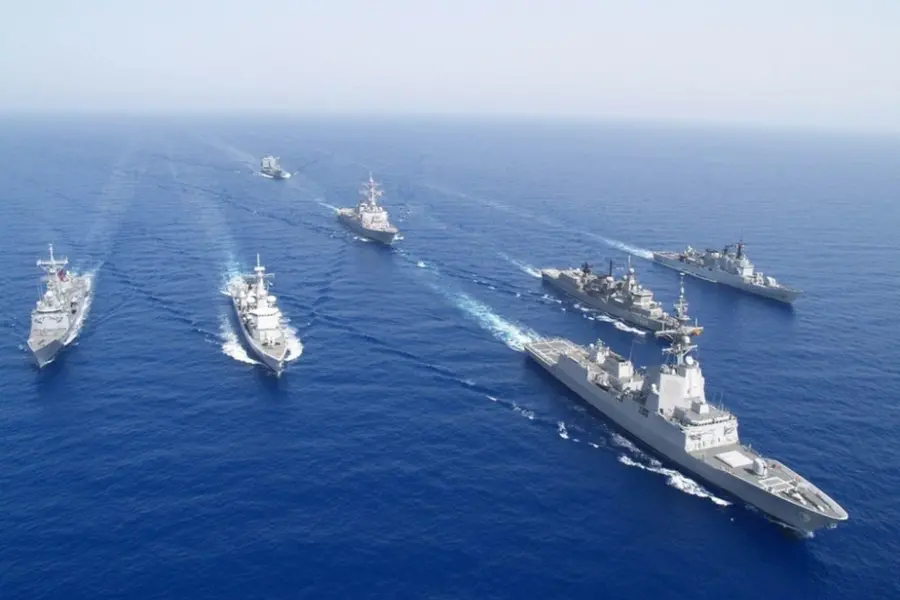
There are two ways to evaluate what a decade of naval investment has bought a country, and Pakistan's own institutional messaging consistently favors one over the other. The first measure counts platforms: Chinese-built Type 054A/P frigates now in service, Hangor-class submarines arriving in stages, expanding surveillance and patrol capability, and a leadership vocabulary increasingly built around blue-water ambition. By this measure, the last ten years represent genuine, well-documented progress.
The second measure counts outcomes for the people the navy's mission statements say it exists to protect — and by that measure, the same decade looks considerably less resolved. Maritime risk to Pakistani nationals working aboard foreign-flagged commercial vessels has not declined in step with the fleet's growth; if anything, the threat environment across the Gulf of Aden and Red Sea corridor has become more dangerous since 2023, driven by a shift from opportunistic piracy toward missile and drone attacks — a threat that Pakistan's frigate modernization was never postured or deployed to address, whatever its technical air-defense capability on paper.
The tension between these two measures is not really a contradiction, and treating it as one risks missing the actual point. Pakistan's naval procurement has been shaped overwhelmingly by deterrence logic aimed at India and by the broader defense relationship with China that underwrites much of the current shipbuilding program. Those are legitimate strategic priorities, and nothing about them is inherently misguided. The issue is that citizen protection in distant, high-risk corridors was never built into that procurement logic as a distinct requirement, and Pakistan's public narrative around naval modernization rarely acknowledges the omission directly.
This matters because the two missions require different things. Deterrence against a state rival calls for submarines, frigates, and a credible conventional posture close to home. Protecting a scattered civilian workforce thousands of kilometers away calls for persistent maritime domain awareness, rapid-response capability, and institutional coordination with flag states and shipping companies — none of which shows up as a line item in Pakistan's current defense budget, and none of which gets discussed with anything like the attention given to a new submarine's delivery.
It is worth asking whether blue-water status is even the correct benchmark for judging a navy whose citizens face more frequent, more immediate risk from piracy and missile threats to commercial shipping than from any scenario its newest platforms are built around. A smaller investment redirected toward flag-state liaison, faster consular response, or a functioning seafarer welfare mechanism would plausibly move the outcome ledger more than continued platform expansion — a case that deserves more attention in Pakistan's defense discourse than it currently receives.
None of this is an argument for abandoning naval modernization. It is an argument that a navy's stated purpose and its actual resourcing should be judged against each other honestly, rather than allowing platform announcements to stand in for security outcomes they were never designed to produce. That risk is not hypothetical. In August 2026, a Houthi strike on the Tanzanian-flagged cargo vessel Tihamah in the Bab el-Mandeb killed three Pakistani crew members — a reminder that the corridor's dangers do not wait for the fleet to catch up.
Until Pakistan's naval strategy treats citizen protection abroad as a mission requiring its own investment, rather than an assumed byproduct of general modernization, the fleet will keep growing while the specific risk it was never built to address keeps resurfacing on its own schedule.
About the author: The author is a maritime scholar, strategic affairs analyst, and Indian Navy veteran. He is an expert faculty and IBDP Examiner in Global Politics and an Adjunct Faculty of Maritime and Strategic Studies at Naval War College, Goa.
Published: 08 Sept 2026, 02:08 pm IST
Related Topics
Disclaimer: Kindly avoid objectionable, derogatory, unlawful and lewd comments, while responding to reports. Such comments are punishable under cyber laws. Please keep away from personal attacks. The opinions expressed here are the personal opinions of readers and not that of Mathrubhumi.
