
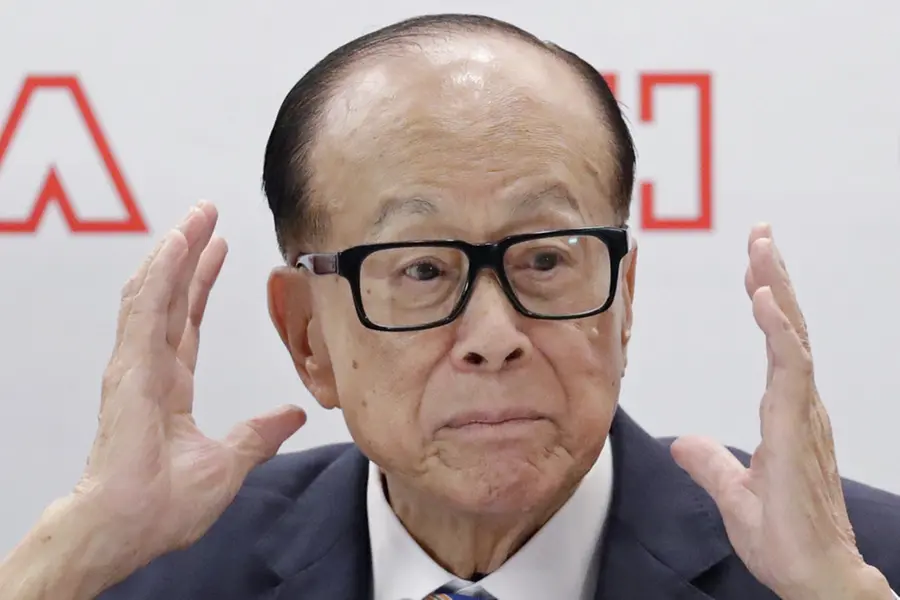
The Chinese Communist Party (CCP) is taking on the Superman. Not the one created by DC Comics, but the Hong Kong tycoon, Li Ka-shing, who is affectionately known by the same moniker in the former British colony.
Beijing's displeasure stems from a global business decision: the sale of ports in Panama. CK Hutchison, headed by Li Ka-shing, owned 80 ports worldwide, including two strategic locations in Panama. In January, Hutchison announced the sale of its entire port business to American asset management giant BlackRock for US$23 billion, securing a substantial profit for the Hong Kong-based conglomerate.
Far from nodding approval of this business success, Beijing expressed anger that Li Ka-shing's flagship company as it relinquished control of the two Panama ports at a time when trade tensions between China and the United States rising.
The first indication of trouble appeared when two local newspapers which act as a mouthpiece of the CCP published an editorial criticising the sale as a betrayal. The Beijing administration's local offices in Hong Kong and Macau subsequently endorsed this view by posting the article on their official website the following day.
Baptist University academic and former South China Morning Post editor Wang Xiangwei noted that while such criticism raised eyebrows in Hong Kong's free-wheeling capitalist society, a similar reaction might have occurred if the situation were reversed: "Say, BlackRock decided to sell 43 ports, including those in the Panama Canal and others in 23 countries, to CK Hutchison in Hong Kong. It's easy to envision Trump immediately condemning the deal on his preferred social media platform, Truth Social, citing national security concerns."
Revered Figure
Beijing's criticism was particularly unexpected given Li Ka-shing's status globally and as a respected figure in Hong Kong. Even powerful Beijing leaders like Deng Xiaoping had held him in esteem, and Li had held meetings with both Deng and President Jiang Zemin – an extraordinary honour few global business leaders can claim.
Before China's 1997 takeover of Hong Kong, Beijing actively sought Li's insights and personal support. His endorsement of the handover signalled to Hong Kong residents that they could trust the transition despite fears about communist rule in a city built on capitalism and British rule of law.
When China began opening its economy, Hong Kong businessmen like Li Ka-shing played a crucial role, teaching the Chinese on the mainland fundamentals of international trade and making substantial investments on the mainland.
Though he officially retired from active leadership of his companies in 2018 at age 89, with his son Victor Li assuming control, the 94-year-old continues as a senior adviser of Hutchson. While rarely seen at public events now, he maintains his revered position in Hong Kong, having donated billions to develop educational and healthcare institutions.
Refugee to Business Titan
Beyond his generosity, what made Li Ka-shing a defining symbol of Hong Kong was his quintessential rags-to-riches story. Born in 1928 in Chaozhou, China, Li Ka-shing's early life was marked by hardship. His family fled to Hong Kong during Japan's occupation of China. Tragedy struck when his father died from tuberculosis, forcing 15-year-old Li to abandon his education and become his family's breadwinner.
He began as a factory worker, enduring 16-hour days for just HK$30 while educating himself by reading borrowed newspapers and business publications. By age 22, Li had saved enough to establish Cheung Kong Industries, a plastic manufacturing company specialising in artificial flowers.
This modest enterprise flourished quickly as the plastic flower market boomed in Western countries, and Li's export-focused operation capitalised on growing demand. His business acumen truly emerged in 1967 when British-ruled Hong Kong saw a series of violent leftist protests and labour strikes inspired by the Cultural Revolution in mainland China. The months of violence engineered from Beijing left 51 people dead and devastated the economy.
When property values plummeted and investors fled the market, Li recognised a once-in-a-lifetime opportunity, purchasing real estate at bargain prices. This counter-cyclical investment strategy launched his transition from manufacturing into property development.
Now his empire extends to sectors like logistics, retail, telecommunications, infrastructure, energy, real estate, renewable energy, healthcare, venture capital, media, and transportation, with presence in over 50 countries.

quintessential rags-to-riches story
In recent decades, Li pivoted toward technology investments through Horizons Ventures, making early bets on companies like Facebook, Spotify, Zoom, and DeepMind. This technological foresight ensured his business empire expanded into the digital realm also.
Hong Kong’s Shield
His business philosophy combined traditional Chinese wisdom with modern management practices, emphasising perseverance, integrity, and calculated risk-taking. This approach earned him the nickname "Li Ka-shing shield" among investors, referring to the perceived protection his associated companies enjoyed during economic downturns.
A popular joke in Hong Kong claimed that the "Li Ka-shing shield" would ensure that even typhoons stayed away from the city until weekends, so work would not be interrupted.
Despite becoming Asia's richest man by the 1990s, countless stories about his frugality enhanced his iconic status. His reported preference for inexpensive watches and local salons for haircut became folklore while newly minted millionaires in the city flaunted their wealth without any humility.
Beijing’s Shadow
When Beijing officials began publicly declaring that his business empire had betrayed the Chinese interests, it sent shockwaves through Hong Kong, as Beijing had cracked down hard using the National Security Law enacted in 2021.
This law gives Beijing the power to override Hong Kong laws, make non-bailable arrests and transfer those charged out of Hong Kong's judicial system into party-controlled mainland courts. Nearly all political party members and student leaders who opposed Beijing have been imprisoned for the last few years, some sentenced, others awaiting trial. Even those who escaped to foreign countries face pursuit, regardless of their citizenship status. But businessmen were spared, at least so far.
With Beijing now targeting Li Ka-shing's empire over the Panama port sale, this shakes the foundations of Hong Kong’s society. The local administration, now widely seen as Beijing's proxy, has already hinted that the business deal will be reviewed to see if it has breached any local laws. Speculation is growing about whether Beijing or Hong Kong authorities will intervene to halt the deal – expected to be signed by April 2.
If the Communist Party interferes with this business transaction, it would signal Beijing's complete abandonment of the promises made to Hong Kong when it signed the Sino-British Joint Declaration in 1997.
Under this agreement, Beijing had pledged to preserve Hong Kong's way of life including its freedoms for 50 years. But only 28 years have gone by and the CCP leadership has systematically dismantled Hong Kong's core values one by one.
Action against a Hong Kong businesses, especially the empire of Hong Kong's "Superman", would be the final indication that the only remaining pillar of this once-vibrant city has also crumbled.
Published: 25 Mar 2025, 11:55 am IST
Related Topics
Disclaimer: Kindly avoid objectionable, derogatory, unlawful and lewd comments, while responding to reports. Such comments are punishable under cyber laws. Please keep away from personal attacks. The opinions expressed here are the personal opinions of readers and not that of Mathrubhumi.