
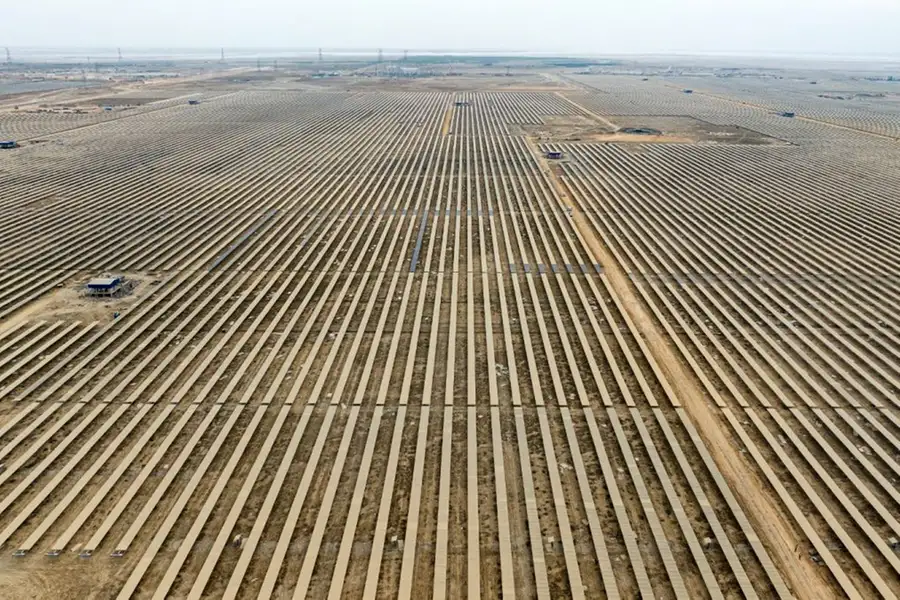
Solar has led the way. Government data show solar capacity rising from 2.82 GW in March 2014 to 150.26 GW in March 2026
India’s clean-energy story has moved from promise to proof. The report of the International Energy Agency (IEA) India Renewable Energy Market Report 2026 finds that the country’s renewable power capacity has almost quadrupled over the past decade and passed 300 GW this year. The report names India the world’s second-fastest-growing renewable market and its second-largest manufacturer of solar PV modules. Set against China, the United States and Europe, the Indian record stands out for its pace and for the economic logic behind it.
India reached its goal of drawing half of its installed power capacity from non-fossil sources in 2025, five years ahead of schedule. It has also become the world’s fourth-largest liquid biofuel market, with production up sixfold since 2020. That extends the transition beyond electricity and into transport fuels.
India added 49 GW of renewable capacity in 2025, more than triple its average over the previous five years. The IEA puts the rise in India’s annual additions at almost 60%, the fastest among major markets. Data from the International Renewable Energy Agency (IRENA) show India overtaking Brazil to become the world’s third-largest renewable market, with about 250 GW installed by the end of 2025. The two agencies use different accounting bases, so their totals differ, but both point the same way.
The economics are as notable as the engineering. Renewable electricity saved India more than $100 billion in coal and natural gas import costs between 2011 and 2025, the IEA says. Without the solar, wind and bioenergy added since 2010, India’s coal imports in 2025 would have been about 110 million tonnes higher. The agency expects cumulative savings to reach nearly $240 billion by 2030. In a year of volatile fuel markets driven by conflict in the Middle East, that cushion carries real strategic weight.
Solar has led the way. Government data show solar capacity rising from 2.82 GW in March 2014 to 150.26 GW in March 2026. Wind reached 56.09 GW over the same period, while total renewable capacity, including large hydropower, stood at 274.68 GW. In the 2025–26 financial year, distributed solar contributed 16.3 GW, or 36% of the 44.61 GW of renewable capacity added.
Two flagship schemes explain much of the momentum. The PM Surya Ghar Muft Bijli Yojana is pushing rooftop solar into households, while PM-KUSUM supports solar irrigation pumps and farm feeders, tying clean power to agriculture. Together they spread generation across homes and farmland, potentially lowering some users’ exposure to grid costs and diesel.
Published: 23 Nov 2026, 12:07 pm IST


Related Topics
Disclaimer: Kindly avoid objectionable, derogatory, unlawful and lewd comments, while responding to reports. Such comments are punishable under cyber laws. Please keep away from personal attacks. The opinions expressed here are the personal opinions of readers and not that of Mathrubhumi.
