
Satyajit Ray introduced a minor scene on this practice in his film Samapti, the last of the Tagore trilogy Teen Kanya he made as a tribute to Rabindranath Tagore on his centenary
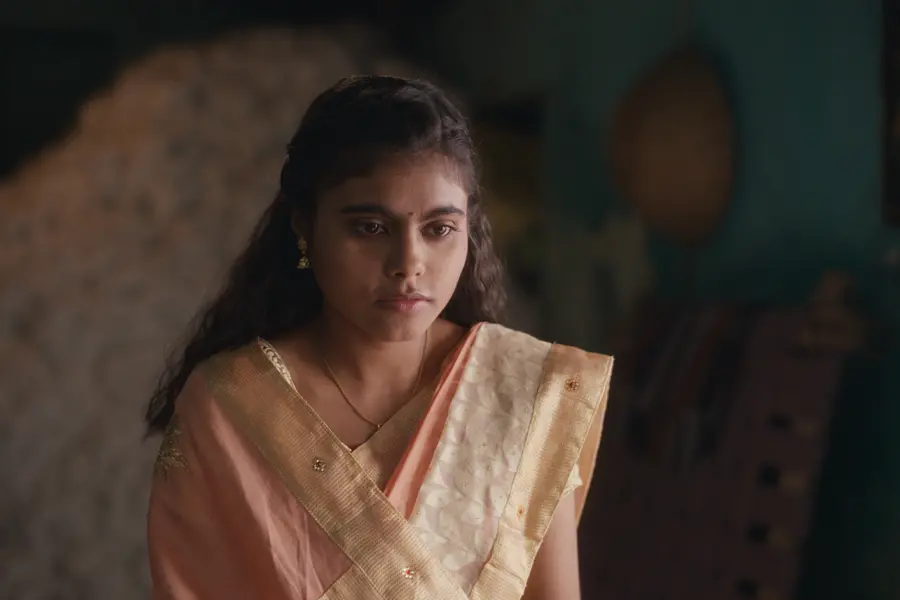
Sthal, a Marathi language film by a debutant director just won five (Critics Jury) Awards in the Marathi films section of the Filmfare Awards. It is a scathing audiovisual attack on the practice of ‘bride-viewing’ for arranged marriages in Indian families.
The bride-viewing practice in traditional Indian arranged marriages—known regionally by names like Pennukanal in Kerala or simply as the "seeing" ceremony (dekhna or chehra dekhna)— is an introductory meeting where the prospective groom and his family visit the bride’s home to evaluate “compatibility, character, and mutual suitability.”
Also Read

The prospective groom, his parents, and close relatives travel to the home of the prospective bride. Historically, it served as a formal checkpoint for both families to approve the match before proceeding with astrological matching or engagement. With changes in social practices, customs and the education of girls, this custom has been reportedly modernized by “allowing” the boy and girl to meet informally without elders being present and “allowing” them to find out if they are the right “match” for each other.
But the original custom is tinged with heavy doses of patriarchy. The ‘modern’ version also, in most cases, a cleverly veiled ‘drama’ followed by the meeting between the elders of both families to “discuss” the financial exchange value of this ‘transaction’ called “dowry” and if the bargaining fails from any one side, the marriage is called off. And another similar script is planned, written and presented another boy’s family comes to “see” the girl, ask her stupid questions and weigh the financial status of the family.
This is part of the cultural history of India since one can remember. It is completely patriarchal and it hardly occurs to prospective brides, their parents and relatives to raise their voice against this very negative practice. So it goes on for ages with minor hiccups when the boy and girl decide on their own to make their individual decision to marry with or without the families’ support.
Satyajit Ray introduced a minor scene on this practice in his film Samapti, the last of the Tagore trilogy Teen Kanya he made as a tribute to Rabindranath Tagore on his centenary. In this film, there is one scene where we find the hero Amulya coaxed by his mother to go and “see” a girl she has chosen for him to marry off to. Amulya dresses up, dons his Oxford shoes, pockets his chain watch and sets off. The girl is quite small, is draped awkwardly in an expensive sari and beckoned to sit in front of Amulya, the would-be groom while the ghatak (marriage arranger) who has organized the viewing, keeps chatting about the qualities of the would-be bride. A harmonium is placed in front of this little girl while an elderly female relative keeps pressing her fingers to her back to begin singing. The entire arrangement is aborted due to the mischievous antics of Mrinmoyee, the girl Amulya eventually marries. Ray introduced this scene as a comic interlude but in reality, it is very humiliating for the little girl in question who really does not understand or question what is happening to her.
A much more mature and cynical scene of bride-viewing was used by Ritwik Ghatak in his film Nagarik. Ramu’s young sister Sita who is a school drop-out, dark and unattractive, is forced to suffer the continuous humiliation of prospective “grooms” coming to see, talk, ask her to show her hair, asking insulting questions on mundane academics, telling her to walk to examine whether she has any physical handicap or not and to write on a piece of paper to check her handwriting and her spelling. Her retired father apologetically keeps on repeating that he did not educate his daughter for some reasons.
This particular incident in the film also gives us a sad insight into the “sighting of girls” by a would-be groom’s family before deciding whether they will accept the girl as a bride in the family or not. Sita herself does not like this but is helpless and has no choice. One realizes on hindsight that all this ‘sighting of girls’ was a hypocritical pretension to actually find out how much dowry the girl’s parents can afford to spend on the marriage and after. “Will inform you later,” is the mandatory phrase that actually meant that the girl was not accepted by the boy’s family. Not that the prospective “groom” was rich or financially stable.
Alamara (2017) in Malayalam, is a family drama and a romantic comedy which has an elaborate sequence of bride-viewing where both families are placed together for an ‘arranged marriage’ between a couple who are already in love. But more than the bride-viewing critique, the story shows how much a newly married couple’s relationship can be endangered by interfering parents on either side. If there was less of the comic woven into it, it would have looked like having been inspired by the Hindi film Kora Kaagaz (1974) directed by Anil Ganguly which was adapted from the Bengali Saat Pake Bandha (1963) directed by Ajoy Kar. The former film won the National Award while the latter bagged for Suchitra Sen her Best Actress Award from the Moscow Film Festival and was an all-time box-office hit.
The precise meaning of the Marathi language film “Sthal” translates as “position” which stands for finding the right ‘match’ for a marriageable daughter or son by the respective parents of both a son and a daughter. But in the patriarchal society we live in, this applies more to a marriageable girl’s parents than to a son’s parents as the entire ‘marriage market’ is tilted clearly in favour of boys and against girls. The director and producers, however, have named the film The Match in its English translation. The girl is treated like an object on display, her looks being the priority beginning with the colour of her skin, the shape of her nose, her figure, the length of her hair, her gait with education, talents and so on taking secondary place, with how much the parents can spend on the marriage and on the dowry taking apparently secondary place but in reality, the major question for final settlement.
Sthal, a debut film by Jayant Digambar Somalkar, had its international premiere at the 48th Toronto International Film Festival last year. It was also screened at the same festival in the Discovery Programme which showcases the first and second features of emerging filmmakers from across the world. Sthal was the only Indian film selected for screening in this section last year. The film won the NETPAC Award at the festival. At the NAFA two-day festival of award-winning Marathi films in San Jose, California, Shtal happened to be honoured to be the opening film among the Indian films in Marathi and received a grand applause from the audience, mostly NRI Maharashtrians in the US.. The film also won the Best Marathi Film award at the Pune International Film Festival – a partner festival to the NAFA Film Festival – earlier this year.
Jayant Digambar Somalkar, the young debutant director of this film, focusses entirely on how the parents of a 20+ girl named Savita, keep breaking their heads searching for the right “match’ for their daughter who is short and also dark-skinned, which brings her down the ladder of the marriage “market” by some steps while this pushes up the material demands placed by the boy’s side on the girl’s parents.
“This film is very special to me because I filmed it in my birth village of Dongargaon, in the very home that I grew up in,” said Somalkar. He also shared that none of the actors in the film are professional actors, but are the actual residents of Dongargaon, a village in Vidarbha district within Maharashtra.
Somallkar builds his screenplay on a continuous series of “girl-seeing” sessions in the home of Savita. But Savita, though brought up in the remote village of Dongargaon in Maharashtra, is completely against getting married early as her sights are focused on appearing for the civil service exams when she graduates from the local college. Her compromised upbringing stops her from rebelling against these girl-seeing sessions which she finds quite humiliating not only for herself but also for her parents.
The camera is structured to pan across the exterior compound of the girl’s home passing through a fresh new towel hanging just outside the door to the entrance of the girl’s home, the labels still stuck to the towel, shifting its gaze to several pairs of slippers indicating the number of men who have come to “see” the girl for a potential “match” for their boy. The girl is escorted from an inner room, dressed up in a colourful sari, some simple make-up, and made to sit on a chair parked right opposite the group seated across on ordinary sofas with her old grandfather watching the proceedings seated beside her.
The questions the girl is asked are hilarious in their stupid simplicity. “What is your date of birth”? Asks one. Or, “what is your height?” and when she corrects her own answer, one of the elders sitting in front, asks her if she has measured her height or not. She says “Yes” she has. But sadly for her parents, none of these proceed after the first ‘seeing’ as the boy’s party does not like her ordinary looks, her dusky complexion and her height. Or, not particularly impressed by her home ambience, understands that her father cannot afford a solid dowry so none of the girl-seeing sessions succeed. This is repeated right through a major part of the film bringing the audience closer to the boredom of the situation and the utter humiliation of the girl who has to sit like a dressed up, live mannequin doctored to answer boring questions again and again and again.
In the meantime, Savita keeps preparing for her civil service entrance exams on her own while her cotton-farming father Daultarao (Taranath Khiratkar), plans to sell off his land in order to fund the dowry for Savita’s marriage. When Savita learns of this, she is deeply hurt but can do little to dissuade her parents from keeping on looking for “matches” for their 20+ daughter. Her best friend gets married meanwhile and though Savita misses her a lot, she takes it in her stride. On her part however, she is determined to take the entrance exams though she has no clue how to go about it given that every other day, some people keep coming to find a “match” for their “suitable” boy. Scenes of cold drinks being brought along with eats for the several men who have arrived enhance the monotony to drive the message home.
Somalkar has handled the script as if the screenplay was made of glass and might crack under the minutest of pressures. So, the sarcasm, the irony, the tiny hints of romance, the girl’s mother’s quiet grumbling, the grandfather’s complete silence are so low key that you must keep your senses alert to take in the smallest detail. And yet, each frame, each scene, spells out a thousand thoughts, feelings and sequential movements. Nandini Chikte who plays Savita, is excellent though she is a local girl who has never faced a movie camera before and this applies to the entire cast of the film.
The fleshing out of the characters is low-key. There is no negative slant given to any character including the men who walk in to “see” the girl, adding some humour while focusing on the number of footwear lined outside the entrance door, the fresh towel and water brought in for the guests to wash their feet and then wipe them with the towel are beautiful to say the least. This adds to the seamless quality of the editing. The production design of the sitting room where the “viewing” and “interview” take place makes it very clear about the modest means of a farmer’s home which signals the father’s capacity to shell out a handsome dowry. So, rejections are natural after every such “seeing” function.
Rich literature in all regional languages has come out inspired by this manner of finding the right “match” for a marriageable girl, the age, wish, choice of the girl being of no consequence. The matrimonial advertisements in newspapers still insist on “fair, slim and beautiful” girls to match the would-be groom but for the boy on the other side, the emphasis is on his job, salary, future prospects and so on and not on his looks. Some of them even emphasize on “efficient in housework” but rarely mentioning the girl’s qualifications, experience and professional status. The manner in which this is embedded within a girl is shown in Sthal through Savita’s close friend who gets very happily married and cannot understand Savita’s ambition of joining the civil service and indifference to marriage. There are subtle hints on a possible romantic relationship between Savita and a local boy which, we can understand, might never be a happily-ever-after story. Scenes focused on the friend’s wedding with Savita dressed up for the occasion, smiling and laughing away adds some lighter moments to the film and also shows up Savita as a normal young girl who enjoys weddings and dressing up on occasion. In the end, we see Savita taking her civil service exams.
The beauty of the film lies in the young director’s very simple and straightforward story-telling without the slightest recourse to sentimentalizing the situation, dramatizing the characters or using melodrama in a single scene. The film won the top award at the Pune International Film Festival some time ago.
Published: 27 Aug 2026, 02:45 pm IST
Related Topics
Disclaimer: Kindly avoid objectionable, derogatory, unlawful and lewd comments, while responding to reports. Such comments are punishable under cyber laws. Please keep away from personal attacks. The opinions expressed here are the personal opinions of readers and not that of Mathrubhumi.