
India’s goods and services exports reached a record $863.11 billion in 2025-26, up 4.59% year on year. Electronics, services, MSMEs and new trade deals are driving growth -- but textiles are slipping and global risks remain.
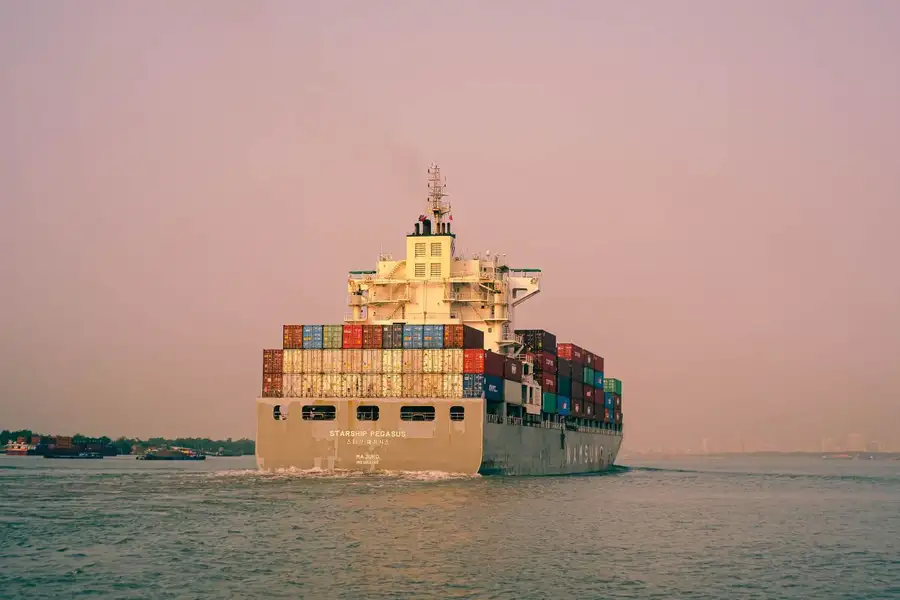
Despite geopolitical headwinds, steady export growth has contributed significantly to India’s economic growth. Over the past decade, India’s exports have nearly doubled, while their scale and composition have evolved.
India’s combined goods and services exports reached a record $863.11 billion in 2025-26, up 4.59% from $825.26 billion. Every quarter set its own all-time high, a first in the country’s trade history. Services did the heavy lifting, growing 8.71% to $421.32 billion, while merchandise inched up by under 1% to roughly $442 billion.
The current year is quicker. Between April and September 2026, merchandise exports rose 18.51% to $259.89 billion, and total exports climbed 13.84% to $476.20 billion. July to September was the strongest second quarter ever. For the first time in several years, goods and services are pulling in the same direction. For comparison, total exports in 2014-15 were $468 billion, so the figure has nearly doubled in a decade.
The government now targets $2 trillion by 2030-31, half of it, goods, with electronics, engineering, textiles, marine and agriculture, toys and pharma expected to deliver about 70% of the goods target. India still exports agricultural commodities, ores, refined petroleum and labour-intensive manufactures, and petroleum products remain a major line.
But the basket is moving toward goods that embody more processing, engineering and design. Electronics is the clearest break from the past. Exports rose from $29.1 billion in 2023-24 to $47.96 billion in 2025-26, and the category moved from seventh largest export in 2021-22 to third by 2024-25.
Its share of merchandise exports grew from about 2% to around 7% between 2014-15 and 2024-25, and September alone saw a 70% jump to $5.31 billion.
Engineering goods remain the backbone at about a quarter of merchandise exports. The government expects drones, solar modules, turbojets and EV and auto components to lift the segment toward $300 billion by 2029-30.
Pharmaceuticals have grown from roughly 5% to nearly 7% of exports and are projected to rise from $25 billion to $57 billion, led by biosimilars and innovative drugs.
Defence exports have gone from Rs 686 crore in 2013-14 to a record Rs 23,622 crore in 2024-25.
Export of chemicals, marine products, processed foods, and agricultural products have gone up.
Even handicrafts (up 43%) and cereals (up 50%) posted strong September gains.
The shift has losers. Textiles and apparel slipped to 6.99% of exports in April to September from 8.09% a year earlier, with apparel shipments down 6.19%. Services now account for 48.8% of total exports, against 33.8% in 2014-15, and non-petroleum merchandise exports hit a record $374.3 billion in 2024-25.
Conflict and route disruptions raise freight, insurance and energy costs, and protectionist tariffs complicate access to traditional markets. Yet exports to the US still rose to $51 billion in April to September from $45.73 billion, and jumped 48% in September alone.
Three factors helped.
* Diversification: India entered 1,821 new product-country combinations in 2025-26, with gains across Singapore, the US, China, Tanzania, Malaysia and Egypt.
* The US interim deal: Announced in February, it cut the American tariff to 18% from 50%.
* Buffers: Commerce Minister Piyush Goyal points to $700 billion in reserves, enough to cover about 11 months of imports.
Between July 2025 and January 2026, India concluded or signed agreements with the UK, Oman, New Zealand, the EU and the US. The UK pact opens duty-free access on about 99% of tariff lines, and the Oman agreement covers nearly 98% of Indian exports.
Under the EU deal, concluded on January 27, Brussels will cut or eliminate tariffs on 98% of Indian exports. It is expected to become operational in early 2027 and aims to double the $136.54 billion bilateral trade by 2032. The US, EU and UK together take almost half of India’s exports, and textiles, leather, marine products, plastics and chemicals stand to gain most.
Small businesses supplied 50.6% of merchandise exports in 2025-26, up from 45.74% in 2023-24, feeding parts, packaging, textiles, food and specialist services to larger exporters. MSME exports climbed from ₹3.95 lakh crore in 2020-21 to ₹12.39 lakh crore in 2024-25.
The Rs 25,060 crore Export Promotion Mission, running to 2030-31, offers interest subvention, collateral-free loans, export factoring, and certification and warehousing support.
Policy has built the platform. Under the 14 production-linked incentive schemes, Rs 2.40 lakh crore of investment has generated Rs 15.20 lakh crore in exports and over 14 lakh jobs. Export orders also feed back into domestic production. Factories expand, adopt international standards and build supplier networks, shortening supply chains and creating skilled jobs.
Challenges remain. India’s share of global merchandise exports is still only about 1.7%. Record receipts, smartphones at the top of the product list and stronger non-petroleum exports point to more complex production, while services and a wider range of goods cushion shocks.
The next test is turning these openings into sustained orders and deeper domestic supply chains, so that “Made in India” means not just shipped from India, but designed, sourced and value-added here.
Views expressed are personal.
Published: 16 Nov 2026, 05:51 pm IST


Related Topics
Disclaimer: Kindly avoid objectionable, derogatory, unlawful and lewd comments, while responding to reports. Such comments are punishable under cyber laws. Please keep away from personal attacks. The opinions expressed here are the personal opinions of readers and not that of Mathrubhumi.
