
From comedy to character roles, from Malayalam to Tamil cinema, Suraj Venjaramoodu has repeatedly pushed himself out of familiar territory. And just when a performance begins to feel like a template, he finds a way to surprise us again.
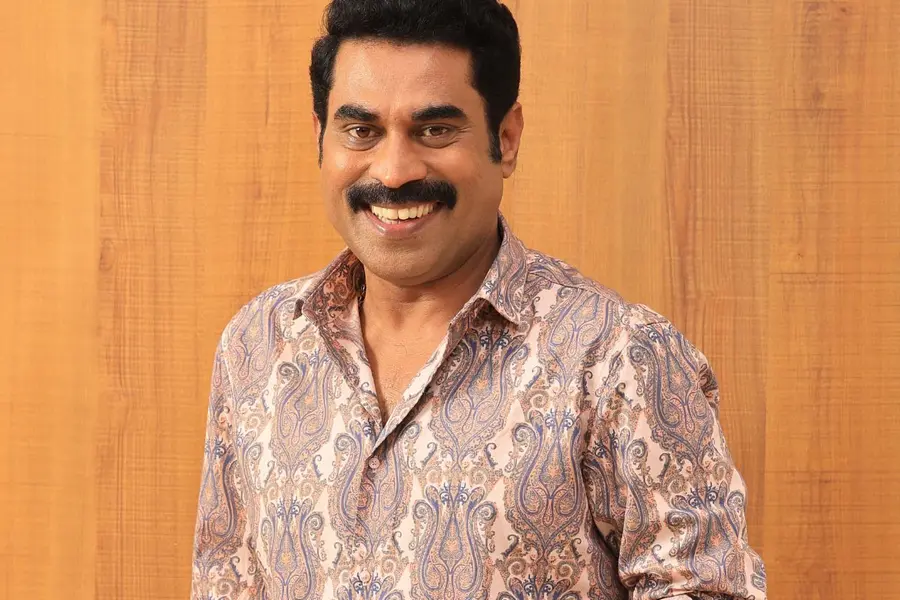
In Jailer 2, Dileep is a local don who runs a small syndicate in Kerala. A former associate of Varman, he is under pressure to find Varman’s (Vinayakan) killer. It’s interesting how Suraj, who occupies a sizeable chunk of the film, stands head and shoulders with Rajinikanth without ever letting him overshadow him. Dileep is sneaky, low-key witty, and yet gives you the impression that he is not someone you want to mess with.
At home, we get hints of him being under his wife’s spell, but in front of his men, Dileep never lets his guard down. Take the scene where he is genuinely amused by the self-proclaimed gangster Moorthi’s antics. It is the only instance when the familiar comic actor resurfaces momentarily, only for Suraj to slip right back into his gangster persona.
Life has truly come full circle for an actor who began his career as a loud, hyperbolic comedian. His transformation speaks to a career he has perhaps carefully monitored whenever it threatened to stagnate. After all, the mark of a hungry actor is not just the willingness to go the extra mile for a role, but the ability to dodge the trap of repetition and embrace reinvention. Suraj’s filmography is a testament to that.
Unlearning the Comedian
For someone with his CV, who has admitted to often playing comedy roles without a backgrounder and being asked to embellish them with his own lines, it would be reductive to attribute his dramatic transformation to a single National Award. The award may have validated his potential, but it was what he did afterwards that truly mattered. In Dr Biju’s Perariyathavar, where he played a sweeper, Suraj offered a glimpse of an actor capable of disappearing into a character rather than merely inhabiting a familiar comic mould. Then came that heartbreaking cameo in Action Hero Biju, and gradually, the choices became more adventurous. He began moving between villainy and character roles with a discernment that suggested an actor learning not just to expand his range, but to question its limits.
It might not be an exaggeration to say that Suraj negotiated the transition from comedian to character actor more convincingly than the legendary Jagathy Sreekumar. Jagathy was, in many ways, an instinctive comedian, and traces of that genius often lingered in his body language even when he moved into sombre territory. Suraj, however, seemed willing to dismantle the very instincts that had once served him so well. He had to leave behind some of the comedian to make room for the actor.
His filmography bears witness to several brave choices (The Great Indian Kitchen, Kaane Kaane, Android Kunjappan, Vikruthi). Yet even reinvention can harden into a formula. At some point, his performances began to feel repetitive, as though he had acquired a template for the troubled, vulnerable, often bewildered men he played. It was visible in the restless movement of his hands, the tilt of his head, the evasiveness of his eyes, and even the familiar inflections of his voice. The problem wasn't necessarily with the characters or the scripts, but with the creeping sense that the performance had begun to precede the character. The actor seemed to be arriving with a set of familiar gestures before the script had a chance to tell him who this person was.
Perhaps that is the more difficult challenge of an acting career: not merely escaping typecasting, but recognising when one's own craft has become a trap. An actor can spend years fighting the limitations imposed by an industry, only to find himself constrained by the habits he has acquired along the way. Suraj needed another rupture, a break from roles that had begun to feel almost second nature. And Tamil cinema offered him that possibility.
Sometimes, reinvention is not about discovering what else you can do. It is about having the courage to unlearn what you have already mastered.
In Veera Dheera Sooran: Part 2, Kannan, son of gangster Periyar Ravi, wears his arrogance like inherited privilege. His father has always been around to clean up his messes, allowing him to mistake impunity for power. Even as the police close in over a missing woman and child, Kannan refuses to shed his swagger, relying on the fear and obligations his father commands. He is fixated on Kaali (Vikram), his father’s trusted former henchman, and keeps needling and taunting him, as though asserting dominance over the older man might validate his own standing.
In his Tamil-film debut, Suraj makes Kannan as repulsive as he is compelling. A simmering intensity undercuts the swagger, occasionally contained, at other times spilling into reckless cruelty. Every gesture and glance reinforces his entitled menace. Even the rough edges of his accented Tamil slang add to the performance, lending Kannan an abrasive outsider energy. Suraj never reduces him to caricature; instead, he reveals a man who mistakes inherited power for personal worth.
As the father of a wayward son (Ken Karunas) in Youth, Suraj brings a familiar character type to life with fresh emotional depth. He is the strict father who fears his son will turn out just like him, his own past shaping the severity with which he tries to steer him away from the same mistakes. But beneath that sternness lies the fear of being alone, rooted in his own experience as an orphan. The film offers one of the most moving passages of Suraj’s career when he finally opens up to his son, voicing his fears and allowing himself to be vulnerable. It is the actor at his finest, finding tenderness in a man who has spent much of his life concealing it.
There is also an understated romance between Unnikrishnan and Saroja (Devadarshini), where Suraj gently draws on his comic instincts without letting them overwhelm the tenderness of the relationship. It is a lovely reminder of how much he can convey through restraint.
Looks like Suraj is one actor we don’t really need to worry about stagnating. No one knows better than he does when it’s time to up his game.
Published: 30 Oct 2026, 09:45 am IST


ABOUT THE AUTHOR

Related Topics
Disclaimer: Kindly avoid objectionable, derogatory, unlawful and lewd comments, while responding to reports. Such comments are punishable under cyber laws. Please keep away from personal attacks. The opinions expressed here are the personal opinions of readers and not that of Mathrubhumi.