
How do we establish whether gender budgeting is genuinely reducing inequality?
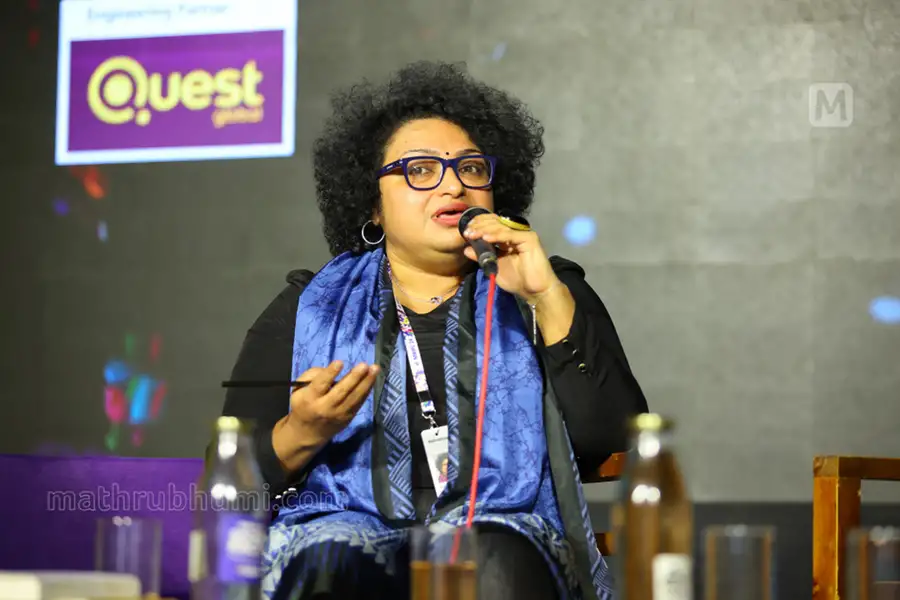
While some lectures leave you with information, others change the way you look at a subject. Professor Lekha Chakraborty’s talk on gender budgeting at the Asianet Agora Festival in Thiruvananthapuram was very much the latter. What initially appeared to be a technical discussion on public finance gradually unfolded into a fascinating exploration of economics, gender, institutional structures and the lived realities of women. It was intellectually stimulating, remarkably accessible and, needless to say, deeply enlightening.
One of the most striking aspects of her presentation was how she showed that gender budgeting is not simply about earmarking a portion of government expenditure for women, but about questioning the very assumptions underlying public finance. Budgets are often presented as neutral instruments of economic governance, but the consequences of taxation, expenditure and fiscal priorities are rarely gender neutral. Investments in healthcare, education, childcare, transportation, sanitation, and other essential services directly affect women's ability to participate in the economy and exercise financial independence. She also highlighted the enormous amount of unpaid care work, predominantly undertaken by women, that remains largely invisible in conventional measures of economic productivity. Access to childcare, drinking water, electricity, and public transport, for instance, can determine whether women can enter and remain in paid employment. These are not peripheral welfare considerations but fundamental questions of economic participation and development.
What makes Professor Chakraborty's scholarship particularly compelling is its deeply personal origin. In her essay, ‘Gender Budgeting: That Fire in My Belly’, published in the Routledge volume Women in Public Finance: Stories of Gender in Budgeting, edited by Maja Bosnić and Manal Fouad, she recounts her childhood in Kerala. Her mother, a government hospital nurse, was left to raise two children after receiving a divorce notice from her husband during her second pregnancy. Watching her mother negotiate the demands of work, motherhood and survival would eventually shape the questions she brought to the discipline of economics. When she entered the field of gender budgeting in 2000, the institutional response was hardly encouraging. Gender was not considered central to public finance, and the economic significance of unpaid care work was questioned. Rather than retreating in the face of resistance, she developed economic models, assembled data, and demonstrated how gender-responsive fiscal policies could influence human development outcomes. India's adoption of gender budgeting in 2004, followed by the introduction of the Gender Budget Statement in 2005-‘06, marked an important milestone in this journey. This offers an important lesson about institutional change. Conviction alone rarely persuades established institutions to change course. It requires evidence, persistence and an understanding of how institutions function. Professor Chakraborty's achievement lies in translating a deeply personal understanding of gender inequality into rigorous economic analysis and, eventually, public policy.
During the interaction, I had the opportunity to raise two questions that I felt were central to the larger conversation. The first concerned intersectionality in gender budgeting. Women cannot be treated as a homogeneous category. The economic realities of a Dalit agricultural worker, a tribal woman, a migrant worker, an urban professional and an elderly woman are vastly different. Their access to resources, employment opportunities and economic security is shaped by multiple, overlapping disadvantages. How do we incorporate these differences into gender budgeting without making the framework administratively cumbersome? Professor Chakraborty addressed this with considerable clarity, emphasising the need to recognise differentiated experiences rather than approach women as a single, undivided category. The effectiveness of gender budgeting must ultimately depend on identifying who benefits from public expenditure and whether those facing the greatest disadvantages are actually being reached.
My second question concerned measurement. How do we establish whether gender budgeting is genuinely reducing inequality? Should governments be required to publish outcome-based audits measuring improvements in women's employment, wage parity, asset ownership and economic independence, rather than merely reporting allocations under different budgetary heads? A budget allocation, after all, is an expression of intent, not evidence of achievement. What matters is whether these investments translate into tangible improvements in women's lives. Are more women entering the workforce? Are wage disparities narrowing? Are women gaining greater control over productive assets and financial resources? Are public investments reducing the disproportionate burden of unpaid care? These are the questions against which the effectiveness of gender budgeting must eventually be measured. Professor Chakraborty was exceptionally gracious in responding to both questions, elaborating on their complexities with the characteristic humility that accompanies genuine scholarship.
Another important dimension of her work is the relationship between gender budgeting and broader fiscal policy. Intergovernmental fiscal transfers and fiscal consolidation, for instance, have significant gender implications. When governments seek to reduce deficits, expenditure on healthcare, education, social protection and care infrastructure can become particularly vulnerable. The composition of fiscal adjustment matters as much as the headline deficit. Who bears the burden of economic decisions is a question that public finance cannot afford to ignore.
I was particularly moved by her observation that gender budgeting and the community of scholars working in this field gave her a language through which she could understand and articulate what had happened to her mother and herself. There is something profoundly meaningful about this journey, where personal experience becomes the starting point for intellectual inquiry and eventually contributes to public policy affecting millions of women. Professor Chakraborty's presentation reminded me that economics need not be divorced from the human experiences it seeks to explain. Personal conviction, when paired with intellectual rigour and empirical evidence, can challenge established assumptions and drive lasting institutional change.
I came away from the session with a renewed appreciation of why gender budgeting matters. Good economics must do more than measure growth, balance accounts and calculate deficits. It must also ask whose lives are improving, whose contributions remain unrecognised and whose interests are excluded from the calculus of public policy. That, perhaps, is the enduring significance of Professor Lekha Chakraborty's work.
(The author is a National Award winner for Best Narration and an independent political analyst. Views expressed are personal.)
Published: 29 Nov 2026, 12:29 pm IST


Related Topics
Disclaimer: Kindly avoid objectionable, derogatory, unlawful and lewd comments, while responding to reports. Such comments are punishable under cyber laws. Please keep away from personal attacks. The opinions expressed here are the personal opinions of readers and not that of Mathrubhumi.
