
Explore `Ikkis,` Sriram Raghavan`s tribute to Arun Khetarpal, the gripping war narrative, emotional depth, and powerful anti-war sentiment.
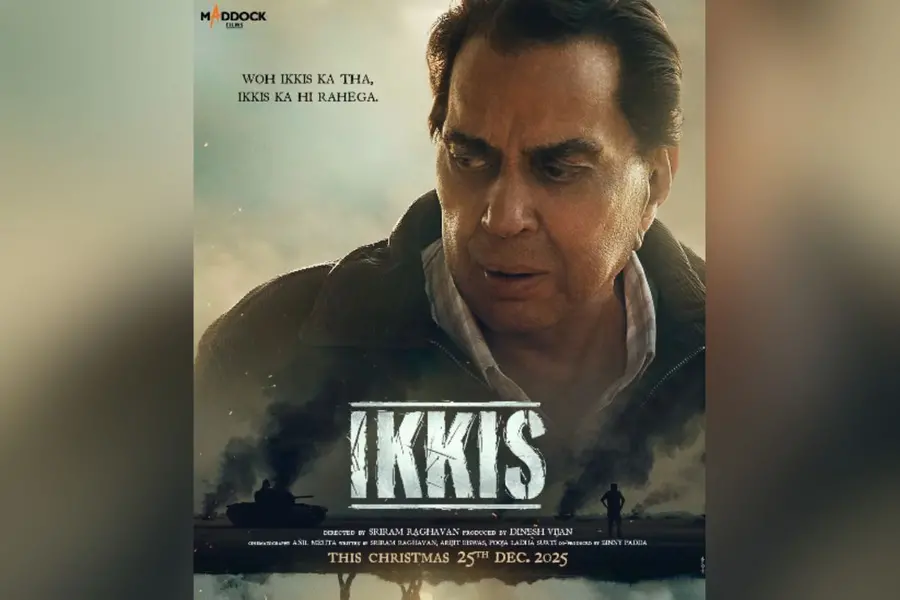
What is a war film? Today, the ‘war film’ genre is complicated by definition, understanding and biases that back it. “A war film is a movie genre depicting armed conflicts, focusing on battles, soldiers' experiences, and the dramatic, emotional, or political impacts of war, often featuring historical events like WW1/WW2 or fictionalized struggles, highlighting heroism, sacrifice, and the harsh realities of combat, ranging from epic battles to anti-war critiques” go one definition. Ikkis directed by Sriram Raghavan, who, till now, has honed his directorial skills in the thriller genre as perhaps, the most consistently brilliant maker of thrillers in Bollywood cinema, took upon himself the challenge of shaping a biographical tribute to Second Lieutenant Arun Khetarpal, the youngest ever winner of the Paramvir Chakra, posthumously awarded, in Indian history, martyred during the battle of Basantar. Ikkis was stated to be a celluloid tribute to his martyrdom when he was 21. So, the title Ikkis or 21.
But Ikkis transcends all accepted definitions of a bio-tribute. It is a tribute but it is much, much more. It is an anti-war film shot against the backdrop-based content of the real war fought in 1971 between India and Pakistan which led to the formation of Bangladesh as an independent country. It is a journey film blended into nostalgia of an old, tired and mourning father, (Retd) Brigadier Madanlal Khetarpal (Dharmendra) who defines the very backbone of the entire film even if Agastya Nanda plays Arun Khetarpal.
Also Read

The film travels back and forth between 1971 and 2001. While 1971 takes us back to the 1971 war that finally led to the defeat of Pakistan and the birth of Bangladesh, it also tells us the story of Arun Khetarpal’s growth as a totally focused young Indian soldier determined to bring back the Paramvir Chakra home.
But it is 2001 which shows the terrible emotional burden of Retd Brigadier Madanlal Khetarpal who journeys to Lahore from where he originally hails in response to an invitation to take part in the centenary celebrations of the college in Lahore he studied in. He has more than one agenda. One is to visit his old home in Sarghoda where he spent his childhood and boyhood now occupied by a Pakistani family. Another is to attend the grand celebrations of his alma mater. And the unmentioned third is to visit the field where his tank commander son fell to the gunshots of a Pakistani soldier. The Pakistani Muslim family welcome Madanlal with open arms. Soon, however, a one-legged ex-soldier arrives at the residence shouting out to bring out the “Indian” guest whose direct or indirect involvement in the war took away one of his legs. Madanlal, who hates war, hugs this handicapped soldier and tells him, “You have lost a leg, I have lost a son” and the angry but shocked group recedes.
Arun Khetarpal is determined to win the war he has come to fight but as Tank Commander, surprisingly states, “this is no different. It is just like our land,” closing all arguments about war, patriotism and subtly emphasizing the imagined enmity between the people of the two neighbouring countries now fighting a needless war. He is a simple young man, full of mischief coupled with some doses of romance. He is no macho with rippling muscles, or an ideal of celluloid masculinity we are used to. There is a naiveté, an innocence in Agastya Nanda displayed in relief against his determination to fight he has been trained to believe, is ‘the enemy.’ Nanda is very convincing in his debut role on the large screen.
Dharmendra, in his last cinematic appearance, defines the backbone of the film and delivers the most outstanding performance of his 60-year career comprised of around 300 feature films. His performance is filled with the emotional pain of visiting a country he believed he truly belonged to. He is a house-guest of Brigadier Jaan Mohammed NIsar (Jaideep Ahlawat) who has invited the Indian ex-soldier to get rid of a heavy emotional burden he has been carrying for 30 years. His wife (Ekavali Khanna) and daughter are shocked by this act of offering hospitality to an ex-soldier of an enemy country. But he refuses to relent. Nissar keeps the old man company right through Madanlal’s three-day tour.
When the old man, visiting the war front now a fertile field bearing no signs of the war that took many young lives, filled with green and a large tree wonders why Arun did not recede with his tank when death was seconds away, Nisar quietly says, “because he was fighting the enemy.” The old man asks “Enemy? Which Enemy?” Dharmendra’s halted conversations, his slow, hesitant gait, his pensive, uncertain smile becomes the heart of Ikkis. Jaideep Ahlawat is sparkling in his restraint and subtlety enriching the performance map of the entire film. Ikkat offers a brief romantic sub-plot featuring another debut-making actor, Simran Bhatia who, however, looks much older than Arun. Her performance is natural but this is a track the film could have done without.
Raghavan has given cameo characters to lesser known actors like Sikander Kher, Vivan Shah, Rahul Dev, all of who have excelled themselves in their commanding roles. Asrani in his last screen appearance is brilliant as the Alzheimers-stricken friend of Madan Lal who fails to recognize him or have any memories of the war. Agastya is wonderful as the young soldier with dreams in his eyes his dreams beginning at the National Defence Academy in Pune and culminating in his martyrdom on a Pakistani battlefield.
There are too many songs that at times, become disturbing because of the high decibels. If they have been inserted as points of relief in a war film, they disturb more than offer relief or add to the emotional content of the film except one song sung in chorus. The technical strategies of a tank war remain vague for novices like yours truly but this ignorance does not spoil the focus of the film or the pull the audience feels.
Anil Mehta’s cinematography is brilliant the way in which he traverses challenging grounds ranging from the opening scenes showing Nisar hanging a portrait of Sachin Tendulkar on his wall through the interiors of Madal Lal’s home in India right into the preparation in the training camps before the war. And of course the battlefield seeing which, from atop his war-tank, Agastya says, “this is just like us. No difference” making us ask, “then why war in the first place? Thirty years after the war, in a misty ambience shot within a thick mist, Madan is amazed to see that no signs of a war that snatched so many lives thirty years ago, his son being one among them remain. But the human scars, the emotional pain of loss, remain.
Raghavan is not alone in making an anti-war film using war tanks as his single plotline. He has been probably inspired by the Golden Lion-winning Lebanon (2009) an Israeli war drama written and directed by Samuel Maoz, based on his personal experiences during the First Lebanon War. The film is unique as nearly all the action is seen from inside a cramped tank and Ikkis comes closest to any recent Indian film on war,(or is it anti-war?) focused on war tanks.
The saddest part of the film comes after the film ends. Printed in Hindi, it clearly states that Nisar is an exception. Other Pakistani soldiers were very cruel. Was it in compliance with the demands of the Establishment in its scary and passionate fervour towards establishing a “Hindu Rashtra” that Raghavan or the powers-that-be inserted this disclaimer? No one knows the answer. But a guess here is as good as knowledge. Right?
Published: 22 Jan 2026, 09:59 am IST
Related Topics
Disclaimer: Kindly avoid objectionable, derogatory, unlawful and lewd comments, while responding to reports. Such comments are punishable under cyber laws. Please keep away from personal attacks. The opinions expressed here are the personal opinions of readers and not that of Mathrubhumi.