
First, critics will point out that India fell short of matching its record tally of 107 medals from Hangzhou in 2023.
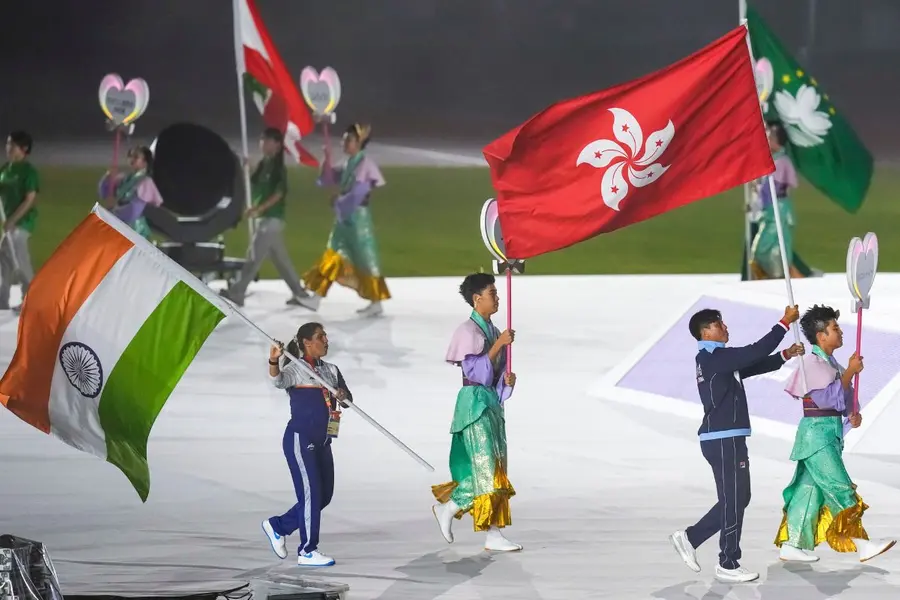
Aichi-Nagoya has now entered sporting history, and all eyes are now on Doha, where the next Asian Games will unfold in four years' time. For India, this outlook is encouraging, especially considering the highs and lows of the recently concluded Games.
First, critics will point out that India fell short of matching its record tally of 107 medals from Hangzhou in 2023. With 85 medals overall, India was over 20 medals short. However, what made up for this deficit, at least to some extent, was how events unfolded in the final few days. Rising from 12th place, a late surge—driven by a handful of gold medals—ensured India finished in fourth place overall, matching its position from last time behind China, Japan, and South Korea. While there was certainly disappointment, the broader perspective reveals a promising future.
Nothing describes India’s sense of pride better than Kumkum Mohod's story. The teenager from Maharashtra overcame a seemingly impregnable Korean challenge to become the first Indian to win an individual recurve archery gold at the Asian Games. Her victory was no easy feat; it required a display of stout heart and unflinching self-belief. First, she defeated world champion Kang Chae-Young, followed by a formidable Chinese competitor, before finally breaking another Korean wall in a high-pressure shoot-out for gold. The 17-year-old—who, as media reports noted, enjoys listening to sad songs—ultimately triggered celebratory anthems across the Indian camp with her lion-hearted performance. Had her triumph come at the start of the Games rather than the tail end, it might have inspired even more fairytale runs from Indian athletes in Nagoya. Adding further shine to her achievement, she also secured an Olympic quota place for the 2028 Los Angeles Games—a remarkable feat for someone who will now gradually adjust to the mantle of greatness.
If Kumkum was the center of attention, the Indian men’s and women’s hockey squads were no less impressive, both returning with gold medals to add to the nation's sporting joy. Furthermore, both teams have qualified for the LA Games, marking another major step forward. The women claimed gold after a 44-year drought, with their last title coming at the 1982 Games in New Delhi. Meanwhile, the men secured back-to-back Asian Games gold medals for the first time in history. While they had previously achieved this feat at the Olympics, doing so at the Continental Games is a new milestone. Hockey needed this boost after a slump that had dimmed its reputation, particularly on the men’s side following a disappointing World Cup campaign. Although a significant gap remains between European and Asian standards, inspiration drawn from continental success makes the road toward Olympic heights far more achievable.
Indeed, the Nagoya Games unveiled new heroes, with female performers taking center stage. Alongside Kumkum's rare brilliance, golfer Pranavi Urs—previously little-known—shot to fame by winning gold, the first ever by an Indian woman at the Asian Games. The Mysore golfer ended a 24-year wait for an Indian golf gold, a feat last accomplished by Shiv Kapur at the 2002 Busan Games. Pranavi’s performance will hopefully inspire more female golfers to aim high on the course.
Athletics was another area of celebration. Gulveer Singh demonstrated patience and grit to capture three medals—two silvers and a bronze—in distance running. Meanwhile, Baranica Elengovan delivered a historic performance by securing India's first-ever pole-vault medal, and Vithya Ramraj earned a bronze while breaking the national record in the 400m hurdles. Vidya, the daughter of a truck driver, erased P.T. Usha’s 42-year-old record.
These heartwarming performances were complemented by gold medals in both men's and women's Kabaddi, alongside strong outings in wrestling, boxing, and cricket, where both Indian teams defended their titles with aplomb.
However, amidst these successes came notable disappointments. Tennis suffered a heavy blow, ending without a single medal for the first time in four decades. Decades after the era of the Krishnans, the Amritraj brothers, and Leander Paes, another defining star has yet to emerge in the sport. Shooting also experienced unusual setbacks; while it contributed 15 medals, expectations had been significantly higher. Badminton was another concern, yielding only a single bronze medal. Experienced campaigner P.V. Sindhu failed to build momentum, but the biggest shock came in men's doubles, where Hangzhou gold medalists Satwiksairaj Rankireddy and Chirag Shetty returned empty-handed in individual events, though they helped secure a team bronze. For a sport featuring Olympic medalists, this was a sharp decline. Table tennis similarly faded into the background amidst the rise of heroes in other disciplines.
Ultimately, while India partially defied gloomy pre-Games forecasts, the final standings make clear that much work remains. A glance at the medal tally and the dominant positions of China and Japan highlights the vast ground India still needs to cover. The Olympics present a completely different level of competition; while expectations for a better showing will be high, whether India can deliver remains the central question.
Published: 06 Oct 2026, 07:00 am IST
ABOUT THE AUTHOR

Related Topics
Disclaimer: Kindly avoid objectionable, derogatory, unlawful and lewd comments, while responding to reports. Such comments are punishable under cyber laws. Please keep away from personal attacks. The opinions expressed here are the personal opinions of readers and not that of Mathrubhumi.