
China topped the medal table for the 12th consecutive edition, finishing with 169 gold, 89 silver and 83 bronze for a total of 341 medals.
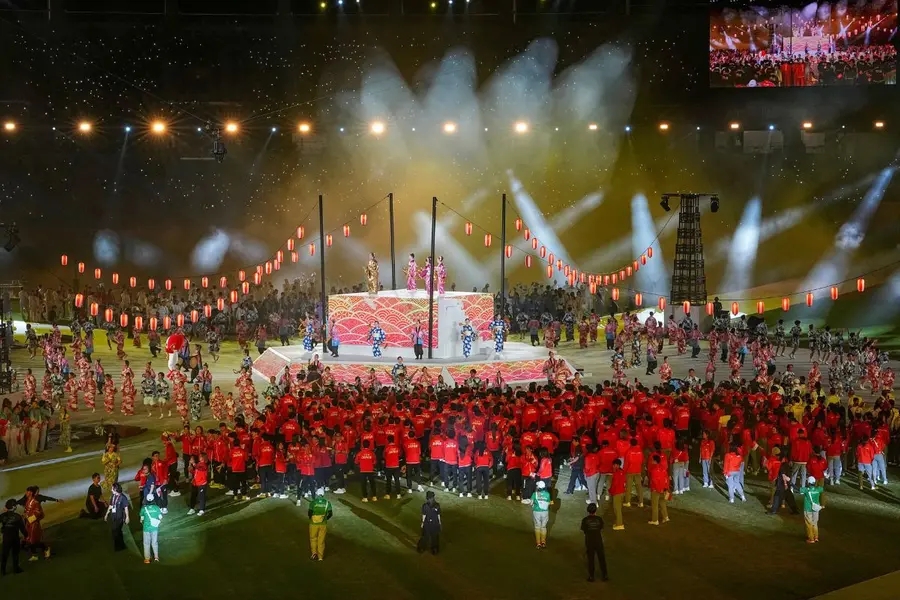
Nagoya: A dazzling light and musical show, sprinkled with a vibrant display of Japan's culture and hospitality, brought the curtains down on the Aichi-Nagoya Asian Games as the host country pulled off a spectacular closing ceremony here on Sunday.
After more than two weeks of intense competition, which produced more than 350 records—including at least 50 world records—athletes from 45 Asian nations gathered in a festive atmosphere at the Mizuho Park Athletic Stadium. The celebration marked the end of a Games edition that had previously been marred by logistical troubles and mismanagement during its build-up. The closing ceremony lasted 90 minutes.
China topped the medal table for the 12th consecutive edition, finishing with 169 gold, 89 silver, and 83 bronze for a total of 341 medals, marking its best-ever haul at an overseas Asian Games. Host nation Japan ended in second place with 269 medals (83 gold, 95 silver, and 91 bronze), followed by South Korea with 39 gold, 43 silver, and 68 bronze.
India finished fourth on the medal tally with 85 medals (21 gold, 27 silver, and 37 bronze)—21 fewer than its tally at the previous edition in Hangzhou, China. Led by trap shooter Neeru Dhanda, who secured two gold medals and one silver during the Games, the Indian contingent actively joined in the evening's festivities. Around 30 Indian athletes and officials, dressed in white and blue kits, marched in the Athletes Parade while waving the tricolour.
Cultural harmony and spectacular stagecraft
To express the closing ceremony's concept of 'One Asia', a central hexagonal stage served as the main highlight of the show. During the grand finale, it was adorned with lanterns—a quintessential symbol of Japanese summer.
At the heart of the performance was the bon-odori dance, an art form originating in Japan that has gained popularity across Asia, transcending generations and nationalities. This was showcased through 'Matsuken Samba II', a song packed with Nagoya's unique charm and widely cherished by the Japanese public.
Following the arrival of dignitaries, the stadium witnessed a dazzling laser light show accompanied by artists from the Nagoya School of Music and Dance performing in cherry-blossom-adorned costumes. The Athletes Parade followed, where flag bearers—including India's Neeru Dhanda—marched in first, after which contingents from all 45 countries entered the arena to music and light displays. The crowd was then treated to highlight reels of memorable performances and tight contests from throughout the Games.
At the opening ceremony on September 19, the diverse roster of athletes was represented by multiple layers of rainbow-coloured hearts. For the closing ceremony, the empty space at the centre of the heart was symbolically filled with shared emotions and unity, aiming to inspire Asian nations to continue working together peacefully for years to come.
Handover to Doha 2030
Olympic Council of Asia (OCA) President Sheikh Joaan Bin Hamad Al Thani officially declared the Games closed in the presence of Crown Prince and Crown Princess Akishino.
"I now declared the Aichi-Nagoya Asian Games officially closed," Al Thani said.
"Tonight, as we lower the flag on Aichi-Nagoya 2026, we close these Games, but we raise the bar for Asian sport. The flame may be extinguished, but the hopes it has ignited will continue to burn brightly across our continent," he said.
"We have witnessed remarkable comebacks, last-second victories and dramatic near-misses. We have celebrated the rise of new teenage superstars and seasoned champions as they added to their impressive legacies. We have seen athletes battle through adversity and injury to claim victory and opponents demonstrate incredible sportsmanship and respect."
He emphasised that the competition in Japan would leave a lasting legacy. "From the first competition to the very last, Asia's finest athletes captivated us with their performances. Over 350 records have been broken, including more than 50 world records. This is a record for our Asian Games."
As per tradition, the OCA chief called upon the youth of Asia to carry this spirit forward and gather again in four years for the 21st Asian Games in Doha in 2030.
During the handover segment, the torch and the OCA flag from the first Asian Games, alongside the current OCA flag, were passed to Qatar's Prime Minister Sheikh Mohammed bin Abdulrahman Al Thani by the OCA president.
The ceremonial flag handover to Doha featured Qatar's Olympic and world high jump champion Mutaz Barshim. Taking centre stage, Barshim accepted the OCA flag as stadium screens displayed digital imagery of him competing, watching from the stands, riding a horse, and lighting the cauldron.
Qatari equestrian rider Jassim Al Kuwari then rode into the stadium on horseback, taking the OCA flag from Barshim and completing two laps around the central platform. The creative concept for the handover, titled 'Al Makan Makanukum/This Place Is Yours', reflected the tradition of preparing a space for a guest before their arrival—symbolising the OCA flag becoming Doha 2030's first guest four years ahead of the event. (PTI)
Published: 04 Oct 2026, 05:42 pm IST
Related Topics
Disclaimer: Kindly avoid objectionable, derogatory, unlawful and lewd comments, while responding to reports. Such comments are punishable under cyber laws. Please keep away from personal attacks. The opinions expressed here are the personal opinions of readers and not that of Mathrubhumi.
