

India faces mixed fortunes at hockey and badminton world events, with a lone bronze in doubles.
Two world championships that had gone on concurrently, hockey hosted jointly by Netherlands and Belgium and badminton by India in New Delhi, and dreams rose but only partially did they get realised. That in a nutshell was what happened for India in these two major sports. Once winner in 1975, India then when it was a super power in hockey, the country was slowly and steadily been doing its best to catch up with the past. The two consecutive Olympic bronze medals in recent times and the gold medal in the Asian Games all were in the right direction in this regard. But, the dream of success in the World Cup will have to wait for some more time, that perhaps has to be the message for Indian hockey as it were. Indeed, in the latest Championship India’s destiny seemed to lay in the hands of two other countries, Argentina and England but as it happened, the former decided it most emphatically. The big win over India said it all.
That, in a nutshell, was what happened for India in these two major sports. Once a winner in 1975, India, when it was a superpower in hockey, was slowly and steadily doing its best to catch up with the past. The two consecutive Olympic bronze medals in recent times and the gold medal in the Asian Games were all in the right direction in this regard. But the dream of success in the World Cup will have to wait for some more time; that perhaps has to be the message for Indian hockey as it were. Indeed, the Championship is still on, but India’s destiny lay in the hands of two other countries, and their performance and improbability is the thinking on India advancing to the next stage after managing a progress to the second stage, past Pakistan, a one-time arch-rival in a big way. The diehards would still hope that India would make it!
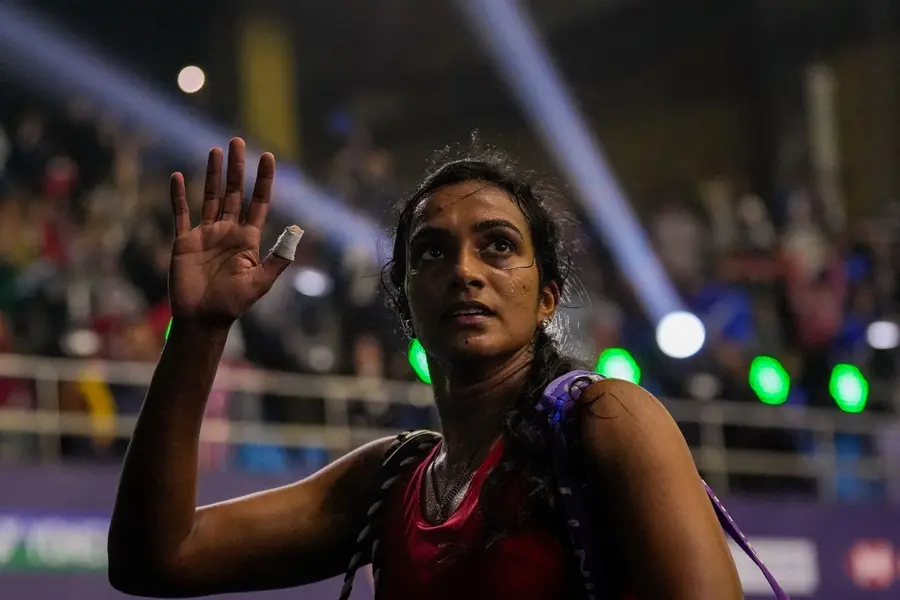
But the little cheer that arose in these times came in badminton, where India in recent times is a vastly grown force and reflects a new mood of dominance that had triggered new hopes and possibilities. Much has to do with the way P.V. Sindhu has risen in the sport. Though not looking as sharp as in the recent past, her success in the Japan Open in July was, as always, an outstanding effort for she had become the first Indian woman to win a BWF Super 750 tournament and that too at the age of 31, the oldest to do so. It was also Sindhu’s first major title win since 2019. Coming as it did close to the World Championship, India could not have asked for a better inspiration for its team than this veteran’s signal that she was ready for the big ones. After all, Sindhu had won a gold medal in the Worlds once back in 2019. The only Indian to do so.
It was debutant Ayush Shetty, however, who set the stage on fire to start with by his absolute show of excellence that saw the exit of world number one and defending champion Shi Yuqi of China. It was in every sense a dream start to a big moment in his badminton career. Indeed, the lanky six-footer had everything in the game to produce the best, but the need was for him to bring them out, and that is what he did to stun his famed opponent. It seemed then that India had set for a big finish, for here was a young man hungry for success and there was Sindhu, as also Lakshya Sen, another hugely talented, to carry on. But as it often happened, too much expectation could be the enemy of all pleasures. Ayush could not cross the pre-quarters, failing to carry on his brilliance, while Sindhu, promising much, also fell in the pre-quarterfinal to a Chinese opponent despite looking in a good position to get past the hurdle. Lakshya too did not last. None could get their acts together just when needed.
Even as the hopes of good times seemed to recede, the doubles pair of Treesa Jolly and Gayatri Gopichand stole the march to ensure India did not end its campaign empty-handed. A regular medal winner in this event, India found in these two gritty girls the way to a medal, a bronze, and a campaign that many hoped would be a landmark one for the host, finished on a low-key note. This was also the first medal for India in women’s doubles since 2011, when Ashwini Ponnappa and Jwala Gutta had won a bronze.
Talk of doubles and when the singles players faded out, the celebrated pair of Satwik Sairaj Rankireddy and Chirag Shetty seemed to come into focus initially. The pair had won bronze medals twice before, and so would it be a hat trick this time around, was the initial hope. But the quarterfinal was what they could see before a Chinese pair, Liang Wei Keng and Wang Chang, showed them the exit. Sad for a well-established pair which had the distinction once of becoming the first Indian doubles pair to reach the number one spot in the world rankings. The whole burden then fell on the women’s pair, and how well they responded to the great occasion! Perhaps it is the start of a great ride ahead after the dream run, for there is nothing like capitalising on the new achievement to aim for more. The Asian Games are ahead.
Sadly, this may not be the story on the hockey front. The men's and, incidentally, the women’s event too were on side by side, and here again disappointment was what India courted. From what the men’s coach Craig Fulton had to say, there were too many loopholes to be filled. It was a question of the team having played well for most part but not finding field goals! Indeed, the main man skipper Harmanpreet Singh, the penalty corner specialist, was not in full fitness, with back pain cutting into his play. Overall, it has been a case of high ambition but not being able to get the action going, matching that. Success, as they say, never comes in easily.
Published: 25 Aug 2026, 07:30 am IST
ABOUT THE AUTHOR
Disclaimer: Kindly avoid objectionable, derogatory, unlawful and lewd comments, while responding to reports. Such comments are punishable under cyber laws. Please keep away from personal attacks. The opinions expressed here are the personal opinions of readers and not that of Mathrubhumi.