
The immediate temptation is to compare it with the student uprisings that culminated in the Emergency of 1975. The parallels are certainly there
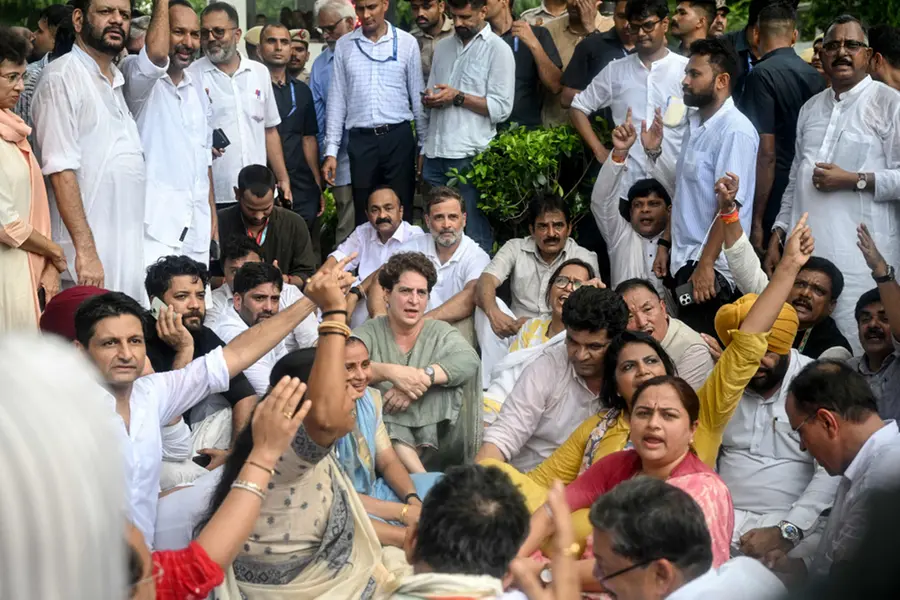
Every generation has its defining protest, but not every protest becomes a defining political moment. The agitation led by the Cockroach Janta Party (CJP) in Delhi has, within weeks, acquired a significance that goes well beyond the immediate issues that brought thousands of young people onto the streets. What began as a movement over examination irregularities and the growing sense of betrayal among aspirants has steadily evolved into a larger expression of frustration with governance, unemployment and institutional credibility. Whether it eventually transforms Indian politics or fades into memory is impossible to predict at the moment. What is already evident, however, is that it has exposed a fault line that no government can afford to ignore.
The immediate temptation is to compare it with the student uprisings that culminated in the Emergency of 1975. The parallels are certainly there. Then, as now, students became the first to articulate a deeper public anger; unemployment and the erosion of public trust provided fertile ground for mobilisation, and what started as a limited protest threatened to become a broader indictment of governance itself. Yet history is rarely so obliging. The movement led by Jayaprakash Narayan emerged at a time when India was grappling with crippling inflation, shortages, labour unrest and an increasingly centralised political authority. It eventually found in JP a moral centre around whom disparate political forces could rally. The constitutional crisis triggered by the Allahabad High Court judgment and the government's response to it created circumstances that were unique to that moment.
Also Read

Today's India is different. The economy faces undeniable challenges, particularly in generating quality employment, but it is not in the grip of the systemic crisis that defined the mid-1970s. The political opposition remains fragmented, and there is no single figure who commands the moral authority that Jayaprakash Narayan did. Social media has made mobilisation easier, but sustaining a coherent movement has become infinitely more difficult. Every protest now unfolds in an ecosystem where narratives are manufactured, contested and dismantled almost in real time. That brings us to the most intriguing aspect of the present agitation. The movement itself appears genuine, and the anger most certainly is. For years, young Indians have invested enormous amounts of time, money and emotional energy preparing for competitive examinations. Many postpone careers, delay marriages and place their lives on hold in pursuit of government employment. When examination systems repeatedly come under suspicion, it is not merely an administrative failure. It is experienced as a personal betrayal, and that sense of betrayal cannot be manufactured in a television studio or a political war room.
But genuine anger does not guarantee political purity. Every successful protest eventually attracts political interests. While some may seek to amplify it, others would attempt to infiltrate it, and still others try to discredit it. Once a movement acquires national visibility, it ceases to belong exclusively to those who started it. The conduct of the Congress party illustrates this dilemma. Unlike its instinctive response to many earlier agitations, the principal opposition party initially kept its distance. It resisted the temptation to place its flag at the centre of the movement. That restraint was perhaps strategic. Had it entered too early, the government could easily have dismissed the protests as a Congress-sponsored campaign, and by waiting, it allowed the movement to establish its own legitimacy. Only after the protests gathered momentum did Rahul Gandhi publicly endorse them, eventually joining demonstrators at Jantar Mantar and courting arrest. Whether this was prudent political timing or calculated opportunism depends entirely on one's political persuasion. Either way, it underlines a simple truth. Opposition parties constantly struggle to balance support for public movements with the risk of overwhelming them.
At the same time, allegations have begun to emerge about the movement's own leadership. Questions are now being raised about Abhijit Dipke, who is credited with initiating the agitation. Reports and speculation suggest that he may have had past links or sympathies with individuals associated with the BJP. Separately, an audio recording purportedly involving Sonam Wangchuk has fuelled claims that his decision to join the protest was influenced by conversations with the Lieutenant Governor of Jammu and Kashmir. Whether these allegations are true, exaggerated or entirely misleading remains unclear. In the age of edited recordings and selective leaks, caution is not merely advisable; it is indispensable. Even if some of these claims eventually prove accurate, they would still not establish that the movement itself is a political fabrication. That distinction is crucial. Political activists, civil society leaders and public intellectuals frequently interact with governments across party lines. Such interactions are neither unusual nor necessarily sinister. More importantly, the authenticity of a public grievance cannot be judged solely by the political associations of those articulating it. Conversely, it would be equally naïve to imagine that a movement of this scale remains untouched by political calculations. Once public sentiment reaches a critical mass, every political actor attempts to influence its direction. Governments seek to contain it and the opposition parties seek to benefit from it. Individual leaders seek visibility and ideological groups attempt to shape its language and objectives.
That is precisely why the present moment appears so murky. The debate is gradually shifting from the issues that brought people onto the streets to the identities and motivations of those leading them. The danger is obvious. If public attention remains consumed by allegations of hidden patrons and covert affiliations, the original concerns of millions of young Indians may once again disappear behind political theatre. Perhaps that is the larger lesson from 1974. The JP movement did not become historically significant because every participant shared identical political beliefs. It became significant because it articulated a widespread public sentiment that could no longer be ignored. The present agitation has not reached that stage, and, perhaps, it may never do so. But it has already accomplished something important. It has reminded India's political class that beneath the impressive headlines about economic growth lies a generation increasingly anxious about opportunity, fairness and the credibility of public institutions.
Governments would be mistaken if they dismissed the protests merely by questioning the motives of their organisers. Protest leaders would be equally mistaken if they allowed political intrigue to eclipse the concerns of those who entrusted them with a cause. The truth, as is so often the case in politics, probably lies somewhere between idealism and manipulation. The anger is real and the politics surrounding it is real too. The challenge is to ensure that one does not consume the other.
(The author is a National Award winner for Best Narration and an independent political analyst. Views expressed are personal)
Published: 22 Jul 2026, 10:10 am IST
Related Topics
Disclaimer: Kindly avoid objectionable, derogatory, unlawful and lewd comments, while responding to reports. Such comments are punishable under cyber laws. Please keep away from personal attacks. The opinions expressed here are the personal opinions of readers and not that of Mathrubhumi.