
The announcement comes just ahead of Tesla’s plans to unveil its own flying car.
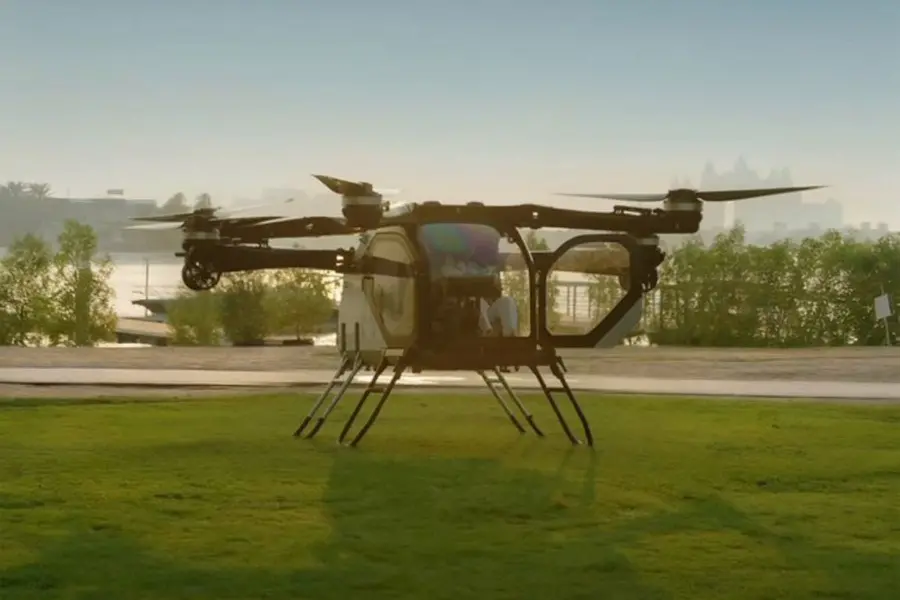
Beijing: Chinese automaker Xpeng Aeroht, a subsidiary of Xpeng Motors, has begun trial production of its flying cars at the world’s first intelligent factory designed for mass production of such vehicles. The move positions China ahead in the global race to commercialise next-generation transport technology, even as Tesla and Alef Aeronautics prepare to enter the segment.
Xpeng’s ‘Land Aircraft Carrier’ takes flight
Located in Guangzhou’s Huangpu district, the 120,000-square-metre plant has already produced its first detachable electric aircraft module, part of the modular flying car known as the “Land Aircraft Carrier”, according to state media Xinhua.
The factory, boasting the world’s largest production capacity of its kind, aims to produce 10,000 detachable aircraft modules annually, starting with an initial capacity of 5,000 units. Once fully operational, it will be capable of assembling one aircraft every 30 minutes.
Xpeng said it has already received nearly 5,000 pre-orders for its flying cars, with mass production and deliveries set for 2026. The company has been posting the videos of these flying cars.
Features of Xpeng’s flying car
The flying car combines a six-wheel ground vehicle, referred to as the “mothership”, with a detachable electric vertical take-off and landing (eVTOL) aircraft.
The eVTOL can operate in both automatic and manual modes, offering smart route planning along with one-touch take-off and landing. Measuring about 5.5 metres in length, it can be driven on public roads with a standard licence and parked in regular spaces.
Tesla and Alef Aeronautics join the race
The announcement comes just ahead of Tesla’s plans to unveil its own flying car. CEO Elon Musk told Fox News that the vehicle might be revealed “in a couple months,” describing it as featuring “crazy technology.”
Meanwhile, Alef Aeronautics, another US-based company, has already demonstrated successful test runs. CEO Jim Dukhovny said Alef has received over USD 1 billion in pre-booking orders and will soon begin commercial production. The vehicles will require both a driving licence and a light aircraft pilot’s licence.
China’s EV sector faces headwinds
According to the China Passenger Car Association (CPCA), the country’s 50 electric vehicle builders exported 2.01 million EVs and hybrids in the first eight months of this year — up 51 per cent from a year earlier.
However, Chinese automakers face challenges abroad following the EU’s 27 per cent tariff on Chinese EVs. Domestically, they struggle with discount wars and overcapacity, with only half of China’s 20 million EV production capacity used last year, Goldman Sachs reported.
Among Chinese EV makers, only BYD, Li Auto, Seres, and Leapmotor are currently profitable, according to the South China Morning Post.
Published: 04 Nov 2025, 03:23 pm IST
Related Topics
Disclaimer: Kindly avoid objectionable, derogatory, unlawful and lewd comments, while responding to reports. Such comments are punishable under cyber laws. Please keep away from personal attacks. The opinions expressed here are the personal opinions of readers and not that of Mathrubhumi.
