From Arunachal dams to Hasdeo coal: 5 infrastructure controversies India is not talking about
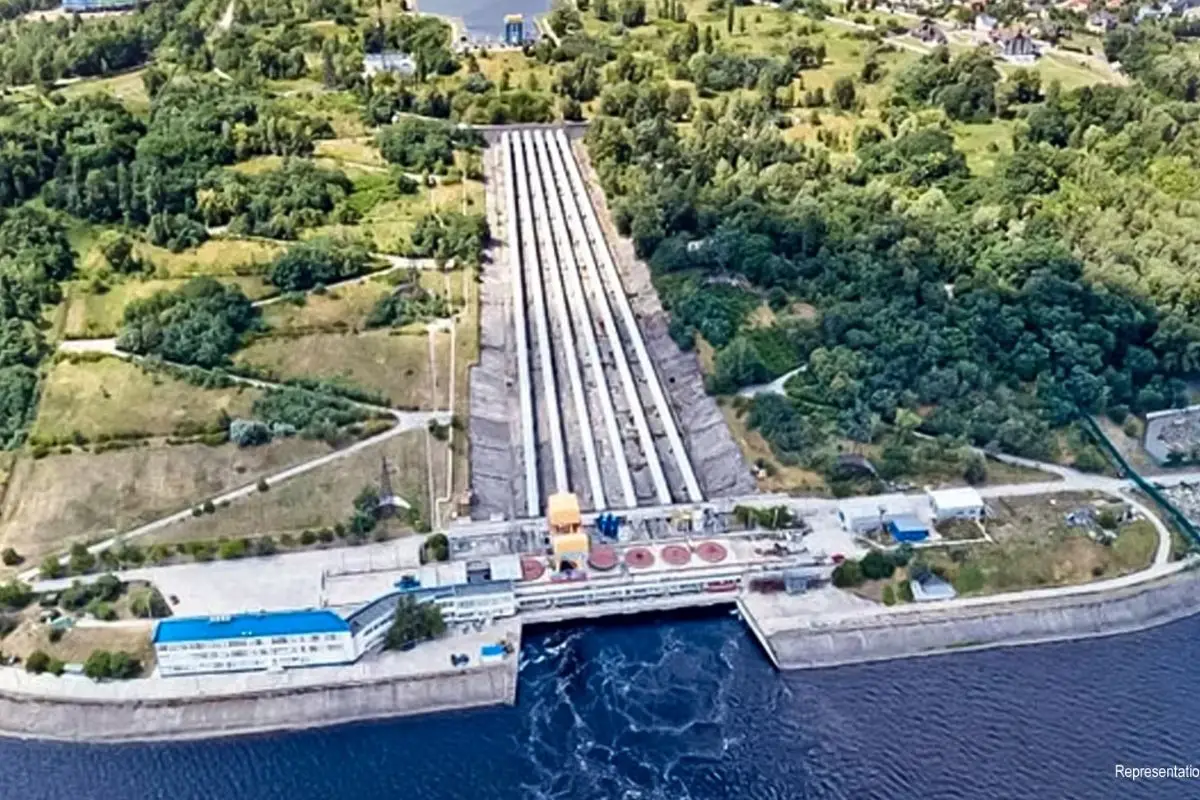
While Great Nicobar, Char Dham and Ken‑Betwa dominate headlines, a second layer of infrastructure projects is generating intense debate on social media, in local assemblies and in community WhatsApp groups. These are smaller in national visibility but no less contentious. These include hydropower dams in the Eastern Himalayas, a pumped‑storage scheme in the Western Ghats, coal mining in central India’s elephant corridors, and port‑linked industrial projects on Maharashtra’s coast.
Activists say these projects are being pushed through with diluted safeguards and inadequate consultation. The government insists they are critical for energy security, employment and regional development, with environmental conditions in place.
Here is a detailed look at five such projects that are widely discussed on social media but rarely make front pages, along with their latest status and the competing narratives around them.
1. Naying Hydroelectric Project (Arunachal Pradesh)
A 1,000 MW run‑of‑the‑river hydro project on the Siyom (Yomgo) river in Shi‑Yomi district, to be implemented by the North Eastern Electric Power Corporation (NEEPCO).
The project involves a concrete dam, underground powerhouse and long tunnels, requiring diversion of significant forest land and felling of tens of thousands of trees.
Latest status (2025–26): The project received Central Electricity Authority concurrence in 2013 but remained stalled for years over ecological and social concerns. Environmental public hearings were held in November-December 2025 in Siang and Shi-Yomi districts.
By mid‑2026, forest clearance was still under examination; the Project Screening Committee had recommended the project, but the Forest Advisory Committee (FAC) and district forest officials raised observations on the compensatory afforestation (CAT) plan, which was revised and sent back for further scrutiny.
ALSO READ: ‘He has a very brutal side’: Rushdie criticises Modi, warns of rising Hindu nationalism in India
On social media and local forums, landowners in Shi-Yomi have raised alarms over administrative delays, compensation uncertainty and lack of clarity on how many trees will be felled and which forests will be diverted. Posts from local news pages and community groups in July-August 2026 show growing anxiety and threats of protests if compensation is not settled before construction.
Activists’ and local communities’ case
The project will fragment dense, biodiversity‑rich forests in the Eastern Himalayas, with irreversible impacts on flora, fauna and local micro‑climates.
Affected villagers fear displacement, loss of agricultural land and inadequate compensation, citing past experiences with other hydro projects where promises were not fully honoured.
Critics argue that cumulative impacts of multiple dams on the Siyom and neighbouring rivers are being ignored, and that seismic and landslide risks in this fragile zone are underestimated.
ALSO READ: India's Su-30MKIs could soon strike enemy aircraft from 300 km away
Government’s justification
Naying is presented as critical for clean energy generation in the Northeast, with nearly 5,000 million units annually, supporting national renewable targets and regional power needs.
Authorities say the project has undergone environmental and forest appraisal processes, with conditions on afforestation, wildlife management and local benefits.
Officials maintain that compensation and rehabilitation will follow statutory norms, and that the project will bring infrastructure, jobs and development to a remote, under‑developed region.
2. Kamala Hydroelectric Project (Arunachal Pradesh)
A 1,720 MW hydroelectric project on the Kamala river across Kamle, Kra Daadi and Kurung Kumey districts. Approved by the Cabinet Committee on Economic Affairs in November 2025 with an investment of over ₹26,000 crore, it is one of the largest planned hydropower schemes in the state.
ALSO READ: Old Monk is not ‘rum’? So what counts as real rum, and why it matters
Latest status (2025–26): Investment approval was granted in November 2025, but land acquisition and compensation issues have triggered local opposition. In June-August 2026, multiple local forums (All Bomrik Hechi & Yukar Welfare Society, Kamala HEP Affected People’s Forum) issued notices and representations alleging violations in land acquisition, exclusion of genuine structures from compensation surveys, and lack of transparency.
Public notices under the land acquisition law were issued in June 2026, but affected villagers in Kra Daadi and Kamle districts have staged protests and online campaigns demanding fair compensation and protection of their rights before any development work begins.
Activists’ and local communities’ case
Villagers allege that land records are being manipulated, with some genuine landowners left out of compensation lists while others are pressured to surrender land at low rates.
ALSO READ: His greatest wealth is not money but the students who still call him 'Asan'
Community posts on Facebook and local newspapers highlight fears of loss of ancestral land, forests and livelihoods, with little clarity on rehabilitation packages or long‑term benefits.
Environmental activists warn that large‑scale forest diversion for dams, roads and transmission lines will fragment wildlife habitats and increase landslide risk in an already fragile Himalayan zone.
Government’s justification
The project is framed as a strategic energy asset, providing large‑scale hydropower to the grid, free electricity to Arunachal Pradesh and Assam, and boosting the state’s economy.
Authorities say land acquisition is being done under the Right to Fair Compensation and Transparency in Land Acquisition, Rehabilitation and Resettlement Act, with surveys, social impact assessments and public notices as required by law.
Officials maintain that compensation rates are in line with policy and that ongoing dialogues aim to address grievances, though affected communities dispute the adequacy and implementation.
ALSO READ: What if Wi-Fi on your flight is not really the aircraft Wi-Fi?
3. Sharavathy Pumped Storage Project (Karnataka)
A 2,000 MW pumped storage hydro project in the Sharavathi valley of the Western Ghats, proposed by Karnataka Power Corporation Limited (KPCL). The scheme involves an underground powerhouse between Talakalale and Gerusoppa dams, with tunnels, blasting and associated infrastructure in and around the Sharavathi Valley Lion‑Tailed Macaque Wildlife Sanctuary.
Latest status (2025–26): The State Board of Wildlife (SBWL) approved the project in early 2025, reportedly without incorporating all mitigation conditions proposed by the forest department, sparking criticism.
The National Board for Wildlife (NBWL) gave an in‑principle recommendation in mid‑2025, but environmental groups challenged the legality of these clearances. By early 2026, the project faced legal hurdles; the Karnataka High Court issued notices on a PIL questioning the approvals, and the matter remained sub‑judice.
On social media, the project has become a rallying point for Western Ghats conservation, with ecologists, student groups and local communities posting about threats to the lion‑tailed macaque, evergreen forests and water systems.
Activists’ and environmentalists’ case:
The project lies within an eco‑sensitive zone and wildlife sanctuary, risking irreversible damage to one of the world’s biodiversity hotspots. Construction would involve tunnelling, blasting and felling of over 15,000 trees, fragmenting key forest corridors and threatening species like the lion‑tailed macaque.
Critics argue that the environmental impact assessment is inadequate, that cumulative impacts of multiple pumped‑storage and hydro projects in the Western Ghats are ignored, and that alternatives (e.g., solar, wind, demand‑side measures) are not seriously considered.
Government’s justification:
The project is pitched as essential for grid stability and renewable integration, providing pumped storage to balance solar and wind variability and support Karnataka’s growing power demand. Authorities say clearances from SBWL and NBWL reflect confidence that, with mitigation measures (wildlife corridors, habitat restoration, restricted construction zones), ecological damage can be minimised.
Officials maintain that the project will create jobs, boost local infrastructure and help the state meet its clean energy and storage targets, and that court processes will ultimately validate the approvals.
4. Hasdeo coal mining expansion (Chhattisgarh)
Expansion of coal mining in the Hasdeo forest of northern Chhattisgarh, one of Central India’s largest unfragmented forest blocks and a critical elephant corridor linking forests in Chhattisgarh, Jharkhand and Odisha. Multiple coal blocks have been earmarked for commercial mining, requiring large‑scale tree felling and forest diversion.
Latest status (2025–26): Between 2023 and 2026, the Union environment ministry approved felling of more than 2.8 million trees on forest land across India; mining projects accounted for the highest share (about 1.35 million trees), with Hasdeo among the most contested areas.
Social media campaigns and reels in early 2026 highlighted allegations of fake signatures and inflated attendance in Gram Sabha meetings that approved mining, with claims that some signatories were deceased or absent, and that the mining agenda was inserted after meetings.
Despite expert recommendations to cancel or scale back some blocks due to elephant habitat loss and procedural violations, tree felling and preparatory work reportedly began in some areas, with activists alleging that “complete” paperwork allowed work to proceed even as substantive concerns remained unresolved.
Activists’ and environmentalists’ case:
Hasdeo is a critical elephant habitat and forest carbon sink; fragmenting it for coal mining undermines national commitments on climate, biodiversity and humane wildlife management.
Activists allege violations of the Forest Rights Act, with Gram Sabha processes manipulated to show consent where there was resistance, and with affected Adivasi and forest‑dependent communities inadequately consulted.
Critics argue that continuing to expand coal mining in such forests locks India into high‑carbon infrastructure for decades, contradicting its net‑zero pledges and renewable energy push.
Government’s justification:
The government frames Hasdeo coal as vital for energy security, reducing import dependence and supporting power generation, steel and other core industries. Officials say all statutory clearances — environmental, forest, wildlife and FRA — have been obtained, with conditions on compensatory afforestation, elephant corridors and community benefits.
Authorities maintain that mining will bring jobs, roads, schools and health facilities to a historically under‑developed region, and that allegations of procedural violations are being investigated but do not justify halting nationally important projects.
5. Adani‑linked Raigad mangrove and coastal projects (Maharashtra)
A set of industrial and port‑linked projects in Raigad district, involving diversion of mangrove forest and coastal land for an Adani Group‑associated development (often discussed on social media in the context of port expansion, logistics parks and ancillary industries). Exact project details vary in public discourse, but the core controversy centres on mangrove loss and compliance with Coastal Regulation Zone (CRZ) and forest norms.
Latest status (2025–26): In mid‑2026, Maharashtra government orders cleared diversion of over 83,700 sq ft of forest land for two Adani‑linked projects in Raigad, sparking debate on development versus environmental protection. Social media posts and local news threads highlighted that the latest orders did not clearly spell out compensatory afforestation measures or detailed monitoring mechanisms, raising questions about who would ensure that clearance conditions were actually implemented on the ground. The issue has not received sustained mainstream coverage but features prominently in local activist circles, environmental pages and community groups concerned about mangrove loss along the Konkan coast.
Activists’ and environmentalists’ case:
Mangroves are a natural flood shield, carbon sink and nursery for fisheries; losing them increases coastal vulnerability and undermines livelihoods of fishing communities. Critics argue that forest and CRZ clearances are being granted with weak compensatory afforestation plans and inadequate long‑term monitoring, repeating patterns seen in other coastal projects. Activists demand greater transparency on project scope, cumulative impacts on the Konkan coast, and genuine public consultation with affected villages and fisherfolk.
Government’s justification:
The projects are presented as critical for industrial growth, port capacity and employment in the Mumbai‑Pune economic corridor, aligning with state and national development priorities. Authorities say all required forest, environment and CRZ clearances have been obtained, with standard conditions on afforestation, pollution control and community safeguards. Officials maintain that economic benefits, jobs, infrastructure, tax revenue, justify the trade‑offs, and that implementation of clearance conditions will be monitored by relevant departments.
Why these “quiet” controversies matter
These five projects illustrate a broader pattern. A state‑backed “Decade of Hydro Power (2025–35)” in Arunachal Pradesh aims to add around 10 GW of capacity but is triggering local resistance over land, forests and cultural impacts. In the Western Ghats, pumped‑storage schemes like Sharavathy are framed as enablers of renewable energy but sit inside some of India’s most fragile ecosystems, raising questions about what “green” really means. In Chhattisgarh, Hasdeo shows how coal expansion continues in key elephant corridors and dense forests, despite climate commitments and local opposition. Along the Konkan coast, Raigad‑type projects highlight the tension between port‑led growth and mangrove/CRZ protection.