Vijay seeks Tamil Nadu’s united stand on delimitation: Why did DMK-AIADMK say no?
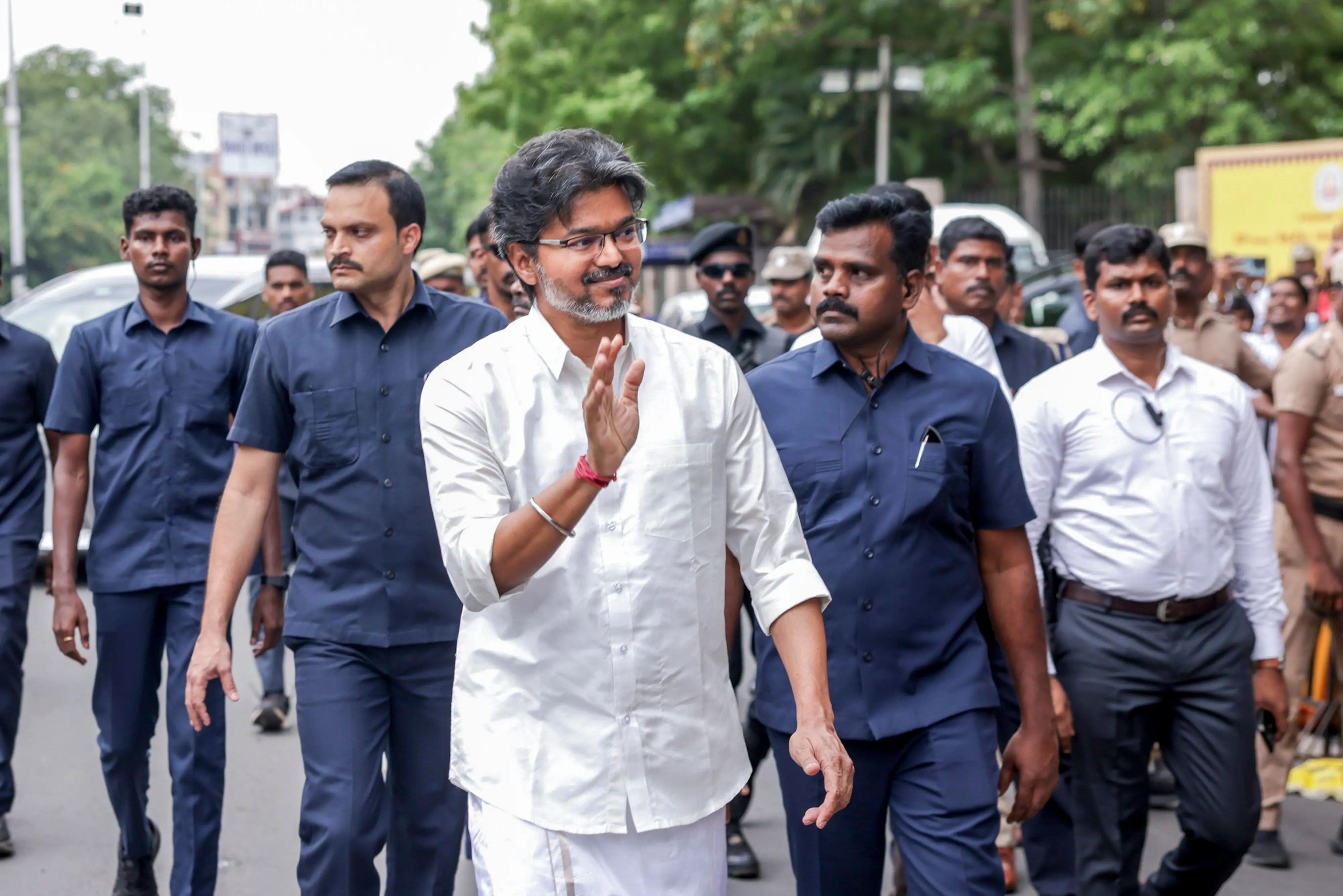
Chennai: Tamil Nadu Chief Minister C. Joseph Vijay convened an all-party meeting of the state’s MPs on Saturday to discuss the possible impact of the proposed delimitation exercise on Tamil Nadu and explore a common position on the issue.
However, the meeting was marked by the absence of two of the state’s major political parties. The DMK and AIADMK decided not to participate, leaving a significant portion of Tamil Nadu’s parliamentary representation outside the consultation.
Of the 57 MPs representing Tamil Nadu, around 20 were expected to attend. The participating MPs were largely from the Congress and smaller parties aligned with Vijay’s Tamilaga Vettri Kazhagam (TVK).
Congress was expected to send 12 MPs, while VCK, CPI and CPI(M) were expected to have two representatives each. MDMK and IUML were expected to send one MP each.
Why did DMK boycott the meeting?
The DMK, which has 30 MPs from Tamil Nadu, decided to stay away from the meeting.
DMK MP Kanimozhi criticised the initiative and questioned the need for the consultation. She argued that the Union government had not officially announced plans to introduce a delimitation Bill during the ongoing Parliament session.
Kanimozhi also pointed out that an amended draft of the proposed legislation was not available, arguing that there was therefore limited new material for MPs to deliberate on.
She further alleged that the meeting could divert attention from the ongoing Cauvery water dispute.
AIADMK and other parties also stay away
The AIADMK, which has four MPs from Tamil Nadu, also decided not to attend.
PMK, Makkal Needhi Maiam (MNM) and DMDK, each with one MP, were also expected to remain absent.
Their non-participation means that several important political groups in Tamil Nadu will not be part of Vijay’s consultation on the delimitation issue.
Why is delimitation sensitive for Tamil Nadu?
The next delimitation exercise has become a major political concern for Tamil Nadu and other southern states because of its possible impact on parliamentary representation.
Southern states have argued that if Lok Sabha constituencies are redistributed primarily on the basis of population, states that have achieved lower population growth could potentially lose their relative share of seats compared with states with faster population growth.
Tamil Nadu parties have therefore been closely monitoring proposals that could alter the distribution of Lok Sabha seats.
What is the 2026 delimitation proposal?
The proposed Delimitation Bill, introduced in the Lok Sabha on April 16, 2026, sought changes to the framework governing the redrawing of parliamentary and assembly constituencies.
The proposal included increasing the strength of the Lok Sabha to 850 seats and facilitating the implementation of women's reservation.
However, the Bill did not clear Parliament after failing to secure the constitutionally required special two-thirds majority of members present and voting.
The proposal has remained politically contentious, particularly among southern states concerned about the possible redistribution of parliamentary seats.
What Vijay’s meeting aimed to discuss
Vijay called the meeting to bring MPs from different political parties together and discuss Tamil Nadu’s concerns over delimitation.
The consultation was intended to examine the potential implications for the state’s representation in Parliament and explore a common position among Tamil Nadu MPs.
However, the absence of the DMK and AIADMK means that the meeting does not represent a consensus across the state’s major political parties.
The divide also highlights the political sensitivity surrounding both delimitation and Vijay’s emerging role in Tamil Nadu politics.
What happens next?
The meeting is expected to focus on Tamil Nadu’s concerns over parliamentary representation and the possible response to any future delimitation exercise.
For the moment, however, the boycott by the DMK and AIADMK underlines the lack of agreement over how the state should approach the issue — and over Vijay’s attempt to bring MPs together for a joint discussion.