Earth’s new dawn begins with Artemis II’s bold lunar flight
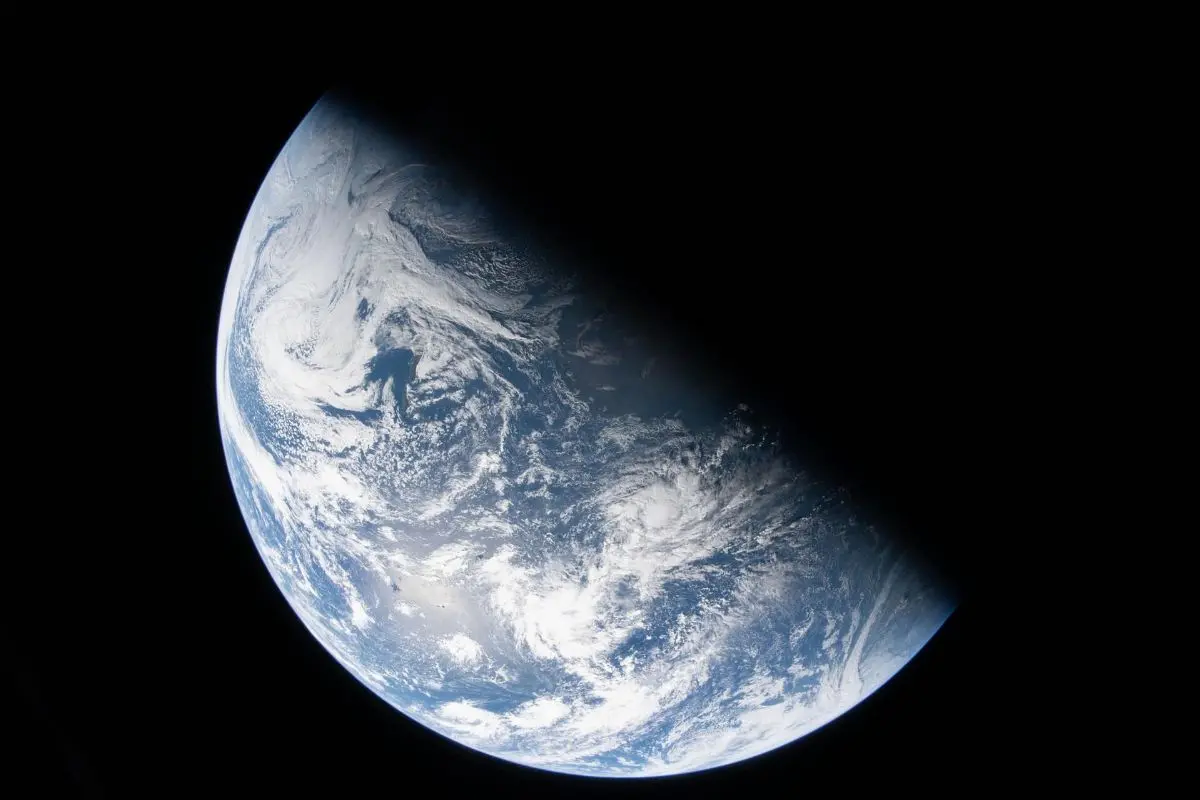
Right now, as you are reading this, four astronauts are travelling through deep space, heading towards the Moon. Not in a movie. Not in a dream. In real life. NASA's Artemis 2 mission — the first crewed lunar mission in over 50 years — is happening this very moment, and the world is watching with its breath held.
According to SpaceNews.com, which has been reporting live updates from NASA briefings, this is the most exciting human spaceflight mission in a generation.
The spacecraft carrying these four brave astronauts is called Orion. It was launched on April 1 (US date, which is April 1–2 Indian Standard Time) and is now moving closer to the Moon each passing hour. The mission is called Artemis 2, and it is mainly a test — to check if the Orion spacecraft is truly ready to carry humans safely to the Moon and back. But that word "test" does not make it any less thrilling. These are real human beings, flying around the real Moon, doing things no person has done since 1972.
Now here is something remarkable. Even though NASA already has a spacecraft called the Lunar Reconnaissance Orbiter — launched back in 2009 — silently orbiting the Moon and sending back beautiful high-resolution photographs of every crater, every ridge, every shadow, scientists still believe that nothing replaces the human eye. A camera captures pixels. A human being notices meaning.
NASA science lead Kelsey Young explained this beautifully. She said that human eyes are extraordinarily good at picking up tiny differences in colour. She gave a powerful example from the Apollo 17 mission, when astronaut Harrison Schmitt noticed orange-coloured soil on the Moon's surface. Nobody had seen it before. No camera had flagged it. But a human being noticed it — and that discovery completely changed our understanding of the Moon's volcanic history. This is why astronauts still matter, even in the age of robots and satellites.
ALSO READ | The new ‘blue marble’: NASA releases breathtaking high-res Earth photos from Artemis II
During the flyby on April 6 (US date, meaning April 6–7 Indian Standard Time), the crew will be carefully looking at the Moon's surface, especially the far side — the side that always faces away from Earth, the side no human eye has ever seen directly before. Astronaut Christina Koch, one of the four crew members, shared on April 4 (US date) that they had already caught their first glimpse of the Moon's far side the previous night. She said it looked truly amazing and felt completely different from the familiar Moon we see from our rooftops back on Earth.
One special area scientists are very excited about is called Mare Orientale — a massive impact crater sitting right at the boundary between the Moon's near side and far side. Scientists believe studying it closely can help us understand how the Moon was formed billions of years ago. Both the science team and the astronauts are eagerly looking forward to observing it.
There is also a rare and beautiful event planned — an eclipse. During the flyby, the Sun will be hidden behind the Moon for about 53 minutes. From inside the Orion spacecraft, the astronauts will witness the Moon completely blocking the Sun, including part of the Sun's outer glowing layer called the corona. Scientists have prepared specific questions they want the crew to observe during those 53 precious minutes.
As reported by SpaceNews.com, the Orion spacecraft has been performing wonderfully. Flight controllers have been so pleased with its accuracy that they actually cancelled two planned course correction manoeuvres — one on April 3 and another on April 4 (US dates) — because the spacecraft was already flying such a perfect path. The third small correction was expected on April 5 (US date) using tiny thrusters, just to fine-tune the route further.
ALSO READ | Artemis II launch: Why one US mission costs more than India’s 3 Chandrayaan missions
But space travel, even a brilliant one, has its very human moments. The crew ran into a small problem — the toilet's wastewater pipe got blocked, most likely because ice formed inside it in the extreme cold of space. Controllers carefully tilted the spacecraft for a few hours to warm that section and slowly melt the ice. The crew used backup systems in the meantime. NASA official John Honeycutt said it with a smile — everyone understands how important a working toilet is, but in space, even something this simple becomes a serious engineering challenge.
And that is perhaps the most beautiful lesson from Artemis 2. Whether you are a scientist studying the corona of the Sun, or an engineer fixing a frozen pipe 300,000 kilometres from Earth — every problem deserves your full attention. Every detail matters. Excellence is not about doing only the big things perfectly. It is about doing every single thing — big or small — with complete care.
The Moon is waiting. And humans are going back.
(Girish Linganna is an award-winning science communicator and a Defence, Aerospace & Geopolitical Analyst)